Grilled Cheese

ExploreLog inSign up

iTEXTILIS | The IK Workshop Society

@itextilis.eurosky.social

125 Following453 Followers

iTEXTILIS – Part of The IK Foundation @ikws.eurosky.social
– Promoting Natural & Cultural History. iTEXTILIS led by Viveka Hansen | Textile historian | Textilis.net
PostsRepliesMedia
@frenchmegaliths.bsky.socialOct 11, 2026, 9:15 AMReposted by @itextilis.eurosky.social

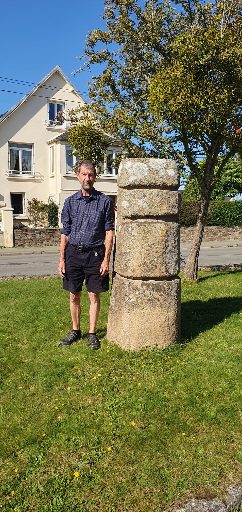
The menhir of La Croterie in Chauvé (Loire-Atlantique) is 4.2m tall and 3.5m wide at the base of the broad face. A recumbent stone behind may have been a twin or may never have stood. Card by Chapeau in Nantes. #StandingStoneSunday.


@katestrasdin.bsky.socialOct 11, 2026, 9:42 AMReposted by @itextilis.eurosky.social

Red and navy blue always a winner in my estimation and this Worth gown uses the brightest of reds to punctuate the details of their mid #1890s design. Nicely nautical for seaside promenading #NGVMelbourne #FashionHistory 🗃️🪡

Front view of a mid 1890s Worth gown of navy blue silk with red detailing centre front, as well as trimming the bodice, cuffs and skirt hem
@roger1952.bsky.socialOct 7, 2026, 8:13 PMReposted by @itextilis.eurosky.social

The tenth sheet from the set Joshoku kaiko tewaza kusa (Silkworm Culture: The Handiwork of Women), by Kitagawa Utamaro, c. 1798-1800, Japan.

In this dynamic woodblock print, four women collaborate in the exacting task of stretching and drying raw silk floss and reeled thread after processing. At the upper left, a woman reaches upward with bare arms to loop long, lustrous skeins of white silk over a elevated horizontal pole suspended above a deep wooden tub. In the foreground, two women lean into opposite directions, using synchronized physical tension to stretch a supple pad of wet silk floss (mawata) across wooden posts with paddles and tender hands. Nearby, another helper with a white cloth (tenugui) bound around her hair looks on attentively. The composition evokes a rich sensory atmosphere: the earthy, warm aroma of damp silk fibers and steamy wash water, the quiet rustle of patterned cotton kimonos, the gentle creak of wooden paddles against posts, the soft splash of water within cedar tubs, and the rhythmic, silent intimacy of women working in harmony.

Designed around 1798–1800 by the master printmaker Kitagawa Utamaro (1753–1806), this artwork represents sheet ten, titled "Stretching the Silk Floss" (Mawata-kaki), from his celebrated twelve-sheet polyptych series Jōshoku kaiko tewaza-kusa (Silkworm Culture: The Handiwork of Women). While instructional manuals detailing sericulture (kaiko-kō) were widespread in Edo-period Japan, Utamaro revolutionized the genre by populating the rural, labor-intensive process with idealized, fashionable beauties (bijinga). By portraying high-fashion Edo women performing arduous agricultural and textile tasks—such as picking mulberry leaves, boiling cocoons, reeling thread, and weaving—Utamaro celebrated the spirit of monozukuri (artisanal dedication, technical precision, and deep respect for raw materials) while transforming technical documentation into an icon of urban sophistication.
@katestrasdin.bsky.socialOct 8, 2026, 8:59 AMReposted by @itextilis.eurosky.social

Purple polka dots shimmy across the surface of this dress, the fabric all that was required to create a decorative dress. Devoid of embellishment other than lace collar and cuffs, it holds its own in lavender shaded splendour. Late #1840s, Brussels Museum of Fashion and Lace #FashionHistory 🗃️🪡

Front view of a long full skirted gown with fitted buttoned bodice and pointed waist. The purple fabric has a woven repeat of polka dots
@itextilis.eurosky.socialOct 7, 2026, 6:02 AM

From the Archive – Essay: Jet and Dressed in Black – The Victorian Period. www.ikfoundation.org/itextilis/je...

@artherstory.bsky.socialOct 6, 2026, 11:46 PMReposted by @itextilis.eurosky.social

Portrait of a Lady, 1670, by #GesinaTerBorch (Dutch, 1631-1690). Held by @rijksmuseum.bsky.social, id.rijksmuseum.nl/200513381 #womenartists #artherstory

A watercolor drawing of a white-skinned woman with bags under her eyes, depicted at three-quarter length, standing by a table. She wears a black gown with white trim, a black head covering, bracelets, earrings, rings, and a pearl choker. On the cloth-covered table at her side are a closed fan and a pair of long tan-colored gloves.
@drannaclark.bsky.socialOct 7, 2026, 5:00 AMReposted by @itextilis.eurosky.social

Niche artist: Gerrit Dou, Dutch Golden Age painter, born in Leiden in 1623; pupil of Rembrandt, known for polished, small-scale trompe l’oeil scenes in stone arches and curtained alcoves; adept at surface reflections, shadows, and textures. Self-portrait with pipe & book, 1650 Rijksmuseum

@katestrasdin.bsky.socialOct 5, 2026, 10:11 AMReposted by @itextilis.eurosky.social

The gossamer muslin used to create early c19th gowns was sometimes described as ‘woven wind’, an amazing description for the lightweight fabric. Here it has been embroidered with wool and I can only imagine the challenges that came with such stitching. C1815 #NGVMelbourne #FashionHistory 🗃️🪡

Back view of a fine white muslin empire line evening dress with a high gathered section centre back and floral wool embroidery at the hemFront view of the c1815 empire line white muslin evening dress with small embroidered sprigs across the front and a deeper band of wool embroidery around the hemFabric detail of the white muslin dress showing the small sprigs of coloured wool embroideryFabric detail from the c1815 white muslin dress showing a larger wool embroidered motif from the hem
@drannaclark.bsky.socialOct 4, 2026, 5:00 AMReposted by @itextilis.eurosky.social

The Gleaners, 1857, realist masterpiece by Jean-François Millet, French artist, a founder of Barbizon school, born #OTD 1814. Described as an “epic hymn to labour”, which prefigured the laundresses of Degas and floorscrapers of Caillebotte.
Musée d’Orsay

@katestrasdin.bsky.socialOct 4, 2026, 10:23 AMReposted by @itextilis.eurosky.social

I am continuing my advocacy for autumn velvet with a sapphire blue gown trimmed with both golden sleeve baubles and sparkly beaded floral motifs. Lots to see and cosy cloth to boot. Dates to c1883, sold via #AugustaAuction #FashionHistory 🗃️🪡

Back view of the top half of a sapphire blue bustle dress with ruched skirt and a row of gold passementerie baubles running down the back of each armSide by side image of the side and front of the early 1880s blue velvet bustle dress which shows the large beaded floral motifs on the front of the skirtA close up of the beaded sparkly blue flower with green leaves decorating the skirt of the blue velvet bustle dress
@chertseymuseum.bsky.socialOct 2, 2026, 6:10 AMReposted by @itextilis.eurosky.social

#FridayFrocks #Waistlines: Day gown of cotton muslin, c.1809 – 1811. It has a bib-front bodice with a high waistline. The bib would have been pinned in place at the front of the shoulder straps.

Front and back views of a Regency-era cotton muslin day gown, dated c.1809-1811, displayed on a mannequin. The ankle-length white dress features a small blue dot pattern, a high waistline, long sleeves, and blue decorative trim at the neckline, cuffs, and hem. The back view shows laced fastening and gathered fabric below the waist. Caption reads: “Cotton muslin day gown, c.1809-1811 © The Olive Matthews Collection, Chertsey Museum. Photos by John Chase Photography.”
@itextilis.eurosky.socialOct 2, 2026, 9:30 AM

New essay series coming from iTEXTILIS: Beyond the Arctic Circle — how textiles and clothes made Arctic exploration possible, tied to the acclaimed 2025 SPITSBERGEN volume. Be part of bringing this untold story to life! ❄️🧵 #textilehistory #Arctic > donate-to.ikfoundation.org/fundraising/...

@ikws.eurosky.socialSep 30, 2026, 6:06 AMReposted by @itextilis.eurosky.social

The final day of a long and important campaign. Our goal is within reach – help us with the last 10% of funding.

Donate if you can > donate-to.ikfoundation.org/fundraising/...

#science #spitsbergen #svalbard #arctic #greenland #opensource #whydonate #crowdfunding #Europe #books #geography #nature

@itextilis.eurosky.socialSep 30, 2026, 5:32 AM

From the Archive – Essay: Handicraft and Textile Exhibitions – A Case Study from 1900 to 1914. www.ikfoundation.org/itextilis/ha...

@olgapecorelle.bsky.socialSep 29, 2026, 6:54 PMReposted by @itextilis.eurosky.social

More weekend pictures from Asti. Working by the fire in the centre of a medieval city on a September night feels so good.

@katestrasdin.bsky.socialSep 29, 2026, 10:51 AMReposted by @itextilis.eurosky.social

The drama of the mid 18th century encapsulated in structured silk. Pale Gros de Naples was chosen for its distinctive ribbed weave structure supplemented with a riot of florals. It is sculpted in such a way, it seems it could stand up on its own #MuseodelTraje #FashionHistory 🗃️🪡

Side view of a short pale blue silk jacket with deep cuffed elbow length sleeves and colourful floral motifs. It has a pleated peplum at the back
@historianjen.bsky.socialSep 29, 2026, 8:33 AMReposted by @itextilis.eurosky.social

I'm a so pleased that the exhibition I co-curated with @cerihoulbrook.bsky.social is now open at the Chelsea Physick Garden. Running until the 15th Nov, it explores the autumnal plants of the garden through the work of pioneering botanical illustrator Anne Pratt.

@hammockauthor.bsky.socialSep 26, 2026, 1:20 PMReposted by @itextilis.eurosky.social

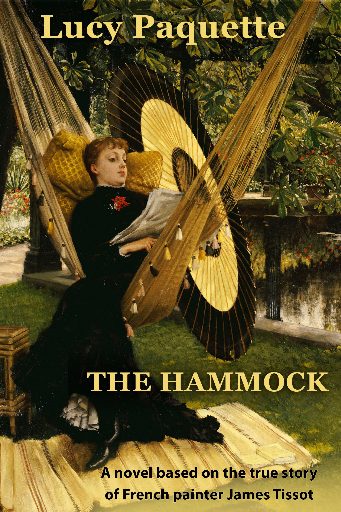
The Blue Ribbon (c. 1894) by Alfred Stevens (Belgian, 1823-1906) Private collection

@annamthane.bsky.socialSep 26, 2026, 7:34 AMReposted by @itextilis.eurosky.social

detail of a waistcoat 1780/1790 Made in France

Delicate embroidery on a silk waistcoat, with flowers, rosebuds and leaves
@olgapecorelle.bsky.socialSep 26, 2026, 9:29 PMReposted by @itextilis.eurosky.social

Asti today.

Older posts
Terms of UsePrivacy PolicyCommunity StandardsHelpGet the app

Grilled Cheese is a product of Village Compute

Version devBuilt at: 2026-10-11 02:37:10 EDT