
Think tank cooking up nonpartisan policy research on housing, energy, climate, and democracy in Cascadia. 🧠🍳 Likes/follows ≠ endorsements.
Newsletters: sightline.org/signup


@sightline.org
Think tank cooking up nonpartisan policy research on housing, energy, climate, and democracy in Cascadia. 🧠🍳 Likes/follows ≠ endorsements.
Newsletters: sightline.org/signup
 @bcpolicy.bsky.socialReposted by @sightline.org
”This municipal election, candidates in our biggest cities should be judged on whether they will finally remove the barriers that keep homes scarce and expensive,“ says @1alexhemingway.bsky.social in his latest piece.
Read it here: bcpolicy.ca/big-cities/
 @emilymoore.bsky.socialReposted by @sightline.org
No one's forcing Washingtonians to spend $$ to buy a heat pump (as much as I'd love my landlord to replace my gas furnace...). You wouldn't know that by reading @seattletimes-rss.bsky.social Sunday article about Initiative 2066.
Correcting the record ⬇️.
 @cascadiajournal.bsky.socialReposted by @sightline.org
Such a cool study of population in the #Cascadia bioregion. If we were an independent nation, we'd be on par with Chile.
@sightline.orgWe'll correct this—thanks for flagging!
@sightline.orgUnsurprisingly, the population centers are Cascadia’s largest urban areas. The top ten most populous jurisdictions are home to 10.8 million people, while the other half of the region is spread out across the other 165 jurisdictions. More data: www.sightline.org/2026/10/08/t...
 @sightline.org
And it's growing.
 @sightline.org
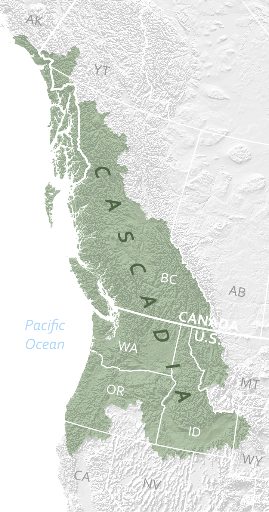
Resident Data Guy @jayleetx.com took up the task of counting the people who live here: all 21,561,819 (ish) of them.
 @sightline.org
Cascadia is a bioregion. We mark the borders by watershed, stretching from the Rockies to the Pacific and from Alaska to California. Those aren’t political borders, which make them hard to tabulate.
 @sightline.org
How many people live in Cascadia? (Spoiler: 21M. But let’s break it down.)
 @cplusc.bsky.socialReposted by @sightline.org
For #WeekWithoutDriving, we published a report showing that car dependence is a burden for people across the US, draining household budgets and leaving drivers feeling trapped. A few key findings with @dataforprogress.org:
 @sightline.org
Since Alaskans adopted top-four primaries and ranked choice voting, legislative elections feature closer margins, more viable candidates, and more challengers unseating incumbents. @alvanderklipp.bsky.social
@sightline.orgHear from Sightline's former AK Research Director Jeanette Lee at this @columbiasipa.bsky.social panel (alongside @jhenson.bsky.social and Robert Shapiro) on midterm election dynamics this Thursday, Oct. 8.
@sightline.orgReposted by @sightline.orgOregon is getting older. Its cities need to catch up.

 @highcountrynews.orgReposted by @sightline.org
The Trump administration’s interpretation of “harm” under the ESA could devastate the recovery of imperiled species, many which have cultural,spiritual and relational meaning and importance for tribal citizens.
 @nondriver.bsky.socialReposted by @sightline.org
What would your life be like if you couldn't drive? This week is #WeekWithoutDriving which is all about understanding what it's like to be a nondriver. @devinsilvernail.bsky.social & I launched @nondriverpodcast.bsky.social to share these stories. Search for 'nondriver' wherever you watch/listen
 @andersem.bsky.socialReposted by @sightline.org
I have a confession to make. The townhomes I & others spent most of a decade trying to legalize are popping up all over Oregon & elsewhere...and I love that...but they're a problem in one big way.
(get ready for a twisty thread about the housing report @sightline.org just published)
 @sightline.orgReposted by @sightline.org
How did Portland's electoral changes affect voter behavior, candidate strategy, and electoral outcomes in 2024? Q+A with Lewis and Clark's Dr. Ellen Seljan:
@sightline.orgOregon is getting older. Its cities need to catch up.
 @oregoncapitalchronicle.comReposted by @sightline.org
Oregon’s second largest investor-owned electric utility could soon directly assign the costs of new energy projects and infrastructure needed for data centers to data center operators. buff.ly/okb6kd0