
#DefendResearch and PEN America Present… Word Wipe! - The Scholarly Kitchen
 @scholarlypub.bsky.socialReposted by @scholarlykitchen.bsky.social

@scholarlykitchen.bsky.social
What's hot and cooking in Scholarly Communications. Blog from the Society for Scholarly Publishing -- account run by Editor David Crotty
@scholarlypub.bsky.socialReposted by @scholarlykitchen.bsky.social#DefendResearch and PEN America Present… Word Wipe! - The Scholarly Kitchen
 @helsinkiupress.bsky.socialReposted by @scholarlykitchen.bsky.social
The results of the new SSP Pulse Check on #ResearchIntegrity are in. Read more on the Scholarly Kitchen blog 👇
@scholarlypub.bsky.social @scholarlykitchen.bsky.social #AI #ScholComm
 @alicemeadows.bsky.socialReposted by @scholarlykitchen.bsky.social
In today’s @scholarlykitchen.bsky.social post @funsizesuze.bsky.social & I introduce Word Wipe - a cool anti #censorship tool based on @penamerica.bsky.social’s banned words list. Try it out and be sure to watch Suze’s brilliant video about it too!
scholarlykitchen.sspnet.org/2026/10/09/d...
@scholarlykitchen.bsky.socialDefendResearch and PEN America Present… Word Wipe! scholarlykitchen.sspnet.org/2026/10/09/d...
@scholarlypub.bsky.socialReposted by @scholarlykitchen.bsky.socialGuest Post – Do Not Go Gentle: Duke University Press Turns 100 - The Scholarly Kitchen
 @aupresses.bsky.socialReposted by @scholarlykitchen.bsky.social
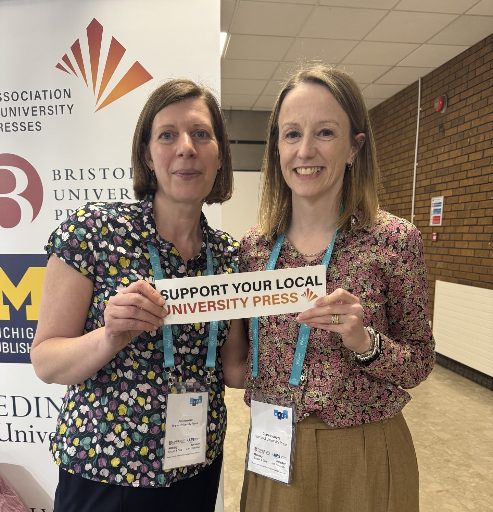
"[C]ourageous scholarship matters most when it addresses the questions society is reluctant to confront. This is the role of the university press." Hear, hear! And happy anniversary, @dukepress.bsky.social!
 @clarehooper.bsky.socialReposted by @scholarlykitchen.bsky.social
Happy Birthday @dukepress.bsky.social !!!
Do Not Go Gentle: Duke University Press Turns 100
 @infodocket.bsky.socialReposted by @scholarlykitchen.bsky.social
UPDATE! Learn More!
TRACE Project Launches to Advance #AI Interoperability
(via @scholarlykitchen.bsky.social)
 @scholarlypub.bsky.socialReposted by @scholarlykitchen.bsky.social
TRACE Project Launches to Advance AI interoperability - The Scholarly Kitchen
@scholarlykitchen.bsky.socialGuest Post – Do Not Go Gentle: Duke University Press Turns 100 scholarlykitchen.sspnet.org/2026/10/08/g...
 @nisoinfo.bsky.socialReposted by @scholarlykitchen.bsky.social
In today's @scholarlykitchen.bsky.social, @9thprime.bsky.social introduces TRACE, a community-wide initiative to advance AI interoperability for scholarly content. (NISO's role?i To develop a minimum metadata model for provenance and attribution tracking). scholarlykitchen.sspnet.org/2026/10/07/t...
 @peerreviewcongress.bsky.socialReposted by @scholarlykitchen.bsky.social
TRACE (Trusted Retrieval & Attribution for Content Ecosystems) aims to accelerate development of technical infrastructure needed to improve trustworthiness of AI systems in scholarly communication.
@scholarlykitchen.bsky.social @nisoinfo.bsky.social
@scholarlykitchen.bsky.socialTRACE Project Launches to Advance AI interoperability scholarlykitchen.sspnet.org/2026/10/07/t...
@scholarlypub.bsky.socialReposted by @scholarlykitchen.bsky.socialResearch Integrity in Scholarly Communications — SSP Pulse Check Report - The Scholarly Kitchen
 @aaronhelton.comReposted by @scholarlykitchen.bsky.social
This is a pretty good rundown of why LLMs aren't necessarily connected to truth. Something plausible and internally consistent or coherent can be false, and simply thinking about it more doesn't lead one to truth, which requires empirical testing and verification (i.e., science).
@scholarlykitchen.bsky.socialResearch Integrity in Scholarly Communications — SSP Pulse Check Report scholarlykitchen.sspnet.org/2026/10/06/r...
 @ashutoshg.bsky.socialReposted by @scholarlykitchen.bsky.social
New article in @scholarlykitchen.bsky.social. The central challenge with AI is not necessarily that machines are becoming intelligent, but that they are becoming extremely capable at amplifying thought—a powerful but limited form of cognition.
@peerreviewcongress.bsky.socialReposted by @scholarlykitchen.bsky.socialAs machines become better at
- Processing
- Remembering
- Acting
We need to become better at
- Perceiving
- Learning
- Questioning,
remembering that representation is never the scholarship itself
@ashutoshg.bsky.social
@scholarlykitchen.bsky.social
@scholarlykitchen.bsky.socialThe Representation Is Not the Scholarship scholarlykitchen.sspnet.org/2026/10/05/t...
 @plos.orgReposted by @scholarlykitchen.bsky.social
In her latest perspective for The Scholarly Kitchen, our CEO Alison Mudditt looks back at 25 years of open access publishing, and reflects on what we might have done differently and where we're headed next.
Read the full perspective in The Scholarly Kitchen plos.io/4rKCKHF.