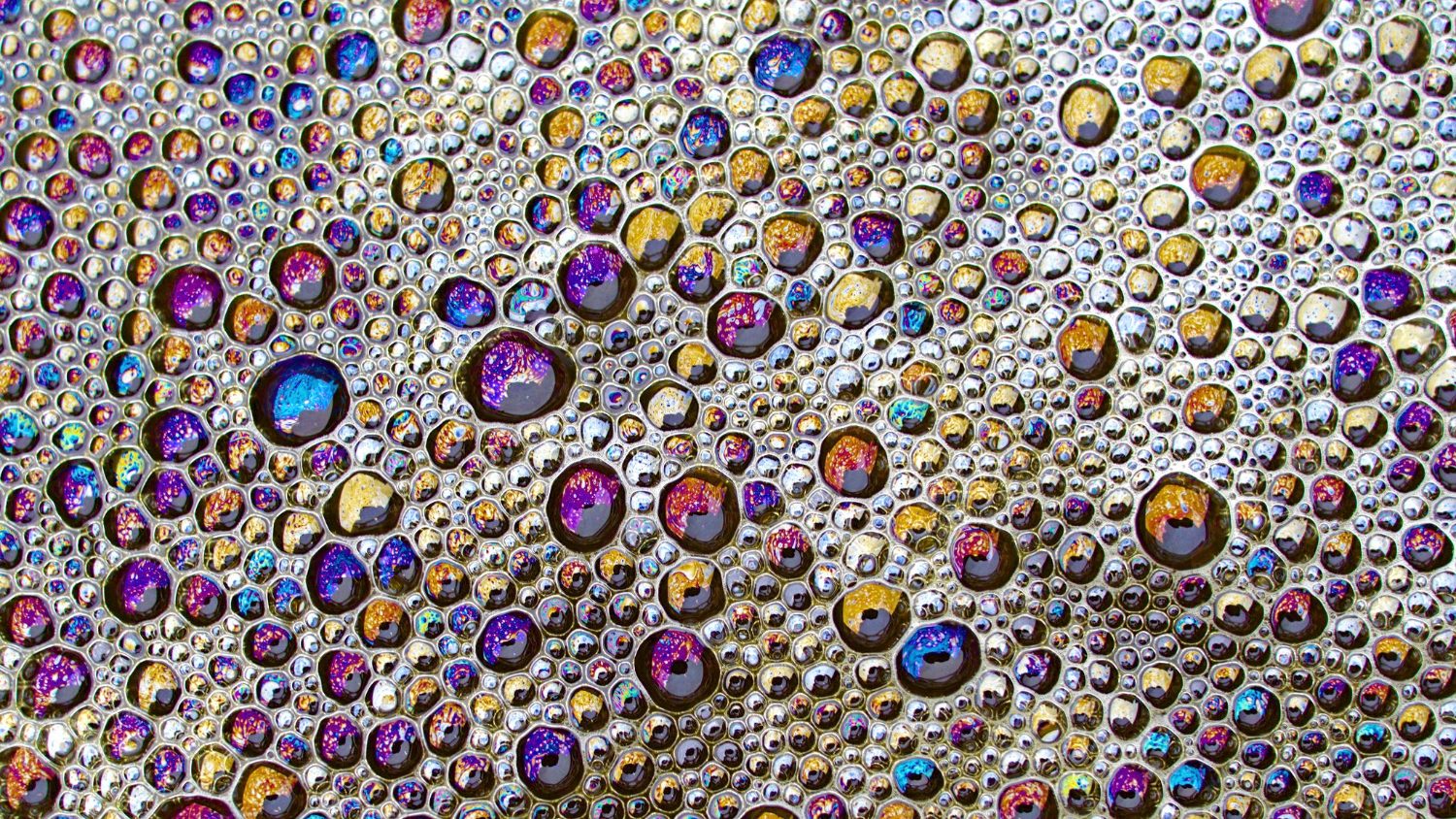
New Horizons LORRI image colorized using MVIC CH4/blue filter data, processed to roughly approximate natural color. Taken on March 1, 2007.
Distance: 2.3 million km
Credit: NASA / JHU / APL / Gordan Ugarković
live.staticflickr.com/6003/6008547...


@danielmachacek.bsky.social
Space nerd, Image processor, Lazy photographer, Humanist
 @ugordan.bsky.socialReposted by @danielmachacek.bsky.social
New Horizons LORRI image colorized using MVIC CH4/blue filter data, processed to roughly approximate natural color. Taken on March 1, 2007.
Distance: 2.3 million km
Credit: NASA / JHU / APL / Gordan Ugarković
live.staticflickr.com/6003/6008547...
 @danielmachacek.bsky.social
I really hope that means adding originally planned NovaSAR radar for Envision with "Sliding spotlight" mode with resolution up to 1 meter on Venus.
 @andrealuck.bsky.socialReposted by @danielmachacek.bsky.social
Phobos (including Saturn and Deimos) in the latest release of @esa.int Mars Express
Can you spot Saturn?
Full size & more info: flic.kr/p/2sFoFaS 🔭🧪
Credit: ESA/DLR/FUBerlin/AndreaLuck CC BY
ESA Mars Express
Release September 15, 2026
Note: Saturn has been enlarged by 300%
 @landru79.bsky.socialReposted by @danielmachacek.bsky.social
High clouds on Mars again 😆
#NASA's #Mars rover #Curiosity
2026-10-07 Sol 5037: Right Navigation Camera
NASA/JPL-Caltech/MSSS/j. Roger
 @ridingrobots.bsky.socialReposted by @danielmachacek.bsky.social
From NASA 📍Gale Crater, Aug. 11, 2026, 8:30 a.m. local Mars time. The Curiosity rover captures the Sun rising on crags known as yardangs, a scene that scientists have long been waiting to see up close.
 @stim3on.bsky.socialReposted by @danielmachacek.bsky.social
Six months have passed since the #ArtemisII mission and NASA has just released the reentry video from the Orion capsule!
Here is a timelapse of the reentry, but be sure to check out the realtime version linked below! 🔭🧪
 @pomarede.bsky.socialReposted by @danielmachacek.bsky.social
Snippets from a 171-images, 360° Mastcam panorama captured two days ago by Curiosity
#Mars Oct. 2, 2026 - Sol 5032🧪🔭
Credits: NASA/JPL-Caltech/MSSS/fredk


 @p-s-v.bsky.socialReposted by @danielmachacek.bsky.social
Astonishing image of JUPITER'S MOON Io and Ganymede during Occultation (October 3 2026)
Alt 30 (Low) at 5:24AM Southern CA USA
Credit Brian Martin
x.com/BackdoorAstr...
www.facebook.com/photo/?fbid=...

 @melina-iras07572.bsky.socialReposted by @danielmachacek.bsky.social
Gravitational lens WISE J220544.23-372701.4 with #JWST NIRCam (F200W, F356W). program: www.stsci.edu/jwst-program...
The galaxy in the center lenses a quasar (quasi stellar object), which is the bright black hole in the center of a galaxy. This creates the four identical point sources.
 @p-s-v.bsky.socialReposted by @danielmachacek.bsky.social
Messier 27 by Andrew McCarthy
Description from Andrew McCarthy
"I pointed my telescope at a dying star for 30 hours to capture this: a detailed look at the expanding planetary nebula.
A similar fate awaits our sun."

 @theplanetaryguy.comReposted by @danielmachacek.bsky.social
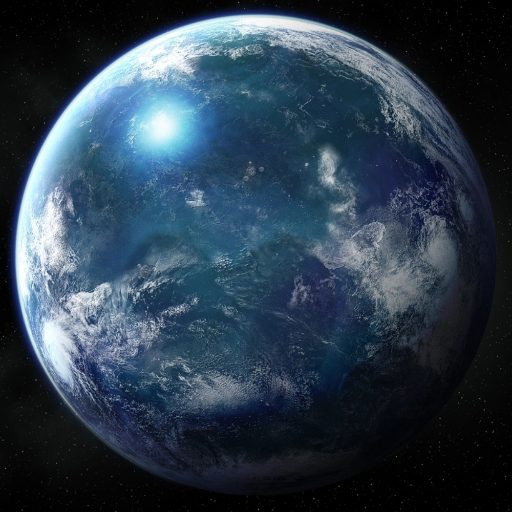
This will never stop blowing my mind. A 12-year sequence of real telescope images of a star 133 lightyears away. And around it, four planets slowly orbiting. Four real exoplanets, each more massive than Jupiter, imaged as they move around their host star.
@melina-iras07572.bsky.socialReposted by @danielmachacek.bsky.socialRemnant of the #supernova SN 1987A with #JWST NIRCam (F150W, F200W) program: www.stsci.edu/jwst-program... 🔭
 @danielmachacek.bsky.social
And from Pluto!
@stim3on.bsky.socialReposted by @danielmachacek.bsky.socialI hinted that there would be more images from the Juice flyby, so here is the timelapse of the full event!
It's always amazing to get these views of our fragile Blue Marble from the spacecraft we send out to explore the solar system!
🔭🧪 #planetsci
 @jstpwalsh.bsky.socialReposted by @danielmachacek.bsky.social
Shane Ross at Virginia Tech created a simulation of what 500k orbital data centers, as proposed by SpaceX, would look like from your home latitude sdross0.github.io/orbital-data...
 @israelvelazquez.bsky.socialReposted by @danielmachacek.bsky.social
NGC-6302 | #Hubble (wide view)
Instrument: WFC3/UVIS
Proposal ID: 11504 (archive.stsci.edu/proposal_sea...)
Principal Investigator: Noll, Keith S.
Date observation: 2009-07-27.
Filters: F656N F658N F502N.
 @stim3on.bsky.socialReposted by @danielmachacek.bsky.social
Great day here at ESOC, staying in the control room with the team while the images came down and processing the JMC images.
Earth proved to be a real stunner with Africa and Madagascar in full view.
#planetsci 🔭🧪
 @science.esa.intReposted by @danielmachacek.bsky.social
A successful Earth flyby improves Juice’s course to Jupiter
Earlier today, Juice flew just 8640 km above the Indian Ocean and snapped these images with its onboard monitoring cameras.
1️⃣Africa, by Juice monitoring camera
2️⃣Madagascar, by Juice NavCam
3️⃣Moon, by Juice NavCam
🔭 🧪 #planetsci


 @ddavisspaceart.bsky.socialReposted by @danielmachacek.bsky.social
The Sunset of September 27, 2026 was an epic spectacle whose intensity and beauty were memorable. The cloud ceiling had a wide opening toward the West that admitted Sunlight which underwent progressive color changes as it briefly in turn illuminated layers of otherwise invisible cloud textures.

 @theplanetaryguy.comReposted by @danielmachacek.bsky.social
These are what the clouds on Jupiter look up close.
The small patches of white are cloud tops, soaring above the main, colourful cloud layer.
Image from NASA's Juno spacecraft during its 38th close approach to Jupiter on 29 November 2021, processed by Kevin Gill (@kevinmgill.bsky.social)
