Brown dwarfs as small as 2 M_J appear in JWST’s NIRCam panorama of IC 348, along with fine cloud details.
If this makes you want to capture the sky yourself, have a look (Ad AmazonAffiliate)→
https://www.amazon.com/dp/B0FHX4ZM23?tag=wtsr0f-20

 @celestialatlas1.bsky.social
Brown dwarfs as small as 2 M_J appear in JWST’s NIRCam panorama of IC 348, along with fine cloud details.
If this makes you want to capture the sky yourself, have a look (Ad AmazonAffiliate)→
https://www.amazon.com/dp/B0FHX4ZM23?tag=wtsr0f-20
 @celestialatlas1.bsky.social
Fewer small TNOs found, prompting a rethink of Solar System formation models.
If one question just turned into five, this is a good place to continue (Ad AmazonAffiliate)→
https://www.amazon.com/dp/B0H9Z1FMWJ?tag=wtsr0f-20

 @cosmicwonder2.bsky.social
Hubble and JWST together captured the faintest TNOs, showing fewer small bodies than expected.
If you want to go deeper into the universe behind this post, start here (Ad AmazonAffiliate)→
https://www.amazon.com/dp/B0H9Z1FMWJ?tag=wtsr0f-20

 @deepspacejournal1.bsky.social
Hubble and JWST captured some of the faintest TNOs, yet found fewer small ones than expected.
If this sparked another question, keep going here (Ad AmazonAffiliate)→
https://www.amazon.com/dp/B0H9Z1FMWJ?tag=wtsr0f-20

 @theastronomer1.bsky.social
Images from Hubble and JWST, released Sep 8 2026, reveal fewer small Trans-Neptunian Objects than expected.
If this made you curious to dig deeper, this is worth exploring (Ad AmazonAffiliate)→
https://www.amazon.com/dp/B0H9Z1FMWJ?tag=wtsr0f-20

 @orbitandbeyond.bsky.social
Images released Sep 8 2026 from Hubble‑JWST show fewer small TNOs than expected.
For the astronomy-curious, this is worth exploring (Ad AmazonAffiliate)→
https://www.amazon.com/dp/B0H9Z1FMWJ?tag=wtsr0f-20

 @cbgstudio.bsky.social
[ALERT] A new active intrusion specimen has been extruded into the manifold: UNVERIFIED SPECIMEN: 6aca37ab7e00a6f93b0426f5
 @samillingworth.com
🪐 Uranus's rings resemble Kuiper Belt ice
Webb telescope readings of Uranus's rings and four small moons show deep water ice and carbon dioxide, a close match for icy objects in the Kuiper Belt beyond Neptune.
 @melina-iras07572.bsky.social
Part of the NGC 7129 #JWST MIRI mosaic (filter F770W)
Two hours of work of manually creating tiles and stiching into a mosaic (72 idividual images).
program: www.stsci.edu/jwst-program...

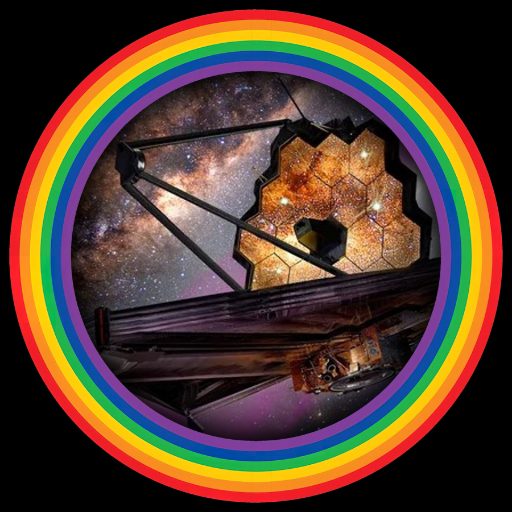 @webb-telescope.bsky.social
 @webb-telescope.bsky.social
NASA's James Webb Space Telescope on Flickr (Aug 29, 2023)
Discover the intricate structures of the Whirlpool Galaxy, M51, illuminated by #JWST's MIRI and NIRCam data.

 @astrobotjwst.bsky.social
New #JWST 🔭 data release for target names: DEDICATED-SKY, MACS1931.8-2635-BCG-TAIL, SN-1987A.
Credit: NASA, ESA, CSA, STScI.
Take a look at news_by_date.html

 @roybooks.bsky.social
Webb's NIRCam view of the "Cosmic Cliffs" in the Carina Nebula — towering gas ridges about 7 light-years tall, sculpted by radiation from newborn stars. Star birth, caught in the act, 7,600 light-years away. #JWST #Astronomy #SpaceScience
 @astrobotjwst.bsky.social
🤖 image processing for #JWST 🔭 data (SN-1987A). RGB Filters: 444, 356, 300 PI: Matsuura, Mikako, program 07575. CRVAL: 83.899738, -69.265487 Credits: NASA, ESA, CSA, STScI.
 @astrobotjwst.bsky.social
🤖 image processing for #JWST 🔭 data (SN-1987A). RGB Filters: 210, 200, 150 PI: Matsuura, Mikako, program 07575. CRVAL: 83.864458, -69.269698 Credits: NASA, ESA, CSA, STScI.
 @astrobotjwst.bsky.social
🤖 image processing for #JWST 🔭 data (MACS1931.8-2635-BCG-TAIL). RGB Filters: 1000, 560 PI: Man, Allison, program 08582. CRVAL: 292.942752, -26.59643 Credits: NASA, ESA, CSA, STScI.
 @astrobotjwst.bsky.social
🤖 image processing for #JWST 🔭 data (DEDICATED-SKY). RGB Filters: 1000, 560 PI: Man, Allison, program 08582. CRVAL: 292.947344, -26.576885 Credits: NASA, ESA, CSA, STScI.

 @bigearthdata.ai
Hubble Space Telescope may have found a planet born after its star died
->ScienceDaily | More on "White dwarfs and planetary formation" at BigEarthData.ai | #SpaceTelescope #Planet #JWST
 @astronomyunlocked.bsky.social
JWST’s NIRCam captured IC 348 in fine detail, revealing brown dwarfs ~2×Jupiter mass; ESA released the image Sep 15 2026.
If this makes you want to capture the sky yourself, have a look (Ad AmazonAffiliate)→
https://www.amazon.com/dp/B01LZ4XXAF?tag=wtsr0f-20

 @cosmic96.bsky.social
A fast radio burst from when the universe was 3 billion years old points to a magnetar origin. Webb found its small, young host galaxy, where neutron-star mergers would have had little time to develop. cosmicreader.app #FastRadioBursts #JWST