Grilled Cheese

ExploreLog inSign up

Kevin Wilbraham

@kpw1453.bsky.social

2.5k Following5.9k Followers

Passionate about archives, archaeology and the medieval past.

PostsRepliesMedia
@kpw1453.bsky.socialOct 12, 2026, 6:43 AM

Part of a 4th century mosaic floor depicting the head of the Roman sea god Neptune. Originally from Hemsworth Villa at Witchampton in Dorset, the mosaic is now part of the collections at Dorset Museum & Art Gallery in Dorchester. šŸ“ø My own. #MosaicMonday #RomanBritain

@kpw1453.bsky.socialOct 12, 2026, 6:43 AM

The Early EnglishGothic splendour of Peterborough Cathedral’s west front. šŸ“ø My own. #MedievalMonday #PeterboroughCathedral

@durotrigesdig.bsky.socialOct 11, 2026, 8:59 PMReposted by @kpw1453.bsky.social

Watching a documentary about the emperor Hadrian's visit to Britain in AD 122

There's a lot of AI

If you're going to use AI (which you shouldn't) at least get an expert to check it

Hadrian's Wall has been studied for 100s of years

We don't know what this Wall is 😱

#AI #archaeologyhorror

An AI image, supposedly of Hadrian's Wall Roman frontier system, depicting a very large stone gate topped by a Medieval farmhouse, with post Medieval drystone wall and two confused legionaries
@drnwillburger.bsky.socialOct 11, 2026, 8:01 AMReposted by @kpw1453.bsky.social

We all need a timeline cleanse, so here is the most adorable #chess piece ever!

A knight, made of antler. Dating 11/12th century.

Found at the Burgstein, Lichtenstein-Holzelfingen.

šŸ“·ļø me

A carved chess piece representing a knight, depicted in an abstract, stylized form with a triangular head, amd wide circular eyes,. The figure has a hunched, cylindrical body and is displayed on a dark surface with an other game pieces and a die nearby.
@stonelands.bsky.socialOct 11, 2026, 9:50 AMReposted by @kpw1453.bsky.social

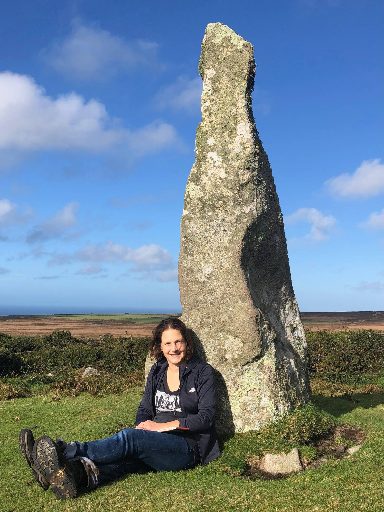
A foggy spring morning at Fernworthy, no one there but us and a couple of rather hairy locals #StandingStoneSunday

Stone circle in a misty clearing in the forestry plantationDartmoor resident having a snack
@druidtombraider.bsky.socialOct 11, 2026, 10:26 AMReposted by @kpw1453.bsky.social

Neolithic standing stones, Kilmartin Glen, Scotland, courtesy of Diego Cue. #StandingStoneSunday #megaliths #Neolithic #BronzeAge #Archaeology

@benjaminsteven.bsky.socialOct 11, 2026, 7:16 AMReposted by @kpw1453.bsky.social

Arbor Low, Derbyshire.

This photo was taken on a beautifully still day in May this year. Only skylarks and bees for company during the visit to this stunning place.

šŸ“· needs a click.

#StandingStoneSunday #ArborLow #PeakDistrict

A view from the bank of Arbor Low Henge, across the ditch to a grassy central circle of (probably) fallen standing stones. In the distance is a farm and a line of trees. The sky is a milky blue.
@handhyorkshire.bsky.socialOct 12, 2026, 5:48 AMReposted by @kpw1453.bsky.social

🧵Rievaulx Abbey, nestled in a secluded valley within the North York Moors, stands as one of England’s most powerful symbols of monastic architectural grandeur. Founded in 1131 by Cistercian monks, it quickly grew into one of the wealthiest and most influential monasteries in Europe,

An aerial view of Rievaulx Abbey, a ruined Cistercian monastery located near Helmsley in the North York Moors National Park. The Abbey Church,  the main cruciform structure dominating the upper section of the image is uniquely, oriented north-south rather than the traditional east-west, a modification forced by the steep and narrow valley landscape. The long arm extending to the right is the magnificent, light-stone Gothic presbytery built in the 1220s, while the shorter western end to the left consists of the simpler, 1140s Romanesque nave,   The large, open green square surrounded by pathways directly adjacent to the church. This central courtyard served as the literal and social hub connecting all major living and working quarters of the abbey. The East Range (Chapter House) is located to the right of the cloister, featuring an unusual apsidal (rounded) east end foundation jutting outward, which is unusual  for a Cistercian layout. The foundations visible along the bottom edge of the cloister courtyard once housed the great dining hall, aligned perpendicular to the cloister to optimise space .Image Adobe Images
@kpw1453.bsky.socialOct 11, 2026, 6:36 AM

One of the stone rows at Ballymeanoch - part of the remarkable prehistoric landscape at Kilmartin Glen in Argyll. šŸ“ø My own. #StandingStoneSunday #Prehistory #Archaeology #Kilmartin #Argyll

@kpw1453.bsky.socialOct 11, 2026, 6:36 AM

Medieval Madonna and Child - a possible survival from Anglesey Abbey in Cambridgeshire, a former Augustinian priory which was converted into a Jacobean-style house following the Reformation. Now under the care of the National Trust. šŸ“ø My own. #StoneworkSunday #AngleseyAbbey

@nessofbrodgar.bsky.socialOct 10, 2026, 9:51 AMReposted by @kpw1453.bsky.social

Delving into earth-houses – a subterranean prehistoricĀ enigma "In the course of the last hundred years a score or more of these have been discovered in Orkney, varying greatly in size and design." Hugh Marwick. Ancient Monuments in Orkney. (1952) "Orkney has many prehistoric structures of another…

@hedleythorne.bsky.socialOct 11, 2026, 3:35 AMReposted by @kpw1453.bsky.social

Watership Down, viewed across the northern rampart of Beacon Hill in Hampshire.

@theduncanmackay.bsky.socialOct 10, 2026, 2:45 PMReposted by @kpw1453.bsky.social

I didn’t want to show off šŸ˜ They were clearly meant to sound dreadful!

@handhyorkshire.bsky.socialOct 10, 2026, 9:31 AMReposted by @kpw1453.bsky.social

🧵Bishops' House, at the southern tip of Meersbrook Park in Sheffield, is a wonderful architectural treasure. Built around 1500–1554, this Grade II* listed building is one of only three surviving timber-framed structures in the city. Originally a remote yeoman's farmhouse in

Bishops' House is a historic, half-timbered Tudor house built around 1500, located at the southern tip of Meersbrook Park in Sheffield, Image: Neil Theasby CC BY-SA 2,0
@enniusredloeb.bsky.socialOct 10, 2026, 11:05 AMReposted by @kpw1453.bsky.social

Animals on parade!

BL Cotton MS Claudius B IV; Old English Hexateuch; ff.49r-49v @blmedieval.bsky.social

@darkgalloway.bsky.socialOct 11, 2026, 5:02 AMReposted by @kpw1453.bsky.social

The Loupin Stanes, Eskdalemuir. A small oval of stones on a constructed platform.
#Scotland #AncientHistory #StandingStoneSunday #blackandwhitephotography #SouthernScotland

Atmospheric black and white photo of standing stones forming an entrance with smaller stones behind.
@bucksarchives.bsky.socialOct 10, 2026, 12:02 PMReposted by @kpw1453.bsky.social

If you’ve ever wondered what our jobs involve, we’re running two free online talks that introduce you to the world of archives! Come along and find out how archives began, and learn about some of the strangest parts of our collection.

Book your free space by heading to histfestbucks.co.uk

The Buckinghamshire History Festival logo with the following text below: ā€˜ā€So, what do you actually do?ā€ – An Introduction to Archives / Online / 3/11/26, 15:00 -16:00 / 27/11/26, 10:30 – 11:30 / histfestbucks.co.uk’. To the right of the image is a photograph of leatherbound quarter session rolls on archive shelving.
@northages.bsky.socialOct 10, 2026, 8:34 AMReposted by @kpw1453.bsky.social

Oct 10: Feast of Paulinus (†644), bishop of York. He baptised Edwin, pagan king of the Northumbrians, in 627. When Edwin died in battle in 633, Paulinus withdrew with the widowed St Ɔthelburh to Kent, where he became bishop of Rochester. šŸ“øPaul Lakin

A view across York.
@enniusredloeb.bsky.socialOct 10, 2026, 8:01 PMReposted by @kpw1453.bsky.social

Presenting the saturday night camel chorus line!

BL Cotton Claudius B IV; Old English Hexateuch; f.39r
@blmedieval.bsky.social

@alisonfisk.bsky.socialOct 10, 2026, 9:30 AMReposted by @kpw1453.bsky.social

Happy weekend!

Here’s a 3,500 year-old Minoan clay flask decorated with a wide-eyed octopus! šŸ™ā¤ļø

From Palaikastro, Crete.

Heraklion Archaeological Museum šŸ“· by me

#Archaeology

My photo shows a frontal view of a clay flask with warm-yellow coloured slip with black hand painted decoration depicting an octopus. The octopus is swimming diagonally with eight writhing, sucker-lined arms covering the surface of the flask. It stares out at the viewer with wide, almost cartoon-like eyes. Additional black painted motifs include sea urchins, tritons, small rocks and seaweed. Minoan decoration depicting sea motifs is known by scholars as the 'Marine Style'. The flask measures 27 cm (about 10.5 inches) in height. It has a short spout at the top with a small loop handle at either side and a small base so that it can stand upright.

ā€œIts shape is somewhat unusual, constructed by slippingĀ together, while still leather hard (clay that is not quite dry), two shallow plates which had been made on a fast spinning potter’s wheel and with highly refined clay. The circular bases of these shallow plates are still visible in the center of both sides of the flaskā€ (Smart History article ā€œOctopus Vaseā€ by Dr Senta German https://smarthistory.org/octopus-vase/)

The flask was excavated in 1903 at a Bronze Age settlement site at Palaikastro. The excavations between 1902 and 1906, were run by R. Bosanquet and R.M. Dawkins from the British School of Athens. The flask is part of the collections at Heraklion Archaeological Museum, Heraklion, Crete.
Older posts
Terms of UsePrivacy PolicyCommunity StandardsHelpGet the app

Grilled Cheese is a product of Village Compute

Version devBuilt at: 2026-10-12 04:31:30 EDT