
Grilled Cheese

ExploreLog inSign up
Terms of UsePrivacy PolicyCommunity StandardsHelpGet the app

Grilled Cheese is a product of Village Compute

Version devBuilt at: 2026-10-10 20:13:24 EDT

Explore

PostsPeople
LatestRanked
@minouette.bsky.socialSep 24, 2026, 2:38 PM

Thermoluminescence in Gadolinite-(Y) is nifty but #Graphite wins hands down for both physics and art applications.

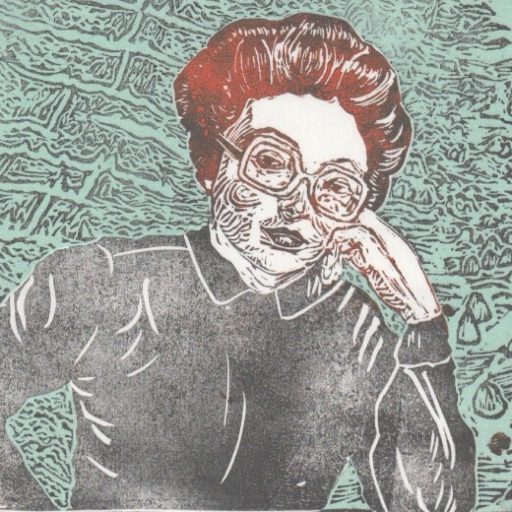
Here are a couple of favourite scientists who worked extensively on graphite, and a tiny hint of the centuries of graphite drawings and their role in art history! #MinCup26 #artHist

My linocut portrait of Millie Dresselhaus in white sweater, red blazer, and C for carbon necklace, with the structure of a carbon nanotube behind her, in red, silver and black ink.My linocut portrait of Rosalind Franklin (1920 – 1958), in a gradient of magenta from her shoulders up through dark blue to her hair. Her necklace is a double helix of DNA. Her brooch is the Tobacco Mosaic Virus. The pattern on her jacket is based on her publication of the structure of non-graphitizing carbon. ⁠ Behind her in shades of robin’s egg blue is an image of the famous X-ray crystallographic Photo 51, produced by her grad student Gosling and important to deducing the structure of DNA.Title: Madame Félix Gallois
Artist: Jean Auguste Dominique Ingres (French, Montauban 1780–1867 Paris)
Date: 1852
Medium: Graphite with touches of gold in oil to highlight jewelry, on buff wove paper.
Dimensions: Sheet: 13 5/8 x 10 9/16 in. (34.6 x 26.8 cm)
Classification: Drawings
Credit Line: Robert Lehman Collection, 1975
Object Number: 1975.1.647
Curatorial Department: The Robert Lehman Collection
“With customary ease and the touch of a pencil, Ingres presents his bourgeois relative with patrician finery, detailing the folds and ruffles of her elegant dress. Sparing no adornments, Ingres has highlighted Nathalie's jewelry in gold paint and traced the lacey hair ornament with meticulous precision. The sitter's porcelain skin and comely expression made the drawing a perfect gift for Monsieur Gallois, as detailed in the artist's affectionate inscription.”

Via The Met Title: Édouard Manet, Seated, Holding His Hat
Artist: Edgar Degas (French, Paris 1834–1917 Paris)
Sitter: Edouard Manet (French, Paris 1832–1883 Paris)
Date: ca. 1868
Medium: Graphite and black chalk
Dimensions: Sheet: 13 1/16 x 9 1/16 in. (33.1 x 23 cm)
Classification: Drawings
Credit Line: Rogers Fund, 1918
Object Number: 19.51.7
Curatorial Department: Drawings and Prints

Via The Met. As described this graphite drawing on ivory paper shows the bearded, balding painter seated in a wooden chair at an angle to the viewer, in a relaxed pose with his legs crossed at the ankles, facing right, wearing a suit and coat, holding his hat in his hands.
@minouette.bsky.socialSep 22, 2026, 1:23 PM

It's cool that a fungus, Paecilomyces javanicus can make bio minerals of Pyromorphite (sometimes an ore of lead) in lead-polluted soil, & lead has been used in pigments since antiquity. Now sold as a resin art pigment. So it gets my art vote over Cylindrite with its cool crystals. #MinCup26 #artHist

Rembrandt, Hendrickje Stoffels
probably 1654-56 is an example of a painting which uses lead pigments (tin-lead yellow). 

Medium: Oil
Support: Canvas
Size: 101.9 x 83.7 cm
Art period: Baroque
National Gallery London
Inventory number: NG6432
Painting in the Rembrandt Database

Via ColourLex 

She is dressed in a heavy white robe, and chain necklace, earrings and hair half up, seated in a wooden chair on a dark reddish brown background.Green pyromorphite of Pingtouling Mine, Guangdong Province, China © Rémi Bornet Via Le Comptoir Géologique Cylindrite on white background. Dimensions: 3.0 cm × 2.5 cm × 1.5 cm
Locality: Mina San Francisco, Poopó, Bolivia
Description: Radial aggregate of needle like cylindrical, grey black cylindrite crystals with metallic luster from the collection of Ra'ike via Wikipedia
@minouette.bsky.socialSep 18, 2026, 1:47 PM

Vesuvianite may be a pretty gem but Skutterudite has played a role in art history as smalt, a pigment in paint, glass and ceramics for centuries so I am voting #Skutterudite!

#MinCup26 #scicomm #artHist

Four cut Vesuvianite gems in different shapes (rectangular with cut corners and pale orange hue, round and olive hue, square orange and round orange) on a white background via the International Gem Society Rembrandt, Portrait of Margaretha de Geer
ca 1661


Medium: oil
Support: canvas
Size: 130.5 x 97.5 cm
Art period: Baroque
National Gallery London
NG1675

Pigments include smalt via ColourLex. The portrait shows an older woman in black holding a handkerchief with a brown scarf and large white ruff seated in a large dark chair on a black background. Title: Snuff Bottle with Antiquarian Design
Period: Qing dynasty (1644–1911)
Date: late 18th–early 19th century
Culture: China
Medium: Blue glass [made with smalt/skutterudite] with rose quartz stopper
Dimensions: H. 2 11/16 in. (6.8 cm); W. 1 5/16 in. (3.3 cm); D. 1 3/8 in. (3.5 cm)
Classification: Snuff Bottles
Credit Line: Bequest of Mrs. Fanny Shapiro, 1971
Object Number: 1971.117.3a, b
Curatorial Department: Asian Art

Via The Met. Title: Cup
Date: 17th century
Geography: Attributed to Iran
Medium: Stonepaste; luster-painted on opaque blue glaze [smalt/skutterudite] (exterior) and white glaze (interior)
Dimensions: Ht. 1 9/16 in. (4 cm)
Diam. 3 in. (7.6 cm)
Classification: Ceramics
Credit Line: Edward C. Moore Collection, Bequest of Edward C. Moore, 1891
Object Number: 91.1.190
Curatorial Department: Islamic Art

Via The Met. 

This is a small, rounded slightly conical ceramic cup which is white inside and dark blue outside with a darker stylized floral pattern.
@minouette.bsky.socialSep 17, 2026, 2:27 PM

Hmm? Do I give the art vote to Azurite, used as a pigment for centuries, or Sphalerite with its cool optical/electrical properties and zinc ore, which has been used in brass & bronze since antiquity. Since the 18th century zinc has been used to make pigments & etching plates. #MinCup26 #artHist

Rembrandt, Saskia in Arcadian Costume
1635

Image credit: National Gallery London
Medium: Oil
Support: Canvas
Size: 123.5 x 97.5 cm
Art period: Baroque
National Gallery London

Pigments include azurite via ColourLex.

This Baroque painting by Rembrandt shows his wife Sasha with her long wavy coppery hair in a high-waisted dress in pale blue, white and gold, with a garland and sprig around her temples holding a bouquet of flowers and walking stick.Amedeo Modigliani, Jeanne Hébuterne
1919

Medium: Oil
Support: Canvas
Size: 91.4 x 73 cm
Art period: Expressionism, Fauvism
Metropolitan Museum of Art New York
Inventory number: 56.184.2
“Amadeo Modigliani, Jeanne Hébuterneis a softly glowing and swiftly executed portrait of the artist’s wife in her pregnancy. The pigment analysis revealed a palette consisting of ochres, chrome yellow, emerald green, Prussian blue, vermilion, zinc white, lead white, and the rather rare chrome orange.”

Via ColourLex
Typical of Modigliani this painting has his stylized lengthening of her face. She wears a loose white top, black pleated skirt, has auburn hair, leans on a mustard cushion on a bluish background.Title: Fish-Shaped Box
Date: 19th century
Geography: Probably made in India, Lucknow or Hyderabad
Medium: Zinc alloy; cast, engraved, inlaid with silver and brass (bidri ware)
Dimensions: L. 9 1/4 in. (23.5 cm)
Classification: Metal
Credit Line: Gift of Robert W. and Lockwood De Forest, 1919
Object Number: 19.135.15a, b
Curatorial Department: Islamic Art

Via The MetTitle: Two elegantly dressed skeletons walking, from a broadside entitled, 'El Gran Panteon Amoroso,' published by Antonio Vanegas Arroyo.
Artist: José Guadalupe Posada (Mexican, Aguascalientes 1852–1913 Mexico City)
Date: ca. 1894
Medium: Etching on zinc
Dimensions: Sheet: 3 1/4 × 2 5/8 in. (8.3 × 6.7 cm)
Classification: Prints
Credit Line: Gift of Jean Charlot, 1930
Object Number: 30.82.46
Curatorial Department: Drawings and Prints

Via The Met

Exactly as titled this etching in black ink on paper was made with zinc and shows a male skeleton in top hat and coat with a female skeleton in dress and fancy hat in his arm.
@minouette.bsky.socialSep 15, 2026, 1:51 PM

Chocolate is great but I have to vote for #Chrysocolla, which has appeared in art since antiquity as a gem, as a “glue” as solder for goldsmithing and as a pigment.

Here we have ancient Buddhist murals in China, Medieval mural in Italy & ancient Peruvian art.
#MinCup26 #artHist #SciComm

Wall painting, cave of musician, Kizil, 600-650 AD. Intense blues in the Kizil Caves in China have been shown to use Chrysocolla as a pigment.   The Buddhist murals shows a Bodhisattva in blue skirt and with blue hair holding a sword on his neck, with draped green scarf, next to a woman in blue kneeling holding a child. There’s a shrub with white blossoms behind them.
“ scene of the wall paintings ( Deposition from the cross , on the southern wall). The faux marble dado with geometric motifs is seen in the lower part. The image shows the appearance of the paintings before the current restoration. ”  This mural at the medieval Sienna Cathedral uses Chrysocolla as a pigment via: Thirteenth century wall paintings under the Siena Cathedral (Italy). Mineralogical and petrographic study of materials, painting techniques and state of conservation July 2006Journal of Cultural Heritage 7(3):171-185 DOI:10.1016/j.culher.2006.04.002Chrysocolla and Shell Breastplate Cupisnique (1250-1 BCE). Larco Museum, Lima  The ancient Peruvian breastplate is shot on a black backgroundOctopus Frontlet, 300–600, Moche culture; gold, chrysocolla, shells. Museo de la Nación, Lima, Peru, MN-14602. Ministerio de Cultura del Perú  The wonderful gold stylized octopus has a face with shell teeth and Chrysocolla eyes with radiating curled octopus arms, shot on a black background via The Getty Museum.
@siga.spainculture.usSep 14, 2026, 4:08 PM

🔗 Full CFP: arthist.net/archive/53583

#Surrealism #ArtHistory #CFP #CallForPapers #Barcelona #PompeuFabra #ArtHist

📷 Image Credit: Salvador Dalí, The Broken Bridge and The Dream, 1945, The Dalí Museum

(4/4)

@minouette.bsky.socialSep 11, 2026, 11:28 PM

VOTE Calcite! Pigments, chalk, sculpture… all of art history! Take a moment to vote calcite! It's the homestretch. #MinCup26 #Calcite #arthist

Diego Velázquez, Las Meninas
1656 Medium: Oil
Support: Canvas
Size: 318 cm x 276 cm
Art period: Baroque
Museo del Prado
Inventory number: P01171

Las Meninas (Spanish for 'The Ladies-in-waiting’) is a 1656 painting in the Museo del Prado in Madrid, by Diego Velázquez, the leading artist in the court of King Philip IV of Spain and Portugal, and of the Spanish Golden Age. It has become one of the most widely analyzed works in Western painting for the way its complex and enigmatic composition raises questions about reality and illusion, and for the uncertain relationship it creates between the viewer and the figures depicted. Amongst the pigments: calcite 
Via ColourLexVermeer, Girl with a Pearl Earring “is an exceptional example of Vermeer’s genius, it is a portrait of an unknown girl or maybe a generalized female head (called a ‘tronie’ in Netherlands).”
Pigment analysis reveals calcite chalk.

https://colourlex.com/project/vermeer-girl-with-a-pearl-earring/

Medium: Oil
Support: Canvas
Size: 44.5 cm x 39 cm
Art period: Baroque
Mauritshuis, The Hague
PaintingFayum Mummy Portrait of a Woman ca 2nd century A.D.  Medium: Encaustic Support: Wood Size: 34.6 x 11.5 cm Art period: Antiquity National Gallery of Art Object number: 1956.12.1  This portrait employs calcite as a pigment. Via https://colourlex.com/project/fayum-mummy-portrait-of-a-woman/Michelangelo, Moses (ca. 1513–15), for the Tomb of Julius II. Collection of San Pietro in Vincoli, Rome. The Renaissance marble sculpture depicts buff, bearded, seated Moses (with horns on his head likely based on a description in chapter 34 of Exodus in the Vulgate, the Latin translation of the Bible used at that time). It is an extraordinary technical achievement to make flowing hair and lifelike anatomy.
@minouette.bsky.socialSep 5, 2026, 10:09 PM

Vote #Orpiment for Francisco de Goya, who used orpiment the metallic highlights of the decorations worn by The Duke of Wellington in this portrait from 1812-14.

#MinCup26 #arthist #scicomm #pigments

Francisco de Goya (1746-1828), The Duke of Wellington (1812-14), oil on mahogany, 64.3 x 52.4 cm, The National Gallery (Bought with aid from the Wolfson Foundation and a special Exchequer grant, 1961), London. Courtesy of and © The National Gallery, London. via 

https://eclecticlight.co/2018/03/15/pigment-arsenic-orpiment-and-realgar/

The Duke faces left but looks over his shoulder at the viewer. He is in his red coat, with sash and many medals, against a brown background.
@minouette.bsky.socialSep 5, 2026, 8:07 PM

Vote #Orpiment for its role in global art history! #MinCup26 #arthist

Consider this personification of wisdom from Kashmir or western Tibet:

Fragmentary Leaf from an Ashtasahasrika Prajnaparamita Sutra
Artist: Unidentified Artist, Kashmiri
Date: 12th century
Culture: Kashmir or western Tibet
Medium: Gold, lapis lazuli, cinnabar, indigo, and orpiment pigments and black ink on paper
Dimensions: Image: 8 1/16 × 6 1/2 in. (20.5 × 16.5 cm)
Classification: Paintings
Credit Line: Gift of Chino Franco Roncoroni, in celebration of the Museum’s 150th Anniversary, 2020
Object Number: 2020.74.2
Curatorial Department: Asian Art, The Met

"This painting depicts the personification of the wisdom text Prajnaparamita. She is represented in six-armed form, the central hands are held over the heart in a variation of the dharmacakramudra, whilst her upper hands display the sacred book (pustaka) and the thunderbolt scepter (vajra), whilst her lower hands hold a rosary (mala) and gesture boon granting. She wears golden jewelry on her body and a tripartite diadem adorns herhead, which is framed by a red halo. A girdle, seemingly of strings of pearls, secures her waistcloth, beautifully decorated with large red rosettes in blue hexagonal frames. Slender ribbons fly through the air, one supporting a blue lotus bloom and stem. She is seated in a mediation posture, enthroned on a golden lotus and she is encircled in a rainbow colored nimbus. Particularly noteworthy is the tonal modelling of the bodily forms, heightened with finely controlled orange-red lines. The swelling breasts and constricted waist are hallmarks of the Kashmir style."
MMineral Cup & Ore Cup@mineralcup.bsky.socialSep 5, 2026, 12:00 AM

#MinCup26 Round 1 Match 5 It's a fiery match of vibrant red #Cuprite and just as saturated orange #Orpiment battle for your votes! VOTE: www.mineralcup.org/2026/vote-re... RESULTS: www.mineralcup.org/2026/vote-re...

Split photo of deep red, chunky cuprite crystals, clear and vibrant and shiny like pomegranate seeds and orpiment forming many round puffs of intensely orange spikes radiating out like sea urchin spines.
@minouette.bsky.socialSep 5, 2026, 7:58 PM

Vote #Orpiment for the 17th century Dutch masters who subjected themselves to foul smelling toxic fumes so their paintings could glow! #MinCup26

This '“Festoon with Flowers and Fruit” (1660s) is an oil painting by Jan Davidsz. de Heem which contains orpiment.
#artHist #minerals #scicomm

Jan Davidsz. de Heem, 'Festoon with Flowers and Fruits' 1670. "This painting features at least four Semper Augustus tulips. These flowers were considered extremely valuable at the time this paintings commission." The bouquet also features morning glory, carnation, purple grapes and red apples and is dramatically lit on a black background. Contains orpiment pigment. Via Wikipedia.
MMineral Cup & Ore Cup@mineralcup.bsky.socialSep 5, 2026, 12:00 AM

#MinCup26 Round 1 Match 5 It's a fiery match of vibrant red #Cuprite and just as saturated orange #Orpiment battle for your votes! VOTE: www.mineralcup.org/2026/vote-re... RESULTS: www.mineralcup.org/2026/vote-re...

Split photo of deep red, chunky cuprite crystals, clear and vibrant and shiny like pomegranate seeds and orpiment forming many round puffs of intensely orange spikes radiating out like sea urchin spines.
1
@minouette.bsky.socialSep 5, 2026, 7:45 PM

Vote for #Orpiment for illuminated manuscripts!

I'd like to invite the medievalists to spare 30 seconds of their time to vote in our yearly battle of the minerals to ensure this important pigment through the centuries doesn't lose out in the first round!

#MinCup26 #artHist #medieval
#scicomm

The Pabenham-Clifford Hours

England,
c. 1315-1320
MS 242

"Folio 2 v
Annunciation with John de Pabenham and Joan Clifford kneeling in the lower margin (Hours of the Virgin)

Underdrawing for the draperies is visible in the infrared image, as well as through the semi-transparent paint used in the Virgin’s pink mantle. This garment was painted with a mixture of an insect-based red dye, lead white and gypsum (hotspot 1), while Gabriel’s dark pink tunic contains a red dye mixed with chalk (hotspot 2). Gabriel’s blue-grey wings contain azurite blue and small quantities of an organic red, as can be seen under magnification (hotspot 4). The tooled gold leaf in the background was additionally decorated by painting a pattern of spirals with an arsenic sulphide yellow pigment, likely orpiment (hotspot 5)."

Via Orpiment Illuminated by the FitzWilliam Museum, Cambridge

https://qi.fitzmuseum.cam.ac.uk/illuminated/lab/overview-of-artists-materials/orpiment/type/material
@minouette.bsky.socialSep 5, 2026, 3:59 PM

Nefertiti says vote for Orpiment!

Her bust employs the storied pigment.

#MinCup26 #scicomm #artHist #Egyptology

Nefertiti Bust, Egypt, Tell el-Amarna, New Kingdom, 18th Dynasty, ca. 1351–1334 BC, height: 49 cm; width: 24.5 cm depth: 35 cm; material: limestone, painted stucco, quartz, wax; ref. no. ÄM 23100; find date: 06.12.1912; house P 47.2; room 19, donated by James Simon © Staatliche Museen zu Berlin, Ägyptisches Museum und Papyrussammlung / Sandra Steiß

“Life-sized painted bust of the queen, 47 cm high. With the flat-cut blue wig, which also has a ribbon wrapped around it halfway up. Colours as if paint was just applied. Work absolutely exceptional…. Only the ears a[nd] part of the r[ight] side of the wig damaged.”
@minouette.bsky.socialSep 5, 2026, 3:47 PM

Vote orpiment, the toxic colour that comes from volcanoes! #MinCup26 #arthist #scicomm

@minouette.bsky.socialSep 5, 2026, 3:09 PM

Cézanne thinks you need to go vote for Orpiment, the storied pigment!

#MinCup26 #scicomm #artHist

Paul Cézanne, Bay of l'Estaque
1879-83

Medium: Oil
Support: Canvas
Size: 60.3 x 74.3
Art period: Post-Impressionism
Philadelphia Museum of Art
Inventory number: 1963-116-21

Rocks and sky use orpiment. Via ColourLex.

This post-impressionist painting shows a view of a curving bay, with trees, rocky shore and below blue-green cloudy skies and some small buildings in the foreground.
@minouette.bsky.socialSep 5, 2026, 3:01 PM

Tintoretto thinks you need to go vote for Orpiment, the storied pigment!

#MinCup26 #scicomm #artHist

Jacopo Tintoretto, Portrait of Vincenzo Morosini
ca 1575-80

Date: about 1575-80
Medium: Oil
Support: Canvas
Size: 85.3 x 52.2 cm
Art period: Late Renaissance (Mannerism)
National Gallery London
Inventory number: NG4004
Via ColourLex

The sash and  background are painted using orpiment. Morosini is a balding, bearded, skeptical Renaissance gentleman in a fur-lined burgundy robe with gold sash, 3/4 view, against a dark wall with a window of sky and landscape behind him.
@minouette.bsky.socialSep 5, 2026, 2:23 PM

Hello art history lovers!
#arthist #art

The storied pigment #orpiment is currently battling, and way behind cuprite, in the Mineral Cup. Please take a moment to vote for a mineral so important to the history of art!