Grilled Cheese

ExploreLog inSign up

LIGO Scientific Collaboration

@ligo.org

61 Following1.7k Followers

Official account of the LIGO Scientific Collaboration. We detect gravitational waves! Email: [email protected]

PostsRepliesMedia
@lisacommunity.bsky.socialOct 7, 2026, 3:10 PMReposted by @ligo.org

🛰️ A decade after LISA Pathfinder, its data continues to support new research and strengthen the foundations for LISA.

🎉 Mark the anniversary by reading the LPF article in the latest issue of the LIGO Magazine @ligomagazine.bsky.social:
ligo.org/wp-content/u...

#LPF10anniversary #LISAMission

@ligo.orgOct 7, 2026, 2:34 PM

How do we get our mirrors their shiniest? A new video from our @ozgrav.bsky.social colleagues looks at the research into our mirror coatings

www.youtube.com/watch?v=fOav...

🧪⚛️🔭

@ligo.orgOct 1, 2026, 1:15 PM

So shiny!

@ligo.orgOct 1, 2026, 1:13 PM

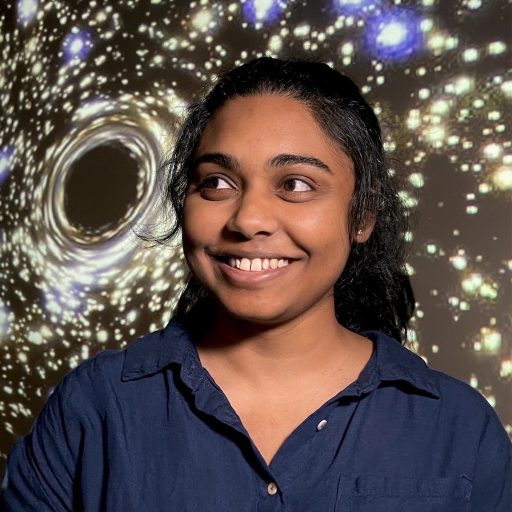
Lots of great research was presented at our recent Collaboration meeting. Special congratulations to our poster prize winners! 👨‍🔬 Avanish Kulur Ramamohan (Australian National University) 👨‍💻 Ananya Anandharaman (@uofgravity.bsky.social) 👩‍🏫 Ashika Achuthankutty (University of Szeged/HUN-REN Wigner RCP)

Experiment:
Avanish Kulur Ramamohan from  Australian National University
“Low-Frequency Interferometric Displacement Readout for Opto-Mechanical Newtonian-Noise Detection”
Honorable mention: Debanjan Adhikari
Data analysis:
Ananya Anandharaman from University of Glasgow 
“Adapting the Gravity Spy machine learning classifier with Thunderclaps”
Honorable mentions: Yogita Kumari & Xavier Garcia Sàbat
Theory:
Ashika Achuthankutty from University of Szeged and HUN-REN Wigner RCP
“Modelling neutron stars in scalar-tensor theories”
Honorable mentions: Saurabh Kumar & Anirudh Nemmani 
Thanking our judges: Nancy Aggarwal, Jack Callaghan, Divyajyoti, K G Arun, Prayush Kumar, Rahul Kashyap
@ligo.orgSep 30, 2026, 9:05 AM

Congratulations to collaboration members on winning @rsef-esp.bsky.social prizes

José María Ezquiaga Bravo of the Niels Bohr Institute has won the young researcher in theoretical physics award

David Keitel and Josep Blai Covas Vidal and of @uib.cat have won the award for best outreach contribution

Universitat de les Illes Balears researchers Josep Blai Covas Vidal and David Keitel holding a copy of Física celebrating the 10th anniversary of the first observation of gravitational waves. David looks very happy, while Josep is more stoic. Credit: A Costa/UIBJose M. Ezquiaga in a dramatic black-and-white portrait. Credit: Jose M. Ezquiaga
@ligo.orgSep 25, 2026, 9:41 AM

The latest issue of the @ligomagazine.bsky.social is now out with all the latest #GravitationalWaves news!

Read it for free at ligo.org/wp-content/u...

🔭🧪⚛️🎶

LIGO Magazine Issue 29

A+ bigger beamsplitters: A major upgrade for LIGO's A+ phase, p 18
GWTC-5.0 - the catalogue continues: 161 events added to the collection, p 6
LIGO Virgo KAGRA teamwork: Gravitational-wave autotune, p 8
Sept. 2026 LVK Meeting in Pune: GW research in India, p 11
A decade on... LISA Pathfinder persists in discovery, p 28
@lisacommunity.bsky.socialSep 16, 2026, 12:07 PMReposted by @ligo.org

What do black holes and comic books have in common? More than you'd think.

📖 Read it for free: blackholecomicbook.com

A starry space scene with a glowing orange-black figure representing the black hole and its accretion disk, a small character and a floating figure at left, and the text “BLACK HOLES” in orange letters.
@sciencejedi.bsky.socialSep 15, 2026, 2:40 AMReposted by @ligo.org

Happy Gravitational Wave Detection Day, the anniversary of #GW150914! 2 black holes, the largest "stellar mass black holes" we had ever detected at that time (36 and 29 solar masses), merged 1.3 billion lyr away! My blog from the announcement in February: writescience.wordpress.com/2016/02/11/t...

@astronerdika.bsky.socialSep 14, 2026, 9:50 AMReposted by @ligo.org

OTD 11 years ago we discovered an event that birthed a whole new field of astronomy ✨

Happy Birthday #GW150914! 🥳

#GravitationalWaves #BlackHoles

Image of Figure 1 of the discovery paper showing an eight panel plot with 2 columns and 4 rows. Each row shows the observed gravitational wave signal over time, reconstructed signal against waveform template over time, the residual over time and frequency time graph showing the signal amplitude in colour map. Each column shows the signal observed in each of the LIGO detectors.
@ligo.orgSep 14, 2026, 2:19 PM

If you have a GW150914 birthday cake, please share* with us!

Here is a thread of cakes from last year bsky.app/profile/ligo...

* Preferably a slice, but photos are OK too

@ligo.orgSep 14, 2026, 11:58 AM

Happy birthday #GW150914!

11 years ago today, we caught our first gravitational wave, and founded a new type of astronomy

A decade later, we now have hundreds of observations!

🔭🧪🎂

Classic plot showing GW150914. Filtered data from LIGO Livingston and LIGO Hanford are shown, both show the characteristic signal of a binary black hole. Crucially, data from the two observatories agree, indicating a real signal.
@ligo.orgSep 7, 2026, 1:36 PM

Please remember we are not currently observing, so a lack of alerts does not necessarily mean that the app is not working, nor that the Earth has been shattered. Don't panic

@asleepywanderer.bsky.socialSep 1, 2026, 3:28 AMReposted by @ligo.org

I can do simple and detailed! 🧪🔭🐡

@ligo.orgAug 22, 2026, 1:49 PM

We have not yet detected gravitational waves from isolated neutron stars, but this is already telling us something about what they are made from

ligo.org/science-summ...

#NeutronStarWeek 🧪🔭

ligo.orgNeutron stars: smoother than billiard balls – unfortunately – LSC – LIGO Scientific Collaboration
@ligo.orgAug 13, 2026, 8:02 PM

Yesterday's eclipse captured by our collaboration members in Mallorca The 1919 eclipse was famously used as a test of Einstein's general relativity. We now test it using stronger gravitational fields than the Sun's 📷 D Keitel @dkeitel.bsky.social, A Calafat & J-R Merou

Photo of the total solar eclipse showing the corona around the masked Sun. By Alicia CalafatPhoto of the total solar eclipse, showing the Sun over the ocean, and Mallorca's coastal landscape. By David Keitel
1
@ligo.orgAug 11, 2026, 12:52 PM

Catch up on 200 years of astronomy breakthroughs as @startswithabang.bsky.social picks his 20 biggest cosmic discoveries of the last 20 decades

bigthink.com/starts-with-...

🔭🧪☄️

bigthink.comThe 20 biggest cosmic discoveries of the last 20 decades200 years ago, we hardly knew anything about our Universe on cosmic scales. Today, there's so much that we know. Here's how we arrived.
@ligo.orgMay 13, 2026, 3:05 PM

Autotuning gravitational-wave detectors using the chirps of the cosmos!

⚫⚫🎶🎛️

Meet #GW240925 and #GW250207, two new, LOUD #GravitationalWave detections that have enabled us to use astrophysical calibration to tune our laser interferometers

🖼️ : @astronerdika.bsky.social, @sbisco.bsky.social

🔭🧪⚛️☄️

The Autotune problem in gravitational waves: understanding astrophysical calibration with music

1. We hear an autotuned recording (detector data) and we want the original voice recording (gravitational wave).
BUT
2. We don’t know the autotune settings (calibration uncertainty).
3. So we use a bunch of trial voice recordings (waveform templates) and apply various autotune settings to them to obtain a set of autotuned recordings.

The best match reveals BOTH the autotune settings AND the original voice recording!

GW240925 and GW250207 Events

GW240925  with component masses of about 9 and 7 solar masses located roughly 1.1 billion light-years away. 

GW250207 masses of about 35 and 30 solar masses located about 600 million light-years away. 

LIGO Livingston and Virgo were online and observing fine, but LIGO Hanford had calibration issues. KAGRA was not observing at the time.The Distorted Recording

Infographic describing gravitational-wave detector calibration. Three panels show:

A compact binary system of two orbiting black holes producing gravitational waves.
A stylized interferometer being stretched and squeezed by passing waves, illustrating calibration and detector response.
A green waveform representing the recorded gravitational-wave signal.

Detectors measure tiny changes in distance, and calibration disentangles the true gravitational-wave signal from distortions introduced by the detector response.More Detectors = Better Localisation

Infographic explaining how adding more gravitational-wave detectors improves sky localisation. On the left, two detectors (Livingston + Virgo) localise a source to a large ring-shaped region on the sky. On the right, adding Hanford creates overlapping rings from different detector pairs (H+L, H+V, L+V), shrinking the possible source location to a much smaller region. 

Astrophysical calibration was needed to use Hanford data
1
@ligo.orgMay 13, 2026, 8:39 AM

Our latest discoveries—two of the loudest gravitational-wave signals ever: #GW240925 and #GW250207

Using these signals, and our understanding of binary black holes, we can verify that our detectors are correctly calibrated

ligo.org/science-summ...

🧪⚛️☄️🔭

The gravitational-wave events GW240924 (top row) and GW250207 (bottom row) as observed by the LIGO Hanford (left column), LIGO Livingston (middle column), and Virgo (right column) observatories. The plots, called spectrograms, show the power spectrum (energy at different frequencies) as a function of time. The signals can be seen as the increase in energy over time (in seconds) and at specific frequencies (in hertz), represented by green and yellow bands. Their shape follows the characteristic chirp pattern produced by gravitational-wave signals. The thickness and brightness of GW250207 shows just how loud it was!
1
@ligo.orgFeb 11, 2026, 5:16 PM

What has happened in the 10 years since #GW150914?

@space.com picks their top 10 discoveries. What are yours?

www.space.com/astronomy/li... by
@robleascijorno.bsky.social

#GW10Years 🔭 ⚛️ 🧪

Article screenshot:

LIGO Legacy: 10 incredible gravitational wave breakthroughs to celebrate observatory's landmark 2015 find

By Robert Lea published September 14, 2025
A lot has happened in gravitational-wave astronomy over the past decade.

An illustration of binary black holes ringing space-time with gravitational waves (Image credit: LIGO/T. Pyle)
1
@ligo.orgFeb 11, 2026, 4:34 PM

Daniel Williams @daniel-williams.co.uk joined our collaboration on 14 September 2015 at the start of his PhD. He shares his perspectives on the last decade and things to come

astronomersdiary.substack.com/p/celebratin...

#GW10Years 🔭🧪⚛️ #AcademicSky

astronomersdiary.substack.comCelebrating Ten YearsA Big Birthday for a New Astronomy
Older posts
Terms of UsePrivacy PolicyCommunity StandardsHelpGet the app

Grilled Cheese is a product of Village Compute

Version devBuilt at: 2026-10-12 04:31:30 EDT