The LISA Mission: Detecting Gravitational Waves from Space
AI-narrated, sourced explainer.

 @backhouse06.bsky.social
The LISA Mission: Detecting Gravitational Waves from Space
AI-narrated, sourced explainer.
 @hydezero-message.bsky.social
Axion-curvaton peaks link PBH abundance, non-Gaussianity and induced gravitational waves. Follow the nonlinear mappings and remaining collapse-threshold approximations. Model predictions, not a detection.
https://note.com/hydezero/n/nff122907ae19?hl=en
#Cosmology #GravitationalWaves

 @theinnovation.bsky.social
Check out our latest issue in @theinnovation.bsky.social! Volume 7, Issue 10 is now online!
www.cell.com/the-innovati...
#SemiconductorDevices #τScalingLaw #ReusableRockets #embodiedrobotics #solidwastemanagement #GravitationalWaves #genomics #ComputationalMathematics #climatechange #EnergyStorage

 @gltch.io
LIGO's sensitivity just got a boost! 🇦🇺ANU coatings reduce laser noise by 35%, potentially detecting black hole mergers *further* into the universe. #gravitationalwaves
Source: https://phys.org/news/2026-10-ultra-precise-coatings-power-generation.html
 @denys-dutykh.com
How does a black hole without a singularity ring? In Physics of the Dark Universe (@elsevierconnect.bsky.social), Davide Batic and I follow the Hayward black hole from the classical Schwarzschild case to the extreme case where its two horizons merge. 🧵 #BlackHoles #GravitationalWaves

 @einsteintelescope.bsky.social
📸 New #ET_snapshot: construction starts at ET-SUnLab in Sardinia, new site studies in the Euregio Meuse-Rhine, strong municipal support in Lusatia — plus a step towards the global IGWN.
Full roundup on LinkedIn 👉 www.linkedin.com/feed/update/...
#EinsteinTelescope #GravitationalWaves


 @uob-bear.bsky.social
Can next-generation gravitational-wave observatories reveal black holes from the Universe’s first stars? Using BlueBEAR HPC @unibirmingham.bsky.social, researchers explored how. blog.bham.ac.uk/bear/2026/09... #GravitationalWaves #HPC #Astrophysics

 @lisacommunity.bsky.social
👀 Check out this episode of @esa.int's Expedition Sound podcast series that lets us sink into the depths of space and explore the mysterious effects of gravity.
✨ Discover more about this podcast here: www.esa.int/.../The_dept...
Credit: European Space Agency (ESA)
#LISAMission #GravitationalWaves

 @cambridgephysics.bsky.social
🌌 Beyond Light: Understanding the Universe with #GravitationalWaves
Join Richard Dyer at 6pm on 29 Sept at the Ray Dolby Centre to explore how gravitational waves reveal black holes, neutron stars, and a universe once hidden from view.
Free and open to all.
🔗https://buff.ly/yc7G3Oc
 @theinnovation.bsky.social
The Innovation Astronomy Call for Papers.
This Virtual Collection brings together innovative research across gravitational-wave astronomy, connecting source modeling and detector science with data analysis, astrophysical interpretation, and fundamental physics.
#astronomy #GravitationalWaves


 @unwashedrepublic3.bsky.social
 @ligo.org
The latest issue of the @ligomagazine.bsky.social is now out with all the latest #GravitationalWaves news!
Read it for free at ligo.org/wp-content/u...
🔭🧪⚛️🎶

 @sohkamyung.bsky.social
"Today’s paper describes the tests of GR that the LIGO, Virgo, and KAGRA Scientific Collaborations performed on GWTC-5 [Gravitational-Wave Transient Catalog], focusing on 168 of the most confidently detected signals observed by at least two detectors."
@lisacommunity.bsky.socialMade possible by a Carlsberg Mindelegat outreach grant from @carlsbergfondet.dk 🙏
#BlackHoles #Comics #SciComm #GravitationalWaves #NielsBohrInstitute
 @jamieroxxartist.bsky.social
Today in History:
Sept 14, 2015 – The first observation of #gravitationalwaves was made, announced by the #LIGO and #Virgo collaborations on 11 February 2016.
 @astronerdika.bsky.social
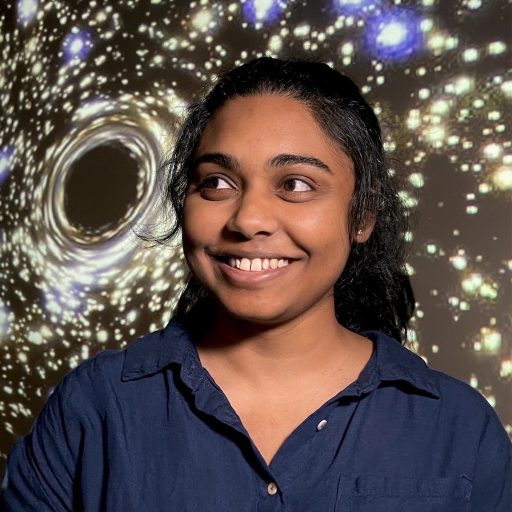
OTD 11 years ago we discovered an event that birthed a whole new field of astronomy ✨
Happy Birthday #GW150914! 🥳
