Grilled Cheese

ExploreLog inSign up
Terms of UsePrivacy PolicyCommunity StandardsHelpGet the app

Grilled Cheese is a product of Village Compute

Version devBuilt at: 2026-10-10 01:38:52 EDT

Explore

PostsPeople
LatestRanked
@anthonymajanlahti.bsky.socialOct 7, 2026, 9:39 PM

For #ReliefWednesday, this C5 BCE Athenian stele is a physical fragment of Phidian brilliance and a historical fragment of the dispersed Giustiniani collection. Breakage stimulates the imagination. As Sondheim wrote: "Nothing's changed / Only maybe slightly rearranged." #AncientBluesky 🏺

ATHENIAN FUNERARY RELIEF OF A HORSEMAN, C. 430-420 BCE. MUSEO GREGORIANO PROFANO

A fragmentary marble funerary relief showing a bearded man in profile facing right, holding the reins of a horse. The man wears an exomis, leaving his right shoulder bare. The heavily muscled horse occupies the right side, its mane carved into crisp ridges. The jagged edges highlight its breakage. The carving radiates the influence of Phidias, echoing the Parthenon. Top right is the engraved mark "1823.C.C. 30", struck when the Cardinal Camerlengo rescued this piece for the Vatican following the dispersal of the C17 Giustiniani collection. This physical fragmentation mirrors the scattering of that great collection. While we deplore such losses, breakage stimulates our imaginations. Dispersal rearranges fragments into new contexts, creating a new kaleidoscopic vision of works of art. To quote Sondheim: "Everything's different / Nothing's changed / Only maybe slightly rearranged."
@bwallower.bsky.socialOct 7, 2026, 4:25 PM

for #ReliefWednesday !

@oz-of-the-ancients.bsky.socialOct 7, 2026, 8:29 AM

A dog(?) riding an ox atop two pillars... 🤔 Is anyone more familiar with Romano-Celtic mythology than me? I'm not sure what this could be!

This is the other side of the cavalryman stele I posted last week for #ReliefWednesday

📍 1st century CE, found near Burgos, northern Spain

🏺 #archaeology

A roughly circular stone disc with the images of a cow with large horns, and what may be a dog, carved in the centre. Held on a cross-shaped museum stand in the middle of a room
@observethedate.bsky.socialOct 7, 2026, 7:21 AM

Wednesday

#WednesdayGreen
#AquilineWednesday
#BookshopWednesday
#EgyptologyWednesday
#GothicWednesday
#HillfortsWednesday
#HollowayWednesday
#WaterTowerWednesday
#LegendaryWednesday
#ReliefWednesday
#RoseWednesday

@romansites.bsky.socialSep 30, 2026, 8:28 PM

A look at the Yorkshire Museum's excellent Roman collection: inscriptions, mosaics and more!
Pics: dedication to Serapis and Four Seasons mosaic (winter) (📷 my own 2026)

New blog at: visiting-roman-sites.blogspot.com/2026/09/york...

#ReliefWednesday #MosaicMonday (late entry) #RomanBritain

@anthonymajanlahti.bsky.socialSep 30, 2026, 7:12 PM

Poisoned Victory. This week's #ReliefWednesday is a pedestal from the demolished #ArcusNovus of #Diocletian in #Rome, with a winged #Victory that flew off to #Florence when its owner became Grand Duke after the sudden death of his brother. #AncientBluesky 🏺

RELIEF OF WINGED VICTORY FROM THE ARCUS NOVUS, C. 303 CE. BOBOLI GARDENS, FLORENCE

A carved marble pedestal stands in the Boboli gardens. The primary face features a high relief of a standing winged Victory holding a laurel wreath and a palm frond. A palm tree grows at her feet. On the left panel stands a male figure in a helmet and cloak, one of the Dioscuri. Diocletian built the Arcus Novus to mark twenty years of rule and ten of his tetrarchy. Demolished in 1491, this piece was bought by Cardinal Ferdinando de' Medici for his Villa Medici on the Pincio, where other reliefs from the arch remain embedded in the garden façade. After his brother the Grand Duke of Tuscany and his wife Bianca Cappello mysteriously died of arsenic poisoning, Ferdinando flung his cardinal's hat into a bed of nettles and rushed back to Florence as the new Grand Duke, bringing his collection of antiquities with him. A victory indeed.
@alisonfisk.bsky.socialSep 30, 2026, 4:46 PM

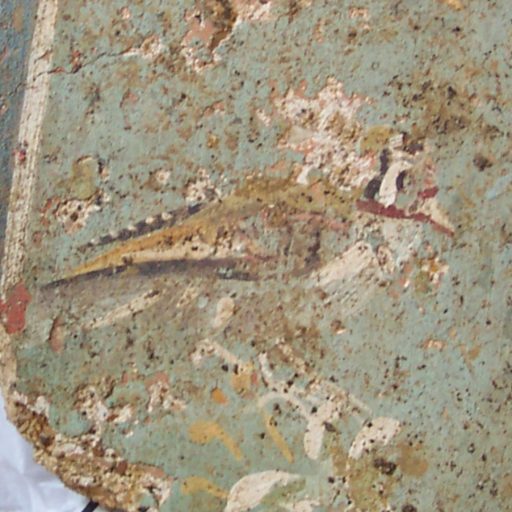
Fabulous fragment of an ancient Egyptian wall relief with three bears and an oil jar.

The paint has survived some 4,500 years!

Limestone relief from the Pyramid Temple of Sahure, Old Kingdom, 5th Dynasty, c. 2496-2483 BC. Neues Museum, Berlin 📷 by me

#ReliefWednesday
#Archaeology

My photo shows a circa 4,500-year-old limestone relief with some well-preserved paint in places, from the funerary temple of Sahure at Abusir, measuring 39 × 35 × 8.5 cm. It shows three bears (partial view only) and a tall one-handled pottery vessel, across two registers. The upper register at left, shows the two leds and hindquarters of a bear, and at right, a bear’s lowered head, chest, and foreleg, painted mid-brown. The lower register at left shows a tall, dark-reddish-brown pottery vessel with a long neck and single handle, and at right, the lowered head, neck, shoulder, and top of foreleg of a dark-brown bear. The bears wear collars tethered by ropes to looped fixtures in the ground. The fragment comes from a wall scene depicting tributes from the Levant. Bears were not native to Egypt. The bears represented are Syrian brown bears  (Ursus arctos syriacus), which were quite common in Levantine mountain regions in antiquity. They were kept as exotic animals in enclosures by Egyptian kings, and also hunted.
@oz-of-the-ancients.bsky.socialSep 30, 2026, 8:14 AM

A fabulous Romano-Celtic relief of a cavalryman from northern Spain, 1st century CE

#ReliefWednesday

It was found near the Roman town of Clunia Sulpicia, one of the most important in northern Hispania

📍 Burgos Museum, Spain

📸 Me

🏺 #archaeology #ancientbluesky

A disc-shaped carved stone object with the carved relief of a cavalryman with spear and shield on a horse galloping, held on an orange museum stand in the centre of an exhibition hall
@observethedate.bsky.socialSep 30, 2026, 6:58 AM

Wednesday

#WednesdayGreen
#AquilineWednesday
#BookshopWednesday
#EgyptologyWednesday
#GothicWednesday
#HillfortsWednesday
#HollowayWednesday
#WaterTowerWednesday
#LegendaryWednesday
#ReliefWednesday
#RoseWednesday

@anthonymajanlahti.bsky.socialSep 23, 2026, 6:41 PM

A roar of loneliness. For #ReliefWednesday, this beautiful late C4 BCE Etruscan terracotta askos. Its deeply modelled mane echoes the frescoes of the François Tomb where it was found. The tomb's dispersion proves that scattering a collection destroys its context. #AncientBluesky 🏺

ZOOMORPHIC LION ASKOS FROM THE FRANÇOIS TOMB, LATE C4 BCE. VILLA GIULIA, ROME

A terracotta vessel shaped like a crouching and snarling lion, resting on a narrow black-glazed base decorated with a wavy pattern. The surface combines painted and heavily modelled relief-like decoration, featuring deep tongue-shaped locks forming the mane and short hatched brown brushstrokes indicating the hide. The open mouth ingeniously serves as a secondary pouring spout. Discovered in 1857 in Vulci, this beautiful object is currently on loan from the British Museum, serving as a stark reminder of the tragic dispersion of the grave goods of the François Tomb. While the famous C4 BCE frescoes were stripped from the tufo walls, objects like this askos were scattered through sales to foreign collectors and institutions. This permanent dismemberment of a unified context is the curse of Italian cultural patrimony. It mirrors the fate of medieval polyptychs broken into isolated panels, Roman mosaics ripped from their architectural settings, monastery libraries sold off piecemeal, and intact family archives pillaged for individual gain. When private greed triumphs over the public good, the original meaning of these masterpieces is gravely diminished and the connective tissue of our history is lost.
@partialhistorians.bsky.socialSep 23, 2026, 9:13 AM

This pastel colourisation may less vibrant than the original finish, but it is gorgeous in its own way. #ReliefWednesday

@archaeohawke.bsky.socialSep 23, 2026, 7:29 AM

#ReliefWednesday

#Battle between #Romans and
Dacians (detail), Column of Trajan, dedicated 113 C.E.,
(📸 S. Zucker, CC BY-NC-SA 2.0)
#Roman #Art #History

@observethedate.bsky.socialSep 23, 2026, 6:56 AM

Wednesday

#WednesdayGreen
#AquilineWednesday
#BookshopWednesday
#EgyptologyWednesday
#GothicWednesday
#HillfortsWednesday
#HollowayWednesday
#WaterTowerWednesday
#LegendaryWednesday
#ReliefWednesday
#RoseWednesday

@anthonymajanlahti.bsky.socialSep 16, 2026, 7:55 PM

The cuckoo in the nest. For #ReliefWednesday we have the magnificent Ara Casali from the late C2 CE, now in the #VaticanMuseums. Its reliefs show the domino effect of myths that led to the founding of #Rome. But the name of the dedicator is a later insertion. #AncientBluesky 🏺

ARA CASALI, C. 170-190 CE. VATICAN MUSEUMS

A richly carved marble altar showing the front and right side. On the front, a circular wreath encloses a dedication by Tiberius Claudius Faventinus from c. 230 CE, carved into an erased surface likely resulting from the Severan purges of the 190s CE. Above and below this palimpsest are reliefs of Sol and the lovers Mars and Venus. The altar operates like clockwork to narrate Roman destiny. The visible right side and unseen left side feature scenes of the Trojan War, leading to the inevitable conclusion on the unseen back depicting the discovery of Romulus and Remus. This repurposed monument was a happy purchase for Faventinus, allowing him to benefit from an implied connection to the first imperial house. The Julio-Claudians famously claimed descent from both Mars, via Rhea Silvia, and Venus, the divine ancestress of the Julian line.
@equipmentroman.bsky.socialSep 16, 2026, 3:01 PM

What's the point of #ReliefWednesday? Well, this may be it (pun wholly intentional): a depiction of a dagger, scabbard, belt with apron straps, and a book of writing tablets (and an accompanying stylus?) on a block from Pula (HRV).

Relief depicting a dagger and scabbard attached to a belt and belt plates and four straps of an apron, as well as a book of writing tablets and, possibly, a stylus. Image: JCNC
@antiquity.ac.ukSep 16, 2026, 12:45 PM

#ReliefWednesday relief on the entrance to a tomb in Late Kofun period (6th–7th centuries AD) Japan, depicting a human figure with a bow.

Rendered with outstretched arms, it seems to symbolically stand between the entrance and the visitor.

🆓 doi.org/10.15184/aqy...

🏺 #Archaeology

Left: photograph of a cave, with a relief engraved to the left of the entrance. Right: illustration of the relief, showing a human figure holding a bow.
@observethedate.bsky.socialSep 16, 2026, 7:37 AM

Wednesday

#WednesdayGreen
#AquilineWednesday
#BookshopWednesday
#EgyptologyWednesday
#GothicWednesday
#HillfortsWednesday
#HollowayWednesday
#WaterTowerWednesday
#LegendaryWednesday
#ReliefWednesday
#RoseWednesday

@kpw1453.bsky.socialSep 16, 2026, 6:01 AM

Gravestone fragment showing a hound chasing a hare from Roman Bath (Aquae Sulis). Now part of the museum collections at The Roman Baths in Bath. 📸 My own. #ReliefWednesday #RomanBritain

@followinghadrian.bsky.socialSep 9, 2026, 7:21 PM

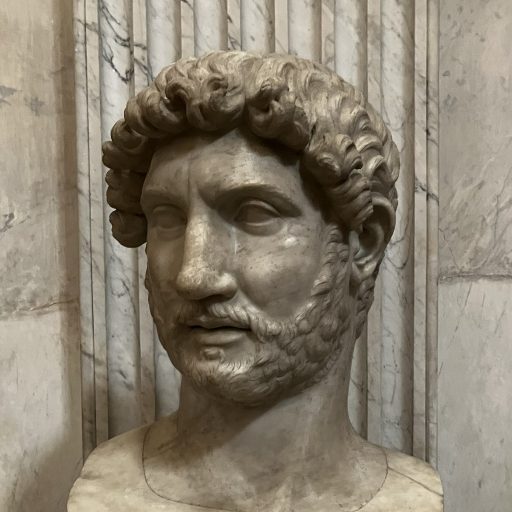
#ReliefWednesday - Marble relief depicting Antinous as Silvanus, harvesting grapes with a dog at his side. Antinous wears a pine wreath and the exomis (Greek tunic) and carries a pruning hook. The maker's name is inscribed on the altar: 'Antonianos of Aphrodisias made this'.

@anthonymajanlahti.bsky.socialSep 9, 2026, 2:01 PM

The bicameral mind. For #ReliefWednesday, a late antique #ivory #diptych in the #Bargello. The left panel shows St Paul on #Malta, complete with horrified bystanders reacting to a viper biting his hand. On the right, Adam is rendered as a classical pagan hero. #AncientBluesky 🏺

IVORY DIPTYCH WITH SCENES OF SAINT PAUL AND ADAM, C. 400 CE. MUSEO NAZIONALE DEL BARGELLO, FLORENCE

This intricately carved late antique ivory diptych presents what appears to modern eyes as a stylistic clash, but which actually reflects a perfectly coherent worldview. The left panel features dynamic, chaotic scenes from the life of Saint Paul, centring on his time on Malta where he shakes a viper into a fire while bystanders react with visceral horror. This dramatic New Testament narrative of the fallen world contrasts sharply with the right panel, which displays Adam in the Garden of Eden surrounded by a peaceful menagerie. Adam is rendered as a classical heroic nude, his static and idealised pose mirroring pagan depictions of Orpheus. To the late antique mind, there was no dissonance in pairing active Christian miracle stories with calm classical imagery. The diptych effortlessly employs established classical artistic vocabulary to convey a unified Christian dogmatic message, visually arguing that the ultimate goal of New Testament salvation is a return to the pre-fall harmony of Eden.
Load more