Grilled Cheese

ExploreLog inSign up
Terms of UsePrivacy PolicyCommunity StandardsHelpGet the app

Grilled Cheese is a product of Village Compute

Version devBuilt at: 2026-10-10 01:38:52 EDT

Explore

PostsPeople
LatestRanked
@dan-b-artist.bsky.socialOct 9, 2026, 7:00 PM

Another one on the slab!

#watercolours #pigment #handmadewatercolors

@patrickkapty.bsky.socialOct 8, 2026, 5:25 PM

Face Hacha
carved stone, pigments
c. 550-950 CE
Veracruz culture
Veracruz, Mexico

From the estate of William Spratling, Taxco.

#handmade #carved #stone #pigment #cinnabar #face #hacha #Veracruz #culture #Mexico #Mesoamerica #precolumbian #prehispanic #ancientart #art #sculpture #precolumbianart


@dustcircle.bsky.socialOct 8, 2026, 2:52 PM

Why are some #animals so #colorful?
Blame this #pigment.

www.popsci.com/science/why-...

@dan-b-artist.bsky.socialOct 5, 2026, 4:41 PM

Here's another new watercolor!

This is Manganese Brown. A beautiful chocolate brown perfect for every palette.

#watercolor #pigment #handmadepaint #handmadewatercolors

@patrickkapty.bsky.socialOct 2, 2026, 12:21 PM

Warrior Face
terracotta, pigment
c. 1200-1600 CE
Muisca culture
Colombia

#handmade #terracotta #pigment #warrior #face #head #Muisca #culture #Colombia #precolumbian #prehispanice #art #ancientart #sculpture #precolumbiansculpture #religion #ritual #precolumbianColombia #indigenousColombia #ceramic

A Muisca ceramic head originating from present-day Colombia, dating between A.D. 1200 and 1600.
Crafted by the indigenous Muisca culture of the central Colombian highlands.
Made of clay and paint, it features distinct slit eyes, a slit mouth, a sharp nose, and an ornately decorated headdress or crown.
This artifact was not an isolated mask; it was originally part of a larger ceramic figure that stood roughly three-and-a-half feet tall. It depicts a high-ranking individual, likely a warrior or chieftain.
The Muisca Civilization was an advanced indigenous pre-Columbian culture that flourished in the Altiplano Cundiboyacense of the Eastern Ranges of the Andes in central Colombia from roughly 600 to 1600 CE.
Spanned about 25,000 square kilometers in the heart of modern-day Colombia, including present-day Bogotá (which they called Bacatá).
Formed a loose confederation of sovereign polities rather than a centralized empire, led by rulers such as the zipa, zaque, and iraca.
Built circular, communal houses called bohios using wood, clay, and thatched straw rather than massive stone monuments.
Cultivated staples adapted to high altitudes, including corn, potatoes, and quinoa.
Rich in natural resources like coal, copper, emeralds, gold, and massive salt deposits.
Used blocks of salt, coal, and emeralds as a form of currency for an active barter system with neighboring groups.
Practiced polytheistic worship centered on nature deities, including Sué (the Sun) and Chía (the Moon).
Celebrated a ritual at Lake Guatavita where a leader covered in gold dust cleansed himself in the water, inspiring the European legend of El Dorado.
Created intricate votive figurines called tunjos from gold and tumbaga (a gold-copper alloy) using advanced lost-wax casting techniques.
Spoke Muysccubun, a Chibchan language that was suppressed and banned during the colonial era but leaves a lasting legacy in modern Colombian place names.
Currently housed at the National Museum of the American Indian.
@patrickkapty.bsky.socialSep 30, 2026, 4:24 PM

The King of Egypt as a Lion Subduing a Nubian
carved gold, Egyptian Blue pigment
c. 1279-1213 BCE
Reign of Ramesses II
Ancient Egypt

#ancient #art #ancientart #propaganda #ancientegypt #RamessesII #ideology #conquest #newkingdom #egypt #gold #EgyptianBlue #pigment #flywhisk #whip #MetMuseum #NYC

This piece, fashioned from Egyptian Blue and gold, presents a striking image of the head of a Nubian man engulfed by the jaws of a lion.
Egyptian blue is the world's oldest known synthetic pigment, created over 5,000 years ago in ancient Egypt to mimic expensive natural stones like lapis lazuli and turquoise. Made by heating a precise mixture of silica (sand), copper (like malachite or metal filings), calcium (lime/chalk), and an alkali flux (such as natron or plant ash). Heated in a kiln at temperatures between 800°C and 1000°C (about 1,470°F to 1,830°F) for hours to form a glassy blue compound, which was then cooled, crushed, and ground into a powder paint.
Though compact in scale, the piece is monumental in its ideological intent. Most likely the terminal of a ceremonial fly whisk or whip, the handle is more than decorative; it is a potent visual expression of royal power and Ancient Egyptian supremacy.
The lion, sculpted in lustrous gold and detailed with stylised precision, symbolises the pharaoh himself, a living god and the ultimate authority over Egypt and its dominions. Its grip upon the Nubian's head is not merely violent but
symbolic, embodying Egypt's dominance over its southern neighbours and reiterating the pharaoh's divine role as protector and conqueror.
The object is said to originate from Qantir, in the eastern Delta region of Egypt, the site of ancient Pi-Ramesses, the grand capital city established by Ramesses II. In the king's day, this area would have been a flourishing centre of political power, military activity, and artistic production. Situated strategically near the route to the Levant, Pi-Ramesses was both a royal residence and a critical base for Egypt's northern campaigns. Its palatial complexes, temples, and extensive workshops made it one of the most
important urban centres of the New Kingdom.
This object is now on display at the Met Museum, NYC, after being gifted by the Norbert Schimmel Trust in 1989.
@natuurlijkinge.eurosky.socialSep 27, 2026, 5:26 PM

Blauwgroen pigment van #wede wordt nog een paar keer gespoeld 😄🙌 succes! Morgen laat ik het drogen.

Was uiteindelijk een dag te lang gefermenteerd denk ik, waardoor het van helderblauw naar blauwgroen ging. Maar, het is een hele mooie #kleur! En een leuke eerste ervaring met het #indigo #pigment 💙

@natuurlijkinge.eurosky.socialSep 17, 2026, 1:07 PM

Weet je nog mijn post van een tijdje terug, waarin ik vertelde dat ik mijn #pigmenten in #bijenwas zou testen op #kleurechtheid? Na weken in de volle #zon zijn deze #kleuren vrijwel gelijk gebleven! Heel leuk om te weten, vooral van de #meidoorn.
De rest werd prachtig #pastel 😉

#naturaldye #pigment

Een papiertje op tafel met daarop geschreven de meest stabiele pigmenten in bijenwas. 

De pigmenten zijn gemaakt van avocado schil en pit, meidoorn tak en bloesem, vlinderstruik takken en treurwilg.

Rechts op het papiertje zie je 9 blokjes gekleurde bijenwas. Deze zijn gekleurd met de genoemde natuurlijke pigmenten. Deze pigmenten heb ikzelf gemaakt door het lakepigment proces.
@13mtm80-designs.bsky.socialSep 8, 2026, 6:59 PM

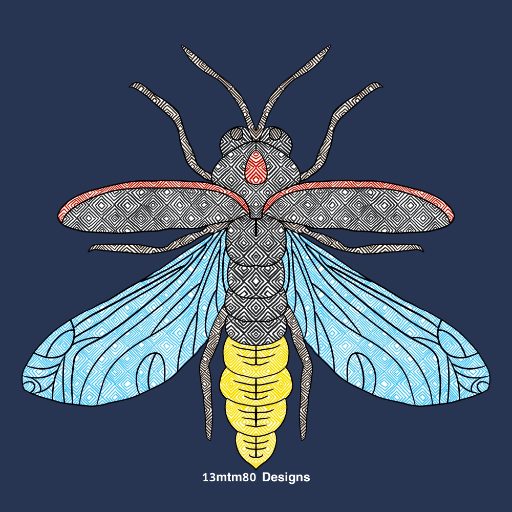
Whenever possible I collect my watercolor/gouache water to save and reuse the pigments.

#paint #pigment #watercolor #artist

@cocrco.bsky.socialSep 7, 2026, 1:00 AM

Maya Orange

マヤオレンジは中米マヤ文明の遺跡壁画で使われた顔料に由来する色。鉄分を含む土から作られ、数千年経た今も鮮やかさを保つ驚異的な耐久性が特徴です。

cocrco.com/colors/CC6600

#cocrco #color #pigment #archaeology #durability

@minouette.bsky.socialSep 5, 2026, 7:31 PM

Vote #Orpiment in Round 1 Match 5 of the #MinCup26!

The storied pigment is found in the great Hokusai’s woodblock prints, and those of other masters of the Edo era. Cuprite could never.

#scicomm #pigment #arthistory #printmaking #minerals

From: Natural and synthetic arsenic sulfide pigments in Japanese woodblock prints of the late Edo period

Left: Ono Waterfall on the Kisokaidō (Kisokaidō Ono no bakufu), from the series A Tour of Waterfalls in Various Provinces (Shokoku taki meguri) by Katsushika Hokusai. The Metropolitan Museum of Art, 14 3/4 × 10 1/4 in., Accession Number JP2925. Henry L. Phillips Collection, Bequest of Henry L. Phillips, 1939. This print is part of Set A. (right) Ono Waterfall on the Kisokaidō (Kisokaidō Ono no bakufu), from the series A Tour of Waterfalls in various provinces (Shokoku taki meguri) by Katsushika Hokusai. The Metropolitan Museum of Art, 14 7/8 × 10 5/16 in., Accession Number JP1082. This print is part of Set B

These beautiful landscape woodblock prints contain orpiment.
@ismaileyesurgery.bsky.socialSep 3, 2026, 10:30 AM

@#pigment #cornea #skill #lens #IOL #exchange