The GHI London is a research centre supporting and connecting history students and scholars from Britain and Germany. One of 11 independent research institutes of the @maxweberstiftung.de.
Open Mo-Fri, 9.30am-5pm


@ghilondon.bsky.social
The GHI London is a research centre supporting and connecting history students and scholars from Britain and Germany. One of 11 independent research institutes of the @maxweberstiftung.de.
Open Mo-Fri, 9.30am-5pm
@ghilondon.bsky.socialdynamics in society, and point to policies that work or that predictably lead to disasters.
#medievalisms #medievalhistory #middleages #modernity #historicalresearch #skystorians
8/8
@ghilondon.bsky.socialof the Middle Ages to the general public – including politicians – that can change their views and actions in today’s world. Thus, the study of migration; the integration or exclusion of minorities; strategies of legitimation; or ideas of gendered roles illuminate illuminate the possible 7/8
@ghilondon.bsky.socialTherefore, the tasks and responsibilities of medievalists for society today and in the future are many. These include debunking medieval myths that play an increasingly important role in the political arena; providing relevant material that could inform social policy; communicating the realities 6/8
@ghilondon.bsky.socialof the Middle Ages in schools in the UK. Distorted medieval history is used for political purposes, witness, for example, the rhetoric of Putin about Ukraine, Viktor Orbán about the “millennial role” of Hungary, and countless misuses of medieval examples by neo-Nazis on social media. 5/8
@ghilondon.bsky.socialMedieval history has an especially bad reputation as arcane and futile, and in everyday language, particularly brutal or horrific events are referred to as “typically medieval”. Despite high-quality research on diverse topics, there is a tendency to severely restrict or even omit the teaching 4/8
@ghilondon.bsky.socialThe humanities in general, and history in particular, are increasingly written off as useless, unlike the natural sciences, or at best seen as providing “transferable skills”. The Middle Ages at once suffer from neglect and the wrong kind of relevance. 3/8
@ghilondon.bsky.socialParticipants: Eva Haverkamp-Rott (LMU Munich), Nora Berend (Cambridge) and Emma Bermond, Timur Guselnikov, John Hinderer, Isabel Kimpel, Davide Polito, Astrid Riedler-Pohlers, Cynthia Stöckle 2/8
@ghilondon.bsky.socialJoin us at 11:30am on 28 October for a Roundtable Discussion on "The Relevance and Modernity of the Middle Ages"! Sign up now: www.ghil.ac.uk/event...
1/8

 @lbilondon.bsky.socialReposted by @ghilondon.bsky.social
On 22 October, Alexander Walther will explore Jewish Holocaust memory and antifascism in the GDR, drawing on personal documents and the work of Arnold Zweig and Helmut Eschwege.
Free lecture, in person and online: lbilondon.ac.uk/walther-26

 @dehypotheses.bsky.socialReposted by @ghilondon.bsky.social
Why did globalisation transform Bombay and Shanghai’s hinterlands so differently? Xinge Zhai finds an answer in an unlikely source: a giant 1870 railway shareholder register in London. ⬇️
@ghilondon.bsky.social🖼 © The Trustees of the British Museum. Shared under a Creative Commons Attribution-NonCommercial-ShareAlike 4.0 International (CC BY-NC-SA 4.0) licence. 3/3
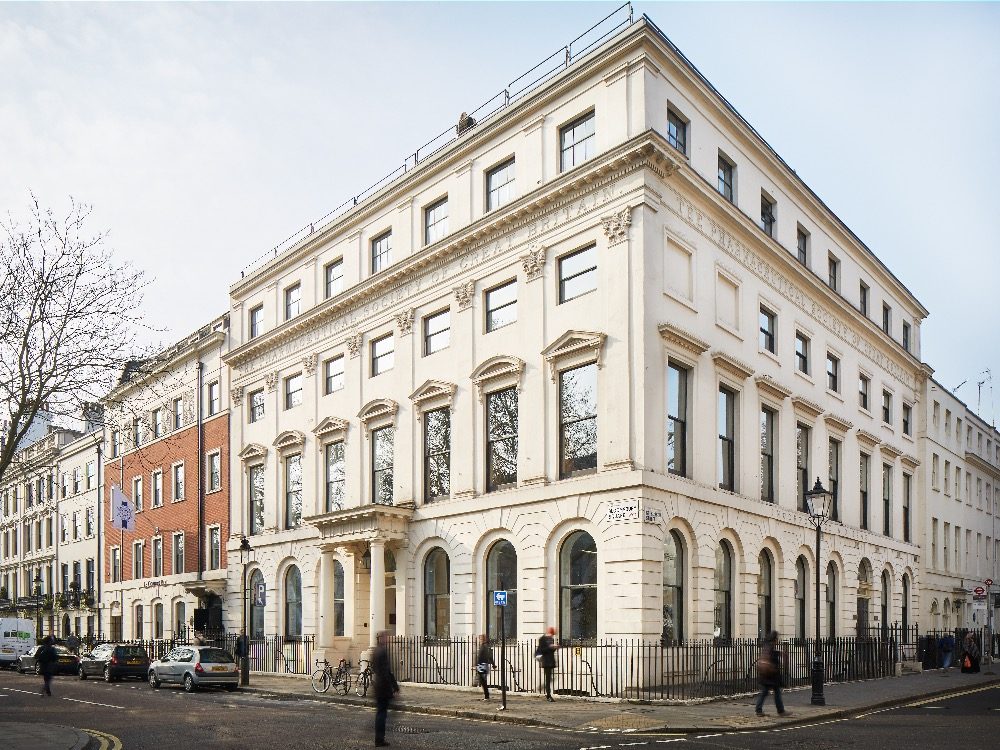
@ghilondon.bsky.socialDuring the nineteenth century, Bloomsbury developed into an academic quarter, and from 1841 to 1976 No. 17 was leased to the Pharmaceutical Society of Great Britain.
#GHIL50 #Bloomsbury #LondonArchitecture #AcademicLondon #HistoricBuildings
2/3

 @ghilondon.bsky.social
Our third anniversary post explores the history of the GHIL’s home at 17 Bloomsbury Square. 🏛️ Laid out in the mid-seventeenth century as one of London’s first formal garden squares, the corner house at No. 17 was remodelled by John Nash in 1777–78. 1/3
 @ghilondon.bsky.social
The historic building was purchased in February 1980, leased to the German Historical Institute, and officially opened on 2 December 1982.
#GHIL50 #BritishGermanRelations #AcademicCooperation #LondonHistory #ResearchInstitute
2/2

 @ghilondon.bsky.social
In the next part of our anniversary series, we will take a look at the GHIL'searly years (1976–1982), from the appointment of its first directors to the acquisition of its permanent home at 17 Bloomsbury Square in 1982. 1/2


 @royalhistsoc.orgReposted by @ghilondon.bsky.social
'History and Archives in Practice' 2027: calls for panels now invited for our annual meeting of historians and archivists, with @ihr.bsky.social and TNA. Closing date: 16 October
HAP27 focuses on connecting past and future with sessions on advocacy and applied history bit.ly/3RGHbWy #Skystorians
@ghilondon.bsky.social#music #musichistory #medievalhistory #middleages #historicalresearch
🖼 Courtesy British Library Royal 15 E. IV
4/4
@ghilondon.bsky.socialGHIL Fellow Thomas Kaal (Thomas H Kaal) investigates what these debates reveal about the relationship between sound, religious belief and devotional life in late medieval England.
Follow the links to find out more about his research:
@ghilondon.bsky.socialAt a time when literacy was limited, many people encountered religious texts and ideas through hearing, whether in sermons and hymns, during processions or through the ringing of church bells. Yet the appropriate use of sound and music in worship was also fiercely debated. ⛪️ 🔔 2/4
@ghilondon.bsky.socialToday is #InternationalMusicDay, a celebration of the place of music in societies around the world. But how did people experience music in the past? 🎶 In the Middle Ages, sound was a fundamental part of religious and everyday life. 1/4
