// Radical History in a Digital Era // https://www.historyworkshop.org.uk/ //
|| enriching the work of History Workshop Journal || https://academic.oup.com/hwj/ ||
\\ continuing the democratising spirit of the History Workshop movement \\


@historyworkshop.org.uk
// Radical History in a Digital Era // https://www.historyworkshop.org.uk/ //
|| enriching the work of History Workshop Journal || https://academic.oup.com/hwj/ ||
\\ continuing the democratising spirit of the History Workshop movement \\
@historyworkshop.org.ukAs managing editor, Marral also helped to guide History Workshop through our celebration of the hundredth issue of HWJ. In this article, Marral considers what the archives of the History Workshop movement say about the time and place in which it emerged.
@historyworkshop.org.ukMarral also edited Rethinking Internationalisms, which recovered the voices of artists, farmers, peace activists and pilgrims as agents of global history. In this piece, Su Lin Lewis and Ben Thomas explore how Afro-Asian solidarity once informed a vibrant musical scene.
@historyworkshop.org.ukMarral's series, Radical Horizons, built on this work by examining how different revolutionary groups have imagined a better world - and how activists have used those hopeful futures to guide their own political projects.
@historyworkshop.org.ukWe're also celebrating the work of marral, who has helped to steer History Workshop as both an editorial fellow and a managing editor. Marral's work is rooted in global activist histories, and particularly the ties between Arab and Iranian revolutionaries.
@historyworkshop.org.ukCelebrating fifty years of History Workshop Journal also encouraged us to look to the future. In this article, Beckie reflects on how History Workshop's founding ideal of the past as 'common property' informs her work.
@historyworkshop.org.ukBeckie extended her fellowship to coordinate our celebration of the hundredth issue of History Workshop Journal. In this podcast with Sally Alexander, Jeffrey Weeks and Vivien Chan, the speakers discuss the origins of the History Workshop movement and its echoes today.
@historyworkshop.org.ukBeckie's series, Reimagining Disability, continued this work by pushing past medicalising narratives and considering the political, cultural, and economic lives of disabled people - from deaf communities in 1930s China to zine-makers in the contemporary UK.
@historyworkshop.org.ukAfter three brilliant years, @beckierutherford.bsky.social's fellowship is coming to an end. A historian of health, gender, and activism in modern Britain, Beckie has edited a selection of incredible articles focused on the experiences and ideas of disabled people.
@historyworkshop.org.ukIt's the beginning of a new academic year at History Workshop - and that means some changes to our team. Over the course of today, we'll be saying farewell to our two departing fellows by celebrating the work that they've done at the magazine.
 @historyworkshop.org.uk
'[The] aim was not to deny or replace disabled people’s decision-making, but to recognise their legal capacity and provide the support they might need to exercise it themselves.' Paul van Trigt on the 2006 Convention on the Rights of Persons with Disabilities.
 @marralsham.bsky.socialReposted by @historyworkshop.org.uk
Such a brilliant piece by @paulvt.bsky.social for the Radical Horizons series!
 @beckierutherford.bsky.socialReposted by @historyworkshop.org.uk
"A radical horizon instead invites us to question the limit: it asks if our horizon is indeed the limit & if we could situate it somewhere else. The history of disability offers a particularly relevant & interesting way into this question." So good to see Paul's brilliant work in Radical Horizons!
@historyworkshop.org.ukThis article is part of Radical Horizons, a new History Workshop series. Read more here:
@historyworkshop.org.ukHow have disabled people and their allies transformed the liberal idea that the human person is autonomous?
Paul van Trigt on the unintended consequences of Article 12 of the 2006 Convention on the Rights of Persons with Disabilities.
 @caitbeaumont.bsky.socialReposted by @historyworkshop.org.uk
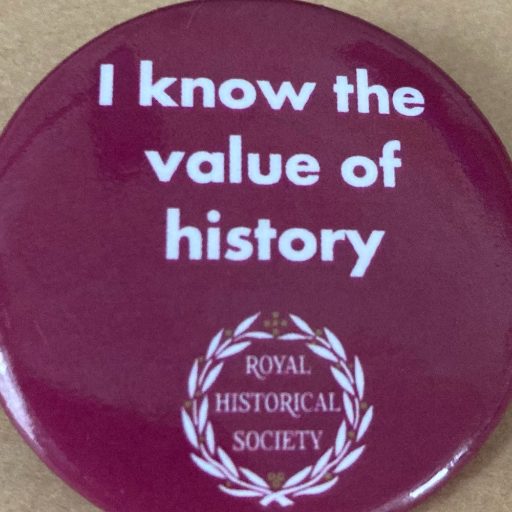
It is amazing what you find when clearing out your office that holds 28 yrs of ‘work’ archive. This includes all my own stuff but also items passed onto me by colleagues who left before me. Like this fab find 🤩. @historyworkshop.org.uk pamphlet no.2, 1970 by the one & only Sally Alexander ❤️.
 @historyworkshop.org.uk
That's so wonderful!
 @alexjwhite.bsky.socialReposted by @historyworkshop.org.uk
Such a fascinating piece on labour, capital, and the edges of empire during the Great Depression. I really feel like it's unpacking the roots of a form of inequality we take for granted today.
@historyworkshop.org.ukReposted by @historyworkshop.org.uk'A narrow, uneven strip of land [was] crowded with huts, machinery, and areas awash with the organic detritus from lobster processing. Just half a dozen wooden buildings housed the island’s 90 to 100 workers.' Andy Drummond on labour and capital on St Paul's Island.
@historyworkshop.org.uk'A narrow, uneven strip of land [was] crowded with huts, machinery, and areas awash with the organic detritus from lobster processing. Just half a dozen wooden buildings housed the island’s 90 to 100 workers.' Andy Drummond on labour and capital on St Paul's Island.
@historyworkshop.org.ukReposted by @historyworkshop.org.ukBetween 1930 and 1931, forty-seven people died on a remote fishing station in the Indian Ocean. Andy Drummond examines what their lives and deaths reveal about capitalism and accountability in France's colonial empire.