
Grilled Cheese

ExploreLog inSign up
Terms of UsePrivacy PolicyCommunity StandardsHelpGet the app

Grilled Cheese is a product of Village Compute

Version devBuilt at: 2026-10-18 01:16:41 EDT

PhotosVideosAllPeople
LatestRanked
Load more
@alisonfisk.bsky.socialOct 15, 2026, 6:20 PM

1,900 year-old Roman birthday invitation! 🎉 🥳

From Claudia Severa to her friend Sulpicia Lepidina, it’s one of the earliest known examples of writing in Latin by a woman!

Found at Vindolanda fort, it gives a glimpse of social life on Rome’s northern frontier! 📷 me

#RomanFortThursday
#Archaeology

My photo shows a Roman wooden writing tablet (Vindolanda tablet no. 291) with a birthday invitation written in ink. The invitation is from Claudia Severa, wife of Aelius Brocchus, to Sulpicia Lepidina, wife of Flavius Cerealis, the commander at Vindolanda fort on the northern frontier of Britannia. The writing tablet is made up of two square, wafer thin, pieces of wood, displayed side by side. Each piece is now somewhat fragmentary, with pieces of wood missing in places. The wood is mid-brown in colour with dark text, and is displayed on a cream mount. The text is written in cursive Latin. Most of the text was written by a scribe, but Claudia adds in her own hand “I shall expect you, sister. Farewell, sister, my dearest soul, as I hope to prosper, and hail” making this one of the earliest known examples of writing in Latin by a woman. Dimensions: Width 22.3 cm × Height 9.6 cm. Dated c. 97 - 103 AD. From Vindolanda Fort, Northumberland. Now in the British Museum collections.
@katesfwriter.bsky.socialOct 15, 2026, 5:08 PM

Finally got to see Burgh Castle, one of 3 Saxon Shore Roman forts on the coast of Norfolk. 9 forts dot the South East Coast. Burgh was a harbour for sea-going ships and a town (vicus) too, as well as military base in the 3rd C AD, and beyond.
📷 my own
#RomanFortThursday #Archaeology #RomanBritain

Photo, no descriptionPhoto, no descriptionPhoto, no descriptionPhoto, no description
@lindsaypowell.bsky.socialOct 15, 2026, 3:07 PM

“Their exercises are unbloody battles, and their battles bloody exercises.” (Often translated as bloodless battles and bloody drills).
— Flavius Josephus, The Jewish War 3.5.1.
Photo: The Ermine Street Guard.
#RomanFortThursday

“Their exercises are unbloody battles, and their battles bloody exercises.” (Often translated as bloodless battles and bloody drills).
— Flavius Josephus, The Jewish War 3.5.1.
Photo: The Ermine Street Guard.
#RomanFortThursday
@raypurvis.bsky.socialOct 15, 2026, 1:09 PM

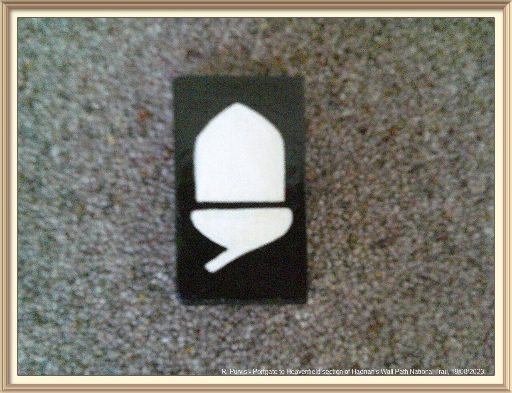
Barracks at Chesters Roman Fort, (Cilurnum). #hadrianswall #followtheacorn #RomanFortThursday

Remains of the Barracks at Chesters Roman Fort, (Cilurnum).
@durotrigesdig.bsky.socialOct 15, 2026, 11:09 AM

Bonus picture of SEGONTIVM / Caernarfon for #Romanfortthursday

Tessa (Verney) Wheeler and Mortimer ('Rik') Wheeler take some well-dressed guests on a tour of their excavations at the Roman fort in 1923

For more see: museum.wales/blog/1847/Ca...

#Archaeology

Black and white photo from the 1920s showing archaeologists Mortimer Wheeler (left) and Tessa Wheeler (right) showing guests round an excavation
@durotrigesdig.bsky.socialOct 15, 2026, 11:00 AM

4th Century usurper Magnus Maximus has strong folklore links with Segontium / Caernarfon, appearing as Macsen Wledig in the Mabinogion

His legend was later claimed by Plantagenet king, Edward I who built his own Roman-inspired fortress nearby

📷 visit 2008

#RomanFortThursday

The impressive masonry walls of Caernarfon Castle in Wales Edward I, not a nice guy, from a medieval painting
@durotrigesdig.bsky.socialOct 15, 2026, 10:56 AM

Segontium #Gwynedd remained the #Roman military hub of North Wales until the late 4th C

Its garrison *may* have been removed by Magnus Maximus, illegally proclaimed emperor in AD 383

🪙 #CNG CC BY-SA 2.5

📷 © @drtobydriver.bsky.social RCAHMWales AP_2006_3490

#RomanFortThursday

Gold coin of the Roman usurper Magnus Maximus Segontium Caernarfon remains of a Roman fort as seen from the air, overlain by a road houses and trees
@durotrigesdig.bsky.socialOct 15, 2026, 10:45 AM

Established overlooking the Afon Menai / Menai Strait and Ynys Môn / Anglesey c. AD 77, SEGONTIVM (‘forceful river’ ?) was one of a chain of forts built to control the Ordovices in North Wales. It housed 1k auxiliaries

🖼 © Alan Sorrell 1961 Ministry of Works

#RomanFortThursday

Black and white illustration of a Roman fort with the Menai Strait and Anglesey in the distance
@clairemillington.bsky.socialOct 15, 2026, 10:45 AM

This is now a #RomanFortFightThursday isn't it? I mean I'm not playing fort favourites but there are other #RomanFortThursday options available?

@durotrigesdig.bsky.socialOct 15, 2026, 10:39 AM

Whilst it's nice this #Romanfortthursday to have news of another Roman fort in Wales we of course already have a Roman fort in Wales with strong folklore connections to Magnus Maximus / Macsen Wledig at SEGONTIVM (Caernarfon)

So not sure what the news story is 🤷‍♂️

www.theguardian.com/uk-news/2026...

@druidtombraider.bsky.socialOct 15, 2026, 10:12 AM

Contemporary reconstruction of the gyrus at Lunt Roman Fort near Coventry, courtesy of Chris McKenna (Thryduulf). #RomanFortThursday #RomanBritain #RomanArchaeology #Archaeology

Photo, no descriptionPhoto, no descriptionPhoto, no descriptionPhoto, no description
@observethedate.bsky.socialOct 15, 2026, 8:28 AM

Thursday
#AdoorableThursday
#BookologyThursday
#BridgesThursday
#FolkloreThursday
#GlassObjectThursday
#HelmetThursday
#InsectThursday
#IronworkThursday
#MetalWorkThursday
#OrchidThursday
#PubSignThursday
#RomanFortThursday
#ThatchThursday
#ThrowBackThursday
#ThursdayBins
#ThursdayChairs
#Thursgate

@kpw1453.bsky.socialOct 15, 2026, 6:11 AM

The mid-4th century remains of the Commanding Officer’s House (Praetorium) at Binchester Roman Fort (Vinovia). Located near Bishop Auckland in County Durham, the site is now managed as part of the Auckland Project. 📸 My own. #RomanFortThursday #Binchester #AucklandProject

Photo, no description
@druidtombraider.bsky.socialOct 8, 2026, 10:13 AM

Boundary wall at Hardknott Roman Fort, courtesy of Ruth Riddle. #RomanFortThursday #RomanBritain #RomanArchaeology #Archaeology

Photo, no description
@archaeohawke.bsky.socialOct 8, 2026, 10:10 AM

Starting life as a fort. Corbridge was the most northerly town in the Roman Empire and one of only two on Hadrian’s Wall, the other being at Carlisle.

The most famous finds include a hoard of Roman armour and other equipment and the stone Corbridge Lion #RomanFortThursday
#RomanBritain #Archaeology

• First Forts (c. AD 77–105): The earliest military occupation started around AD 77–83 at the nearby Red House site, followed by a permanent timber-and-turf fort built around AD 87 at the critical junction of the Stanegate road and Dere Street, guarding the River Tyne crossing. This early fort was destroyed by fire around AD 105 and subsequently rebuilt.

• Hadrian's Wall Era (AD 122 onwards): Located about 2.5 miles south of Hadrian's Wall, Corbridge lost its primary frontline defensive role after the Wall was built, though it continued to serve as a vital military supply and logistics hub.

• Transition to Town and Legionary Base (AD 160s–3rd Century): By the 160s AD, the military base was converted to support legions (such as Legions VI and XX), and a thriving civilian town (vicus) grew around it. It eventually developed into a self-governing administrative capital (civitas) and one of the most northerly urban settlements in the Roman Empire.Photo, no descriptionPhoto, no descriptionPhoto, no description
@shirleyrl.bsky.socialOct 8, 2026, 8:19 AM

#Hardnott #RomanFortThursday

Roman fory walls
@observethedate.bsky.socialOct 8, 2026, 7:08 AM

Thursday
#AdoorableThursday
#BookologyThursday
#BridgesThursday
#FolkloreThursday
#GlassObjectThursday
#HelmetThursday
#InsectThursday
#IronworkThursday
#MetalWorkThursday
#OrchidThursday
#PubSignThursday
#RomanFortThursday
#ThatchThursday
#ThrowBackThursday
#ThursdayBins
#ThursdayChairs
#Thursgate

@durotrigesdig.bsky.socialOct 8, 2026, 6:57 AM

Recreation of Richborough Roman coastal fort #Kent c AD 250

The fort enclosed an earlier triumphal arch

Anyone who's read Rosemary Sutcliff's 1959 novel *The Lantern Bearers* will know the arch probably became a signal tower

© Ivan Lapper 2001 (for the English Heritage guide)

#RomanFortThursday

Aerial reconstruction painting of a rectangular Roman fort with a large white marble arch at the centre and buildings, some being demolished, surrounding the triple ditches and sea to the left