Grilled Cheese

ExploreLog inSign up
Terms of UsePrivacy PolicyCommunity StandardsHelpGet the app

Grilled Cheese is a product of Village Compute

Version devBuilt at: 2026-10-12 04:31:30 EDT

Explore

PostsPeople
LatestRanked
@mrfw17thc.bsky.socialOct 8, 2026, 2:45 PM

Huge accomplishment and an absolutely fantastic project. And a big feather in the cap for Cardiff History!

Congratulations Esther!!

#skystorians

@uvapress.bsky.socialOct 8, 2026, 1:46 PM

Happy #pubday to "Prizefighter: Yankee Sullivan and the Hands That Built the Modern World" by Patrick Griffin!

The globetrotting champion of the oppressed who shook his fist at the world in an era of profound change

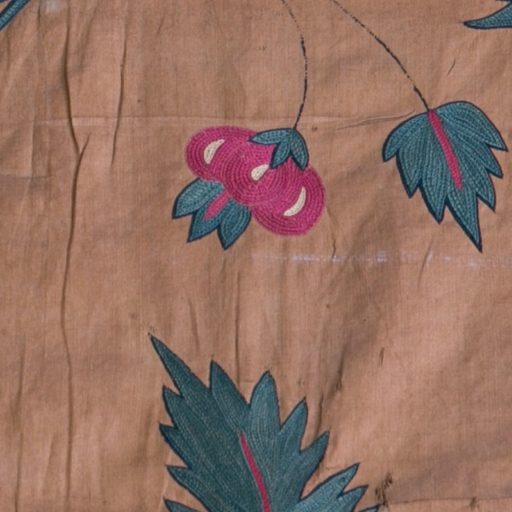
#booksky #skystorians #readUP

upress.virginia.edu/title/10241/

@eicathomefinn.bsky.socialOct 8, 2026, 12:38 PM

Registration link is now available for the 1st seminar of the 2026-27 season of the IHR's London Group of Historical Geographers. Join us to explore historical geographies of skill in the past. Free, hybrid in-person/online and open to the public. #Skystorians

@ideasroadshow.bsky.socialOct 8, 2026, 11:52 AM

🚪 This door opens up to a lovely Dutch vista in the Annunciation Triptych by the Netherlandish artist Robert Campin, ca. 1427–32.

🗃️ #arthistory #skystorians 🏺 #medievalsky #Dutch #AdoorableThursday

A door that opens up to a lovely Dutch vista in the Annunciation Triptych by the Netherlandish artist Robert Campin, ca. 1427–32.
@royalhistsoc.orgOct 8, 2026, 11:03 AM

We're very pleased to welcome 213 new Fellows, Associate Fellows, Members & Postgraduate Members who join @royalhistsoc.org today: bit.ly/4zjoRD1.

Our new Fellows and Members reflect the breadth of historical research and practice: across all careers stages in the UK & worldwide #Skystorians 1/2

@mobhistory.substack.comOct 8, 2026, 10:10 AM

#OTD (Oct 08)
Events in U.S. organized crime #history.

#NewCastlePA #Detroit #Brooklyn #Pittsburgh #BuffaloNY #ProvidenceRI #NewEngland #NewJersey #NewYork #Mafia #MafiaHistory 🗃️ #Skystorians


On this date, Oct 08...
• in 1886, New York Whyos gang leader Daniel Driscoll is sentenced to death for killing Bridget 'Beezie' Garrity.
• in 1902, New York Assemblyman Tom Foley hosts a peace conference between the Eastman and Five Points gangs.
• in 1906, Pietro Romeo succumbs to gunshot wounds at New Castle PA after identifying Rocco Esposito as his killer.
• in 1918, former Giannola partner Peter Bosco is murdered at his Detroit garage.
• in 1928, Tony 'Marlow' Melillo dies in Manhattan of gunshot wounds suffered several days earlier.
• in 1930, Ignazio Lupo is thought responsible for the Brooklyn murder of Ruggerio 'Roger' Consiglio.
• in 1931, the remains of murdered Pittsburgh bootlegger Sam 'Toto' Amarosa are discovered in a roadside fire.
• in 1950, Venero Mangano of New York City is fined $200 for bookmaking.
• in 1951, thousands attend the New Jersy funeral of murdered mafioso Willie Moretti.
• in 1963, FBI surveillance overhears Buffalo crime boss Stefano Magaddino saying Joe Valachi will be murdered for informing.
• in 1968, Luigi Manocchio is charged as accessory to the April killings of Providence RI bookmakers Rudolph Marfeo and Anthony Melei.
• in 2008, A U.S. district judge reduces the prison sentence of Gaetano Milano, convicted of killing New England mafioso William Grasso.
Image of Roger Consiglio
@laurajcleaver.bsky.socialOct 8, 2026, 9:36 AM

The Research Festival @sas-news.bsky.social is underway! #Palaeography (not palaeontology) #Skystorians

@ijhs.bsky.socialOct 8, 2026, 7:23 AM

#skystorians 🗃️ #sporthistory

📍New article!

"From Shared Practises to Gendered Meanings: Girls’ Gymnastics and the Making of Femininity in Norwegian Schools, 1889–1925"

by Paal Augestad, University of South-Eastern Norway, Bø, 🇳🇴

Check it out: www.tandfonline.com/doi/full/10....
@footnotesinhistory.bsky.socialOct 8, 2026, 1:29 AM

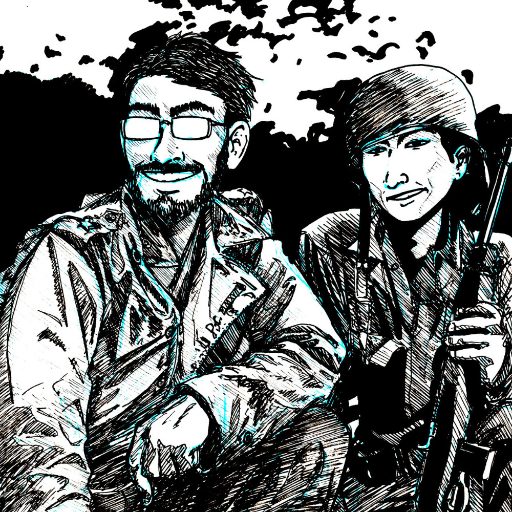
#OTD in 1944, the Seattle Times reports on a meeting of the anti-Japanese Remember Pearl Harbor League in Auburn. More than 300 attended and proposed discriminatory measures "short of violence" against any returning Japanese Americans. The group claims about 900 total members.
🗃 #skystorians

@iduhouse.bsky.socialOct 8, 2026, 1:23 AM

🖌️ Artist of the Day: M. F. Husain

M. F. Husain, also called the 'Picasso of India', painted with bold lines and boundless imagination. His work redefined Indian modernism, merging myth, movement, and emotion into sweeping stories of identity and nationhood

#CreatorsAtWork #Skystorians #Art #ArtSky

Later-life portrait of M. F. Husain seated against a softly blurred field of orange, red, green, and blue. His long white hair and full white beard frame round dark glasses; he wears a white jacket and rests one hand near his neck. By the time this photograph was made, Husain’s own appearance had become nearly as recognizable as his paintings. That public image belonged to an extraordinary journey. Born in Pandharpur in 1915 and raised partly in Indore, Husain arrived in Bombay with little money and earned a living painting enormous cinema hoardings, designing toys, and decorating furniture. The scale and speed demanded by those billboards never really left his work. In the years around Indian independence and Partition, he joined F. N. Souza, S. H. Raza, K. H. Ara, H. A. Gade, and S. K. Bakre in the Progressive Artists’ Group, artists searching for a modern visual language that could engage international modernism without surrendering India’s own histories, myths, folk traditions, and daily life. For Husain, modernity was not a rejection of tradition but a way to make India’s composite culture newly visible after colonial rule and empire. Husain would spend decades painting horses, women, Gandhi, Mother Teresa, the Ramayana and Mahabharata, village life, cinema, and the idea of India itself. He also made films, including Through the Eyes of a Painter, which won a Golden Bear in Berlin in 1967. His stature was recognized by India with the Padma Shri, Padma Bhushan, and Padma Vibhushan, yet public acclaim did not protect him from political attack. Decades-old drawings became targets of organized protest in the 1990s and 2000s; lawsuits, vandalism, and threats followed. Husain left India in 2006, later accepted Qatari citizenship, and died in London in 2011. The calm face here therefore holds a contradiction: an artist celebrated as a national modernist who spent his final years unable to return safely to the country that remained the inexhaustible subject of his art.A huge horizontal M. F. Husain composition erupts in flat blocks of blue, red, yellow, green, orange, brown, white, black, and gray. Human and animal bodies overlap like frames from a film; at center, an orange elephant-headed Ganesha sits beside a small panel reading “Mahabharat” in Gujarati script. The image is widely reproduced under the label Mahabharat L, though I could not verify that as an original catalogue title. What is certain is the larger artistic world it belongs to. Husain returned again and again to the Mahabharata, not as a remote religious text but as an inexhaustible theatre of family loyalty, power, duty, violence, fate, and moral contradiction. His most famous engagement came in 1971, when he was invited to the São Paulo Biennial, where Picasso was also being shown. Husain responded with a monumental Mahabharata series, thinking on the scale of epic history and drawing on the visual confidence he had learned painting cinema hoardings. The 1971 cycle comprised 27 paintings, including Battle of Ganga and Jamuna, a meditation on ethical conflicts. Ganesha is especially meaningful here. In Hindu tradition, he is remembered as the scribe who wrote down the Mahabharata as the sage Vyasa dictated it, so placing his elephant head beside the word “Mahabharat” makes storytelling itself part of the scene. Husain fractures that story rather than illustrating one tidy episode. Bodies, weapons, architecture, gods, humans, and animals share the same visual plane, closer to memory or montage than conventional narrative painting. That was central to Husain’s modernism: Indian epics did not need to be preserved behind glass as the past. They could be cut apart, enlarged, accelerated, and made to speak to contemporary life. The result feels both ancient and immediate, an epic not remembered from a distance but still unfolding around us. The crowded composition works like visual argument: tradition is not frozen, and myth is not separate from the political present.Black-and-white photograph by Sharad Saxena of M. F. Husain and actor Madhuri Dixit at Art Today Gallery in New Delhi in 1995. Husain stands at left in profile, his white hair pushed back and glasses visible as he extends a long brush toward one of his paintings. Dixit stands beside him smiling, wearing a sleeveless dress, large earrings, and a long necklace, following the brush with her eyes. The painting shows a stylized bride-like woman at right while angular black forms cut across the composition. Along its lower edge Husain has handwritten a line beginning, “Th’ hand holding the burning diya stretches hard towards Madhuri, the bride in waiting.” The moment belongs to one of the strangest and most revealing chapters of his career: the modern painter in open conversation with Indian popular cinema. Husain had started out painting movie hoardings in Bombay, so film was never truly outside his visual education. Decades later, after repeatedly watching the 1994 blockbuster Hum Aapke Hain Koun..!, he became fascinated by Dixit’s screen presence. He painted her not simply as a celebrity portrait subject but as a shape-shifting muse, placing her into mythic, cinematic, historical, and imagined roles. This 1995 Art Today exhibition presented that obsession publicly. It would eventually expand into Gaja Gamini, Husain’s 2000 feature film starring Dixit, conceived less as conventional narrative cinema than as a moving meditation on womanhood, beauty, art history, music, and the female figure across time. The photograph therefore loops his career back on itself. The young man who learned scale and gesture from Bollywood hoardings became an internationally famous painter, then returned to cinema with the authority to collapse gallery painting and movie mythology into the same creative world. Husain points with the brush, Dixit looks, and behind them an image is already transforming a living actor into another kind of icon.M. F. Husain composition on pale paper showing a long-bodied brown female figure seated diagonally beside a tall stringed instrument. Her simplified face, red bindi, lotus, raised white hand, and the small elephant below create a sacred, musical vocabulary. The combination strongly recalls Saraswati, Hindu goddess of knowledge, music, learning, and the arts, a figure Husain represented repeatedly, though I could not verify the exact title and catalogue history of this image and therefore would not label it definitively. What we can see is a theme that ran through his career: classical Indian music translated into shape and color. Husain began a sustained series on musicians around 1959 and repeatedly returned to veenas, tanpuras, dancers, ragas, and listening figures. His music paintings also drew on Ragamala traditions, where specific ragas were visualized through color, form, mood, and symbolic imagery over time. He had encountered music and dance while growing up in Indore, then turned those memories into a visual rhythm of long limbs, spare contours, flattened fields, and symbolic objects. The painting also leads into the hardest part of Husain’s legacy. A different, older drawing of Saraswati, made decades earlier, was reproduced in 1996 and became the focus of campaigns accusing the Muslim artist of insulting Hinduism. Husain insisted he had depicted Saraswati with respect and was trying to create her “in the modern language of painting.” The dispute helped transform him from celebrated national painter into a political target. Seen with that history in mind, this quieter musical image asks a larger question that followed Husain for the rest of his life: who is permitted to reinterpret a culture’s sacred stories, and when does artistic belonging become contested? The controversy would later become part of the pressure that drove him from India, making this image of music, devotion, and modern form inseparable from questions of authorship, faith, and belonging.
@pauldlockhart.bsky.socialOct 8, 2026, 12:51 AM

jobs.chronicle.com/job/38048635...

Come work with me at Wright State! Looking for someone with pre-1900 US experience, plus public history and digital humanities. *
___
*I’m not sure how much longer I’ll be at Wright State, but apply anyway!

#skystorians #historyjobs

@kefauver4prez.bsky.socialOct 8, 2026, 12:14 AM

Estes Kefauver, friend to farmers!

Kefauver test-drives a tractor while visiting an agricultural fair in Iowa in 1956. He looks comfortable behind the wheel!

#skystorians #history #polisky

@jenahra.bsky.socialOct 7, 2026, 9:39 PM

Episode 11 Here Be Monsters is finally out on Myths, Games and Meaning podcast. Where I talk Leviathan, sea serpents and ghosts with Dr Ryan Denson. Follow link www.buzzsprout.com/2523235/epis...

#mythology #monsters #odyssey #skystorians #gamestudies

@footnotesinhistory.bsky.socialOct 7, 2026, 7:20 PM

#OTD in 1944, the Seattle Times continues to cover the ongoing saga of the Kuroki-Sperling couple. The couple was denied the waiver for the 3-day waiting period, putting the marriage at risk. Judge Allen asked for Sperling's mother's approval before he would give a waiting day waiver.
🗃 #skystorians

"Nisei Marriage May Be Delayed"
Whether Pvt. Masao G. Kuroki, Japanese-American soldier, and his 19-year-old white fiancee will be able to carry out their plan for an immediate marriage remained an open question today, when Presiding Judge Clay Allen revealed the couple told him Kuroki would be leaving eSattle before their marriage license becomes valid.
Kuroki, 24, and the girl, Eugenie Sperling of Spokane, applied for a license Thursday, and then asked Judge Allen for a waiver of the required three-day waiting period. The reason they gave for requesting the waiver, Judge Allen said was that Kuroki would not be here Monday, when the waiting period expires.
The Seattle Times, October 7, 1944"Mother's Approval Asked"
"I told them I would not grant a waiver unless I had the approval of the girl's mother in writing," Judge Allen said. "I told the young man I have no doubt he is as loyal to this country as I am, but that it seemed to me they were inviting trouble by getting married until the trouble between Japan and this country is over.
"He seemed to be a fine young man. and I admire the Japanese-American boys who are fighting for this country. But I didn't feel I could grant a waiver, under the circumstances." 
Miss Sperling's mother, Mrs. Anna Sperling, forewoman in a Spokane laundry, told The Times she was violently opposed to the marriage, and had forbidden her daughter to go to Seattle to marry Kuroki. 
"Waiver Up to Judge"
In this state, a girl does not need her parents' consent to marry after she is 18 years old. However, the granting or refusal of a waiver of the waiting period rests entirely within the discretion of the judge to whom application for it is made. Mrs. Helen McGregor, a visitor for the Red Cross Home Service here, acted as witness for the couple when they applied at the County-City Building for their Iicense, and also accompanied them when they were interviewed by Judge Allen. This service was performed, the Red Cross explained, at the request of Kuroki's commanding officer, as it would be for any Unitod States service man.
The Seattle Times, October 7, 1944
@ideasroadshow.bsky.socialOct 7, 2026, 6:23 PM

Angels Worshipping (and lots of birds) by Benozzo Gozzoli, 1459-1461, Magi Chapel-Palazzo Medici-Riccardi. The work displays lots of gold ☀️ to catch the flickering light of candles. 🕯️

🦆 Read more: ideasroadshow.substack.com/p/three-hidd...

🗃️ #arthistory #medievalsky #skystorians #art #italy #birds

Angels Worshipping (and lots of birds) by Benozzo Gozzoli, 1459-1461, showing lots of angels coming down to earth while there are quite a lot of birds around as well. Peacock in the Angels Worshipping by Benozzo Gozzoli, 1459-1461,More birds in Angels Worshipping (and lots of birds) by Benozzo Gozzoli, 1459-1461,
@breerob-kirk.bsky.socialOct 7, 2026, 6:23 PM

It was an honour to sing for the Friends of St Cecilia's Hall a concert of music performed and composed by the Corri family. Here is a snippet of Domenico Corri's A Sailor's Song performed with John Kitchen. Fun book work! #skystorians @bsecs.bsky.social @wsguk.bsky.social @oldedinburgh.bsky.social

@racheljwillie.bsky.socialOct 7, 2026, 4:19 PM

By popular demand (OK, a handful of “eeek, I missed the deadline. Can I still submit” emails), we’ve decided to extend the deadline until 16th October. Who knew a CfP deadline coinciding with teaching ramping up would cause such havoc?! #Skystorians

@ijhs.bsky.socialOct 7, 2026, 3:42 PM

#skystorians 🗃️ #sporthistory

📍New article!

"Narrating the Awakening of Chinese Women: The Establishment and Dissemination of the Shanghai Women Chin Woo Athletic Association

by Hsienwei Kuo, Chinfang Kuo

Check it out: www.tandfonline.com/doi/full/10....

Load more