Stopping #VectorBorneDiseases starts with understanding the vectors.
This review shows how genomic differences shape host-seeking, #PathogenTransmission, and vector competence across major insect vectors. #Mosquitoes

 @dit-journal.bsky.social
Stopping #VectorBorneDiseases starts with understanding the vectors.
This review shows how genomic differences shape host-seeking, #PathogenTransmission, and vector competence across major insect vectors. #Mosquitoes

 @vaccinologist.bsky.social
#Germany’s #Frankfurt #airport #malaria cluster is a reminder that global travel can occasionally transport infected #mosquitoes as well as people. The main #publichealth risk is delayed diagnosis when patients have no travel history. www.linkedin.com/posts/drmelv...

 @arimcollection.bsky.social
🦟 This week, discover the unique ornaments of Lutzia tigripes (Daruty de Grandpre & Emmerez de Charmoy, 1901) ⬇️!
Explore details and distribution on GBIF🌱: https://www.gbif.org/species/5089890 .
Fascinating diversity of #mosquitoes !
Photos by @nil-rahola.bsky.social
 @vaccinologist.bsky.social
#Dengue is continuing to expand beyond its traditional tropical range, with locally acquired transmission increasingly reported in the US, including #Florida. The spread of #Aedesaegypti #mosquitoes highlights the combined effects of #climate #urbanization + #travel. www.linkedin.com/posts/drmelv...

 @jgardela.bsky.social
Extracted from a book published back in 1938. Unfortunately, the message is still relevant today.
#Mosquitoes and other #arthropods are a real problem, and we, #humans, have the tools to fight against the #pathogens they transmit.
Less #war, more #vectorcontrol.

 @csmonitor.bsky.social
The geography and climate of Iceland have prevented mosquitoes from establishing a foothold. But recent discoveries of the pests in the island nation’s wilds have made locals wary. #iceland #mosquitoes #climatechange
www.csmonitor.com/World/Europe...
 @cryptidboyz.bsky.social
Mosquito Mayhem Seriously, the situation is buzzing! 🦟 🤯 🤣 #Mosquitoes #Funny #Absurd
 @globalvectorhub.bsky.social
🦟" #Asia on high alert as #ElNiño threatens new #dengue #epidemic: Higher temperatures mean more #mosquitoes, and with them will come a new surge in “break-bone” fever, say experts" by @sneweyy.bsky.social in @telglobalhealth.bsky.social

 @lymediseaseaction.org.uk
Good, succinct arguments for thinking widely. #ticks and their pathogens are changing as are #mosquitoes and theirs. The #OneHealth approach applied to urban planning. Everyone knows the benefits, some know the risks, awareness and coordination are needed to plan for the unknowns.
 @plosbiology.org
Mosquitoes use CO2 to sense if humans are nearby. Chih-Ying Su explores a @plosbiology.org study showing that CO2-sensing neurons in #mosquitoes can amplify each other’s signals, creating a neural echo chamber 🧪 Paper: buff.ly/jk3046I Primer: buff.ly/lf5AOVg

 @andybrwn.sfba.social.ap.brid.gy
West Nile virus cases increase across the Sacramento region https://www.abridged.org/news/west-nile-virus-sacramento/ #WestNileVirus #Sacramento #Mosquitoes
@plosbiology.orgCO2 is an important cue used by #mosquitoes when searching for a human blood meal. @darbly.bsky.social @megyounger.bsky.social &co show that the wiring of #neurons that sense CO2 differs from that in #Drosophila, allowing robust detection of this key host cue @plosbiology.org 🧪 buff.ly/jk3046I
 @plosbiology.org
Mosquitoes use CO2 to sense if humans are nearby. Chih-Ying Su explores a @plosbiology.org study showing that CO2-sensing neurons in #mosquitoes can amplify each other’s signals, creating a neural echo chamber 🧪 Paper: buff.ly/jk3046I Primer: buff.ly/lf5AOVg
 @microbesinfo.bsky.social
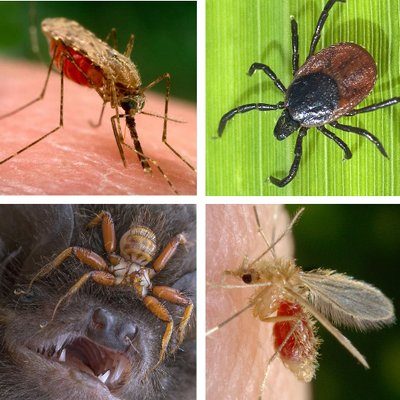
🐔🦟 #Delaware uses sentinel #chickens as an early-warning system for #WestNileVirus and #EEE because the #birds develop detectable #antibodies without spreading the #viruses.
#WNV #PublicHealth #Mosquitoes #PublicHealth #Microsky via @theguardian.com
 @bloodsparasites.bsky.social
Bioecological patterns and vertical stratification of Wyeomyia (Diptera: Culicidae) #mosquitoes in Atlantic Forest remnants in southeastern Brazil #ActaTropica
@bloodsparasites.bsky.socialBioecological patterns and vertical stratification of Wyeomyia (Diptera: Culicidae) #mosquitoes in Atlantic Forest remnants in southeastern Brazil #ActaTropica
@bloodsparasites.bsky.socialICYMI: Recurrent synapses between CO2-sensitive olfactory sensory neurons enable robust CO2 detection in Aedes aegypti #mosquitoes @plosbiology.org
 @rosheenm.bsky.social
My talk covered part of my PhD work: can Anopheles mosquitoes act as secondary vectors for arboviruses, beyond their well-known role in malaria transmission?
If you're working in this space, looking for a PDRA or curious about collaborating let's talk.
@plosbiology.orgMosquitoes use CO2 to sense if humans are nearby. Chih-Ying Su explores a @plosbiology.org study showing that CO2-sensing neurons in #mosquitoes can amplify each other’s signals, creating a neural echo chamber 🧪 Paper: plos.io/4cFCPpV Primer: plos.io/4h9FSIy
