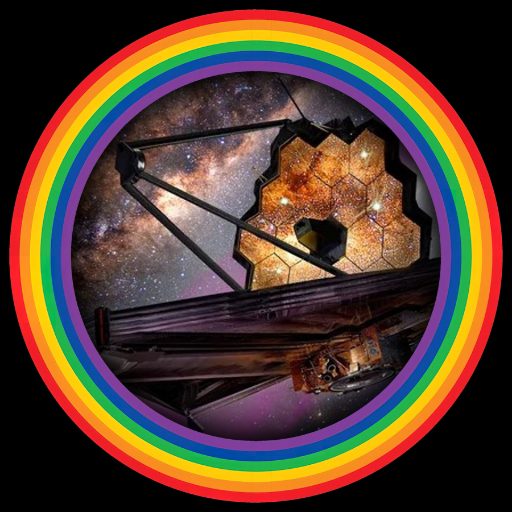
Estudo com o Telescópio Espacial James Webb revela mudanças na composição dos anéis do asteroide Chariklo, indicando um processo dinâmico de ganho e perda de material em sua estrutura.
#jwst #chariklo #asteroides #astronomia #ciencia

Estudo com o Telescópio Espacial James Webb revela mudanças na composição dos anéis do asteroide Chariklo, indicando um processo dinâmico de ganho e perda de material em sua estrutura.
#jwst #chariklo #asteroides #astronomia #ciencia
New #JWST 🔭 data release for target names: M-22.
Credit: NASA, ESA, CSA, STScI.
Take a look at news_by_date.html
A near‑infrared panorama of IC 348, taken by JWST’s NIRCam, was released Sep 15 2026.
If this makes you want to capture the sky yourself, have a look (Ad AmazonAffiliate)→
https://www.amazon.com/dp/B0FHX4ZM23?tag=wtsr0f-20
Hubble and JWST jointly observed faint TNOs, finding fewer small bodies than models predicted. Images released Sep 8 2026.
If you want to keep exploring the topic, this is a good place to start (Ad AmazonAffiliate)→
https://www.amazon.com/dp/B0H9Z1FMWJ?tag=wtsr0f-20
Faint TNOs finally imaged by Hubble and JWST; fewer small bodies seen. Images Sep 8 2026.
If you want to keep exploring the topic, this is a good place to start (Ad AmazonAffiliate)→
https://www.amazon.com/dp/B0H9Z1FMWJ?tag=wtsr0f-20
Images from Hubble and JWST, released Sep 8 2026, expose a lack of small TNOs.
Want to take the space rabbit hole a little further? (Ad AmazonAffiliate)→
https://www.amazon.com/dp/B0H9Z1FMWJ?tag=wtsr0f-20
Hubble‑JWST’s joint view of faint TNOs, Sep 8 2026, uncovers fewer small bodies, prompting a rethink of Solar System formation models.
If this sparked another question, keep going here (Ad AmazonAffiliate)→
https://www.amazon.com/dp/B0H9Z1FMWJ?tag=wtsr0f-20
For the first time, Hubble and JWST jointly observed the faintest TNOs, finding fewer small bodies than models expected. Images out Sep 8 2026.
If this made you curious to dig deeper, this is worth exploring (Ad AmazonAffiliate)→
https://www.amazon.com/dp/B0H9Z1FMWJ?tag=wtsr0f-20
NASA's James Webb Space Telescope on Flickr (Jul 23, 2024)
This composite image of NGC 1365 highlights a supermassive black hole surrounded by rapidly forming stars, captured by Chandra and Webb. #NASA #JWST
🔴 Webb keeps finding tiny "little red dots" in the early universe. Nobody agrees on what they are.
Simulations on Japan's ATERUI III supercomputer show a newborn black hole could look exactly like one.
Case closed? Not quite.
With PRIMA, NASA will try to build a billion-dollar space telescope in record time
->Ars Technica | More on "NASA's new space telescope mission" at BigEarthData.ai | #JWST #SpaceTelescope #NASA
New #JWST 🔭 data release for target names: Greebo-Repeated, Luna-Repeated.
Credit: NASA, ESA, CSA, STScI.
Take a look at news_by_date.html
🤖 image processing for #JWST 🔭 data (Luna-Repeated). RGB Filters: 444, 70 PI: Peek, Joshua, program 08527. CRVAL: 350.821634, 56.825571 Credits: NASA, ESA, CSA, STScI.
🤖 image processing for #JWST 🔭 data (Greebo-Repeated). RGB Filters: 444, 200 PI: Peek, Joshua, program 08527. CRVAL: 350.207675, 58.195615 Credits: NASA, ESA, CSA, STScI.
Hubble and JWST jointly captured faint TNOs, revealing fewer small bodies than models predicted. Images released Sep 8 2026.
If you want to keep exploring the topic, this is a good place to start (Ad AmazonAffiliate)→
https://www.amazon.com/dp/B0H9Z1FMWJ?tag=wtsr0f-20
For the first time, Hubble and JWST jointly observed the faintest TNOs, finding fewer small bodies than expected.
If this made you curious to dig deeper, this is worth exploring (Ad AmazonAffiliate)→
https://www.amazon.com/dp/B0H9Z1FMWJ?tag=wtsr0f-20
Joint Hubble‑JWST data reveal a deficit of small Trans‑Neptunian Objects, a clue for Solar System formation. Images released Sep 8 2026.
If you want to go deeper into the universe behind this post, start here (Ad AmazonAffiliate)→
https://www.amazon.com/dp/B0H9Z1FMWJ?tag=wtsr0f-20
🤖 image processing for #JWST 🔭 data (Maki-Repeated). RGB Filters: 444, 200 PI: Peek, Joshua, program 08527. CRVAL: 347.631058, 59.915345 Credits: NASA, ESA, CSA, STScI.