Very sad news, he will be greatly missed. www.ufz.de/index.php?en...
 @chrisvanswaay.eurosky.social
@chrisvanswaay.eurosky.social
Ecologist and butterfly expert at Vlinderstichting and Butterfly Conservation Europe
@chrisvanswaay.eurosky.socialVery sad news, he will be greatly missed. www.ufz.de/index.php?en...
@chrisvanswaay.eurosky.socialMax count per 1000m of Queen of Spain Frit (kleine parelmoer, I lathonia) on Dutch Butterfly Monitoring transects in 2026. Open dot=visited. Traditional high numbers in coastal dunes, but this year also lots in C and S NL. Also many near Wageningen.

 @profakkermans.bsky.socialReposted by @chrisvanswaay.eurosky.social
@natuurmonumenten.bsky.social
 @chrisvanswaay.eurosky.social
At the end of the butterfly season the Pale Clouded Yellow larvae (gele luzerne, C hyale) will try to hibernate, the September generation was the last. The Clouded Yellows (oranje luzerne, C croceus) can't go into diapause and will either fly south or die with the first really cold night.
 @chrisvanswaay.eurosky.social
This morning in our moth-trap, Griposia aprilina, in English Merveille du jour (!), in Dutch Diana-uil. We had one last year too. I know it is not that rare, but a spectacular and beautiful moth it is. Would it be living in our oak?

 @jtroscianko.bsky.socialReposted by @chrisvanswaay.eurosky.social
🦋 Butterfly wing patterns create motion illusions that protect them from predators! Our new study (8 years in the making) is out in Nature today
@grahancock.bsky.social @esbriolat.bsky.social
@scienceanna.bsky.social @lauraakelley.bsky.social @uniexecec.bsky.social
 @chrisvanswaay.eurosky.social
This comma (gehakkelde aurelia, P c-album) looks like a little dragon with a small c. Both 1st (July) and 2nd generation (>July) on Dutch Butterfly Monitoring transects have moved forward in time, the 2nd gen most, but that also got much smaller over time. Does hot 2026 even produce a 3rd gen now?
 @chrisvanswaay.eurosky.social
The Essex Skipper (zwartsprietdikkopje, T lineola) had declined by >90% on Dutch Butterfly Monitoring transects since 1995. In N America the species is an invasive, accidentilly introduced around 1910, still expanding. This photo from www.inaturalist.org/observations/231653174 shows it in NW Canada.
 @chrisvanswaay.eurosky.social
Another poor year for the Purple Hairstreak (eikenpage, F quercus) on Dutch Butterfly Monitoring transects. The species spends most of the time in the canopy of oak trees, and can be hard to find, which makes them difficult to monitor. In some years, as e.g. 2018, they descend in large numbers.
 @chrisvanswaay.eurosky.social
In NL we have the largest influx since 1990, so it makes sense that some manage it across the North Sea.
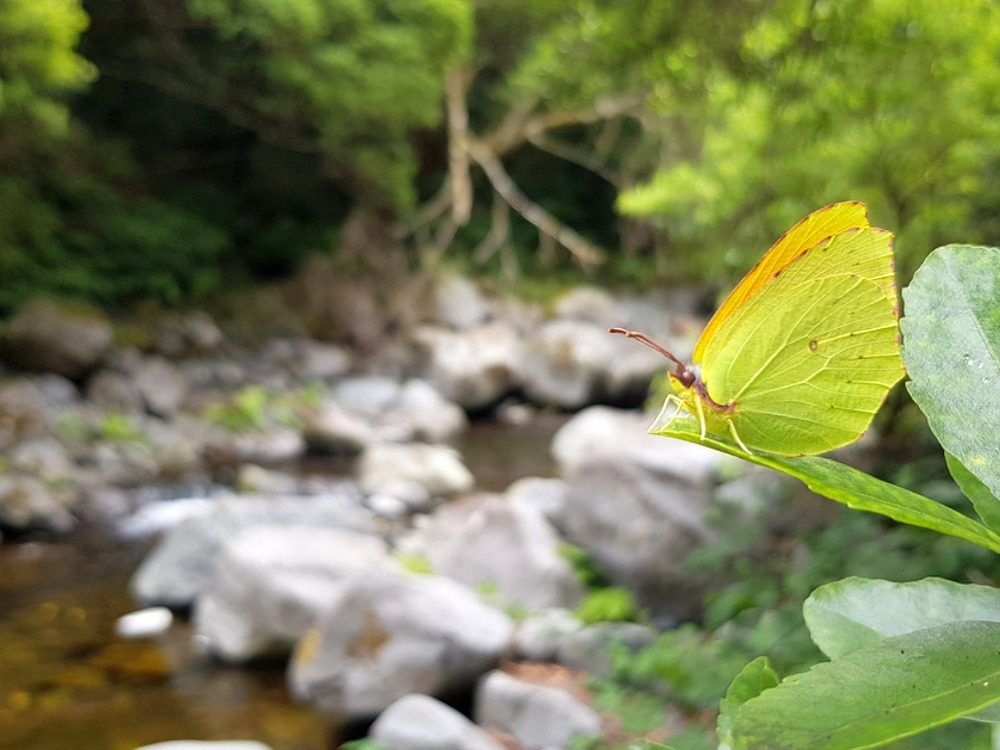
@chrisvanswaay.eurosky.socialThis is most probably C hyale, which is a highly mobile migrant species from C Europe. Adults cannot be distinguished from C alfacariensis. However that seems to be a sedentary species from calcareous grassland with Hippocrepis, hardly known from outside its habitat patches.
@chrisvanswaay.eurosky.social2026 gave us more butterflies on Dutch Butterfly Monitoring transects than 2023 and 2024 (these years were the worst since 1990), and a little bit more than 2025, especially in August. But beware of shifting baseline, numbers in most years in the 1990s were often twice as high as nowadays.
 @chrisvanswaay.eurosky.social
Also moving fast along the Rhine in Germany, lots of habitat along the river. They might be here earlier : -)
 @chrisvanswaay.eurosky.social
Hard to be sure with such an old specimen and no upperside, but the apparent lack of a broad black marginal band on the edge of the hindwing seems to point in that direction.
@chrisvanswaay.eurosky.socialThe Lesser Purple Emperor (kleine weerschijnvlinder, Apatura ilia) has been expanding north at a speed of ±10km per year and has now started to colonise SE of NL. If this speed continues it might reach me in Wageningen in ten years or so. The expansion is caused by climate warming.

 @emathion.bsky.socialReposted by @chrisvanswaay.eurosky.social
The French made a short film about what could happen after all immigrants would follow the ‘white, angry old man’s’ advice to go back where they came from.
@chrisvanswaay.eurosky.socialDistribution and trend of Dark Green Fritillary (grote parelmoer, S aglaja) in NL in 2026. It is painful to see how rare this species has now become, where it used to occur on semi-natural grasslands, woodlands, heathlands, coastal dunes, almost everywhere.
 @chrisvanswaay.eurosky.social
I think they eat all Viola species
@chrisvanswaay.eurosky.socialThe coastal dunes in NL have always been occupied by I lathonia. The inland has been empty between 1950s and 2000. Then it was recolonised from the south (Flanders) and SE (Germany). Habitat and foodplant in dunes (viola curtisii) is completely different from inland (v arvensis).
@chrisvanswaay.eurosky.socialAnd you have much less C hyale in the UK, this year there are lots of them. They come from the east, and probably have problems crossing the North Sea.