
Grilled Cheese

ExploreLog inSign up

Birbbirbbirb1

@birbbirbbirb1.bsky.social

51 Following39 Followers

Hello, I'm Birb! I love studying astronomy and myrmecology. [He]/him

PostsRepliesMedia
@birbbirbbirb1.bsky.socialOct 16, 2026, 3:17 PM

I wish you the best, Inverse! Hope you manage to pull through!

@esa.intOct 16, 2026, 3:02 PMReposted by @birbbirbbirb1.bsky.social

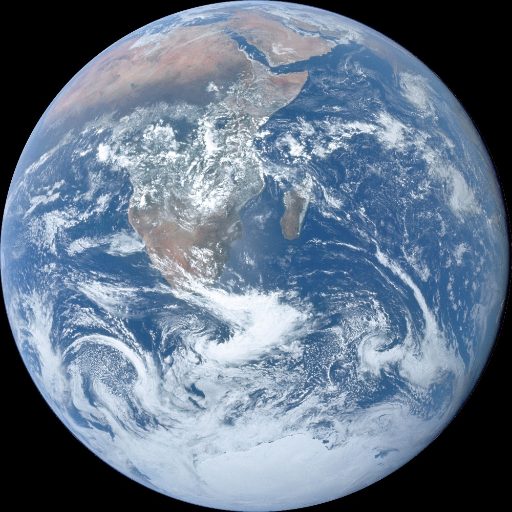
Hera is approaching asteroid Didymos, where it will study the effects of NASA’s DART impact.

The initial braking manoeuvre has bee successfully completed, bringing Hera another step closer to its arrival in November.

Want to know more? Ask our Hera A Companion 👉 hera.esa.int
3
@astrochara.bsky.socialOct 16, 2026, 9:29 AMReposted by @birbbirbbirb1.bsky.social

Note that these use the D65 whitepoint, which is the standard, but ill-fit for space objects since it's intended for use under Earth's clear blue sky, and space doesn't have the clear blue sky.

@askaniy.bsky.social recalibrated the images to use Illuminant E, which is better.

More info in ALT!

A modified version of Figure B8 of the paper, where the whitepoint is changed from D65 to Illuminant E. The colour is shifted to be bluer relative to D65, which was orange-tinted. It shows simulations of white dwarfs with hydrogen-dominated atmospheres (DA) at 20000 K, 10000 K, and 7000 K respectively. These are hot blue ~blackbody stars, and limb darkening is barely visible for the hottest stars.

As with every other image here, the left side contains spectra and limb darkening information, and the right side contains the generated image of the stars.A modified version of Figure B9 of the paper, where the whitepoint is changed from D65 to Illuminant E. The colour is shifted to be bluer relative to D65, which was orange-tinted. It shows simulations of three real white dwarfs with carbon-rich atmospheres (DQ). The topmost is pale blueish purplish, the middle is pink, and the bottom is orangish red.A modified version of Figure B10 of the paper, where the whitepoint is changed from D65 to Illuminant E. The colour is shifted to be bluer relative to D65, which was orange-tinted. It shows simulations of three real white dwarfs with metal-rich atmospheres (DZ). The topmost is cyanish white, the middle is pale greenish yellow, and the bottommost is pale lime green.A modified version of Figure B11 of the paper, where the whitepoint is changed from D65 to Illuminant E. The colour is shifted to be bluer relative to D65, which was orange-tinted. It shows simulations of three real white dwarfs with metal-rich atmospheres (DZ). The topmost is pale cyan, the middle is lime green, and the bottommost is deep sky blue, with strong limb darkening making it clearly distinct from hot DA stars.
AChara@astrochara.bsky.socialOct 15, 2026, 5:41 AM

Section 4 details their visualization of these white dwarfs. Resolved stellar discs exhibits limb darkening, which affects the colour of the star as well. The results are presented in Figure B8-11.

Figure B8 of the paper. It shows simulations of white dwarfs with hydrogen-dominated atmospheres (DA) at 20000 K, 10000 K, and 7000 K respectively. These are hot blue ~blackbody stars, and limb darkening is barely visible for the hottest stars.

As with every other image here, the left side contains spectra and limb darkening information, and the right side contains the generated image of the stars.Figure B9 of the paper. It shows simulations of three real white dwarfs with carbon-rich atmospheres (DQ). The topmost is pale purple, the middle is pink, and the bottom is orangish red.Figure B10 of the paper. It shows simulations of three real white dwarfs with metal-rich atmospheres (DZ). The topmost is white, the middle is pale yellow, and the bottommost is greenish yellow.Figure B11 of the paper. It shows simulations of three real white dwarfs with metal-rich atmospheres (DZ). The topmost is white, the middle is green, and the bottommost is very blue, with strong limb darkening.
@singularityg3.bsky.socialOct 15, 2026, 3:39 PMReposted by @birbbirbbirb1.bsky.social

Zombie Star - WD J1330+6435
———————————————
A Green White Dwarf
#spaceart #art #noai

Photo, no description
@astrochara.bsky.socialOct 15, 2026, 4:24 PMReposted by @birbbirbbirb1.bsky.social

Nice spooky sickly green star for spooky day this year

@birbbirbbirb1.bsky.socialOct 15, 2026, 10:58 AM

Reposting all the rainbow white dwarf posts is peak experience

@askaniy.bsky.socialOct 15, 2026, 9:24 AMReposted by @birbbirbbirb1.bsky.social

Yes, I can't recommend using D65 white point since its reference white is based on a clear sky environment, while in astronomy it's useful to compare with constant energy spectral distribution (illuminant E). D65 gives celestial bodies a consistent orange-pink hue. Result of the quick recalibration:

Photo, no descriptionPhoto, no description
@astrafoxen.bsky.socialOct 15, 2026, 4:12 AMReposted by @birbbirbbirb1.bsky.social

This roster of white dwarf spectra and colors is ABSOLUTELY INSANE.

Photo, no description
@astrochara.bsky.socialOct 15, 2026, 5:41 AMReposted by @birbbirbbirb1.bsky.social

Section 4 details their visualization of these white dwarfs. Resolved stellar discs exhibits limb darkening, which affects the colour of the star as well. The results are presented in Figure B8-11.

Figure B8 of the paper. It shows simulations of white dwarfs with hydrogen-dominated atmospheres (DA) at 20000 K, 10000 K, and 7000 K respectively. These are hot blue ~blackbody stars, and limb darkening is barely visible for the hottest stars.

As with every other image here, the left side contains spectra and limb darkening information, and the right side contains the generated image of the stars.Figure B9 of the paper. It shows simulations of three real white dwarfs with carbon-rich atmospheres (DQ). The topmost is pale purple, the middle is pink, and the bottom is orangish red.Figure B10 of the paper. It shows simulations of three real white dwarfs with metal-rich atmospheres (DZ). The topmost is white, the middle is pale yellow, and the bottommost is greenish yellow.Figure B11 of the paper. It shows simulations of three real white dwarfs with metal-rich atmospheres (DZ). The topmost is white, the middle is green, and the bottommost is very blue, with strong limb darkening.
@astrochara.bsky.socialOct 15, 2026, 3:18 AMReposted by @birbbirbbirb1.bsky.social

On today's arXiv day: colourful white dwarfs!!! [Published]
arxiv.org/abs/2610.18966

@astrochara.bsky.socialOct 14, 2026, 5:54 PMReposted by @birbbirbbirb1.bsky.social

Two of Terra's many possible face orientations (from a W.I.P artwork)

#ACelestialJournal #art #gijinka #astronomy #space #SolarSystem #planet #Earth #Terra #天体擬人化

This artwork depicts two possible appearances of Terra, a personified Earth; both's face is centred above the African large low shear velocity province (LLSVP). The upper is south-up, and the lower is north-up. Terra's hairstyle and hair texture reflects the surface features of Earth. For example, the north-up style has sub-Saharan Africa as a long bang covering their left eye.
@woestruction.bsky.socialOct 14, 2026, 1:49 AMReposted by @birbbirbbirb1.bsky.social

Hi! I'm Scarlet/Wolf.
Thanks for dropping by, I'm an independent artist and writer trying to make my way in the galaxy! I post my favorite space-inspired paintings here.

You can buy my art on things such as prints at my RedBubble page: www.redbubble.com/people/TheFa...

No pressure, but it helps!

@woestruction.bsky.socialOct 14, 2026, 1:46 AMReposted by @birbbirbbirb1.bsky.social

Father time keeps passing by...

Saturn rises above the orange-yellow haze of Titan, its largest moon. The photochemical haze blankets the lower third of the image, brighter at its rim, before it transitions into Titan's blue sky, which at this high altitude quickly fades off into black open space. Hanging above this eerie horizon is Saturn, notably oblate, with shadows cast upon one blue-hued hemisphere, and white clouds forming high altitude bands across the tank and brown washes of Saturn's face. Six other moons are visible in the distance scattered around Saturn.
@tethylinaf101.bsky.socialOct 13, 2026, 6:44 AMReposted by @birbbirbbirb1.bsky.social

So like made some more stars for funsies
- Kronos & Krios
- η Carinae (with the Nicknams "Foramen")
- The Butterfly Star
- The Moth
- ζ Picsium (Revati & Paushna)

#stars #doodles #art

Lore relevance i guessSame with itNice little girl vs weird evil guyAbsolute mess of a system
@jcsctoan.bsky.socialOct 13, 2026, 7:30 AMReposted by @birbbirbbirb1.bsky.social

Today's #BirdofTheDay theme by AB is #LookingDown; any bird looking down/head lowered. Great tit looking down from a bird table. Have a good day folks #rspb.bsky.social #rspb.scotland.bsky.social #NaturePhotography #nature #wildlife #wildlifephotography #birds #birdphotography #birdwatching #ECK

Photo, no description
@marwellaspaceart.bsky.socialOct 12, 2026, 12:05 PMReposted by @birbbirbbirb1.bsky.social

WIP

Photo, no description
@melina-iras07572.bsky.socialOct 13, 2026, 8:39 AMReposted by @birbbirbbirb1.bsky.social

Iris Nebula (NGC 7023 or Caldwell 4) with #JWST NIRCam (F250M, F470N, F335M). program: www.stsci.edu/jwst-program...
Thing on the lower left is a telescope artifact (would need to look up what kind).

Wave-like orange-yellow nebula on the upper left. Stars in the middle. Blue nebula at the bottom with green outflow. Blue and larger red circle shaped telescope artifact on the lower left.
@birbbirbbirb1.bsky.socialOct 11, 2026, 9:03 AM

Added objects up to Sirius

@inverse5040.bsky.socialOct 11, 2026, 4:32 AMReposted by @birbbirbbirb1.bsky.social

QRP with your moon art #ArtTrain

A drawing of the Mun from KSP, with the mun illuminated from the left, in waning gibbous phase.

I guess in my case it would be "QRP with your mun art".
@ugordan.bsky.socialOct 10, 2026, 5:42 PMReposted by @birbbirbbirb1.bsky.social

New Horizons LORRI image colorized using MVIC CH4/blue filter data, processed to roughly approximate natural color. Taken on March 1, 2007.
Distance: 2.3 million km

Credit: NASA / JHU / APL / Gordan Ugarković
live.staticflickr.com/6003/6008547...

Crescent Io in approx. natural color. A red dot in the north locates a volcano eruption site with the red-hot magma glowing, with a blueish plume from the eruption's small particles thrown up hundreds of km up catching sunlight above it.
Older posts
Terms of UsePrivacy PolicyCommunity StandardsHelpGet the app

Grilled Cheese is a product of Village Compute

Version devBuilt at: 2026-10-17 03:54:26 EDT