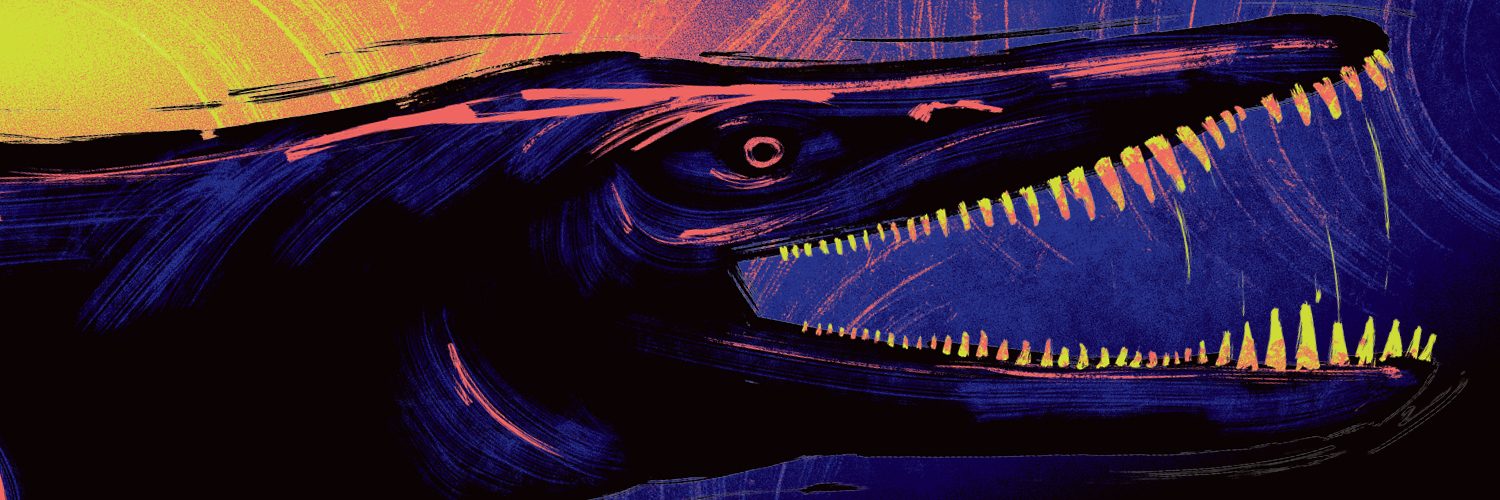
The wait is over – our new exhibition Jurassic Oceans: Monsters of the Deep is open! 😍
From the pliosaur to the ichthyosaur, meet the legends of Earth’s prehistoric oceans. 🌊
Book your tickets now 👇 www.nhm.ac.uk/visit/exhibi...


@nhm-london.bsky.social
We’re the museum looking deeper into the Earth’s past to shape a new future where both people and planet thrive. Protecting the planet, it’s in our nature. 🌍
@nhm-london.bsky.social PinnedThe wait is over – our new exhibition Jurassic Oceans: Monsters of the Deep is open! 😍
From the pliosaur to the ichthyosaur, meet the legends of Earth’s prehistoric oceans. 🌊
Book your tickets now 👇 www.nhm.ac.uk/visit/exhibi...
 @nhm-london.bsky.social
Millions of specimens, brought together, can help us reconstruct what species and ecosystems looked like in the past. This evidence can help us understand what has changed and guide where conservation action could have the greatest impact. 🌿
 @nhm-london.bsky.social
Natural history collections are time capsules of life on Earth, in some cases, records of living species stretch back hundreds of years. Each specimen captures a moment in time, with records showing what species it is, where it was collected and when.
 @nhm-london.bsky.social
WWF’s Living Planet Report shows that monitored vertebrate populations have declined by 73% since 1970. 🌍 But there’s more to the story that museum collections can help unravel.
 @nhm-london.bsky.social
The researchers also found that three previously recognised gentoo subspecies are genetically distinct enough to be considered separate species. 🧬 This newly described species lives in the southern Indian Ocean on the Kerguelen Islands, one of the most isolated places on Earth.
 @nhm-london.bsky.social
A new penguin species has been named for the first time in 100 years! 🐧 Researchers studying the DNA of gentoo penguins have identified a previously unknown species, which they’ve called the southeastern gentoo.
 @nhm-london.bsky.social
The results show that the variation in their genomes has fallen by almost 25% across Britain over the past century. 📉 The changes were particularly pronounced in England and Wales, where populations also showed greater signs of isolation.
 @nhm-london.bsky.social
Smaller, more isolated populations usually experience higher levels of inbreeding, which can reduce genetic diversity. 🧬 A new study used DNA from museum specimens collected between 1894 and 2019 to track changes in the bees' genetic diversity over time.
 @nhm-london.bsky.social
Museum collections are revealing how the genetic diversity of the moss carder bumblebee has changed over the past century! 🐝 Once widespread across Britain, these bees have declined in number and become increasingly isolated as suitable habitat has been lost.
 @nhm-london.bsky.social
A reminder that the Museum will be closed on 9 October as we're hosting a charity gala. 🦖 We rarely close to the public, however, hosting events like this helps us to continue our vital work, including scientist research and finding solutions to the planetary emergency.
 @nhm-london.bsky.social
Did you know that seaweed is older than dinosaurs? 😮🌿 Learn more about the fascinating world of seaweed our series, Natural History Museum Showstoppers!
@nhm-london.bsky.socialThe declines are largely driven by human activities, including agriculture, hunting and pollution. Protecting birds across their entire migration routes, particularly along major flyways, could help populations recover. 🌍
 @nhm-london.bsky.social
Seven migratory bird species are thought to have gone extinct in the past 150 years. 🐦 That includes the slender-billed curlew, which was officially declared extinct last year after no confirmed sightings for three decades.
 @nhm-london.bsky.social
Almost half of the world’s migratory bird species are in decline. 💔 The latest State of the World’s Birds report highlights cuckoos, turtle doves and Arctic terns among the migratory species facing increased extinction risk.
 @nhm-london.bsky.social
Our new temporary exhibition, Nature and Us, is open! 🌿 Housed in a gallery closed to the public for over 80 years, this exhibition explores our changing relationship with nature. There's over 50 specimens to discover – would you like to learn more about them? 👇


 @nhm-london.bsky.social
As talks on a Global Plastic Treaty continue, researchers say stronger recycling laws, including for items like bottle lids, will be vital to tackling plastic waste. Would you support a global treaty on plastics? Let us know in the comments 👇
 @nhm-london.bsky.social
In 2011, one bird was found with 276 pieces of plastic, weighing 64g. By 2023, that record had been smashed, with more than 400 pieces found in a single bird. The record has been broken every year since. Last year, one bird contained 894 pieces of plastic.
 @nhm-london.bsky.social
🚨 Record-breaking amounts of plastic are being found in seabirds. A 16-year study of sable shearwaters on Australia’s Lord Howe Island has found a sharp rise in the amount of plastic in their stomachs.
 @nhm-london.bsky.social
Did you know that some of the treasures in our collection were donated as gifts in wills? 🔬
This #RememberACharityWeek, why not help support scientific research and inspire the next generation by leaving a gift in your will? 🎓
Find out more: brnw.ch/21x5BKJ
 @nhm-london.bsky.social
Plants produce resin to help seal wounds and protect against damage from pathogens, insects and wildfires. 🔥 The evolution of resin may have been an important innovation that helped early terrestrial plants survive and thrive as they spread across the land. 🌱
 @nhm-london.bsky.social
The oldest amber has been discovered in China, and it’s around 385 million years old! 🌳 The discovery pushes the confirmed record of amber back by around 65 million years, showing that plants were producing resin much earlier than previously demonstrated.
