Grilled Cheese

ExploreLog inSign up
Terms of UsePrivacy PolicyCommunity StandardsHelpGet the app

Grilled Cheese is a product of Village Compute

Version devBuilt at: 2026-10-19 00:41:47 EDT

PhotosVideosAllPeople
LatestRanked
Load more
@toptags.bsky.socialOct 19, 2026, 12:01 AM

🌟 BlueSky trending hashtags (1h) #16-30:

#nsfwart #deadlock #oc #resistanceroots #hazbinhotel #furry #explicaocasoanaelisaflavio #voices4victory #furryart #fatfur #eck #stunday #ocsky #auspol #aiart

👇 #1-15 trending hashtags

TTrending Tags (Beta)@trendtags.bsky.socialOct 19, 2026, 12:01 AM

🌟 BlueSky trending hashtags (1h): #debatenaband #luladandoshownaband #respondeolulaflavio #lulavaivencer #nsfw #art #usdemocracy #flaviosociodocareca #proudblue #birds #aiイラスト #fanart #photography #scottpilgrim #vore

@toptags.bsky.socialOct 19, 2026, 12:01 AM

🔥 BlueSky trending hashtags (30m) #16-30:

#photography #usdemocracy #vividshadows #oc #aiイラスト #furry #deadlock #proudblue #abdl #hazbinhotel #resistanceroots #eleições2026 #bigtits #furryart #vore

👇 #1-15 trending hashtags

TTrending Tags (Beta)@trendtags.bsky.socialOct 19, 2026, 12:01 AM

🔥 BlueSky trending hashtags (30m): #respondeolulaflavio #flaviosociodocareca #luladandoshownaband #explicaocasoanaelisaflavio #debatenaband #art #hatm #scottpilgrim #nsfwart #nsfw #fatfur #birds #lulapaidobolsafamilia #voices4victory #fanart

@bambooshooti.bsky.socialOct 18, 2026, 11:42 PM

#ResistanceRoots

Jibreel Khazan was born on this day in 1941 in Greensboro, N.C. He is the last surviving member of the Greensboro Four, college students who staged a sit-in at a segregated lunch counter at an F.W. Woolworth’s store in Greensboro. He has dedicated his career to human services. /1

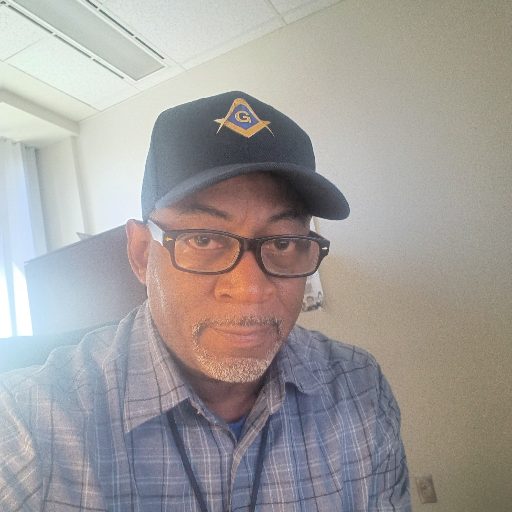
Dr. Jibreel Khazan in 2015, reflecting on the 55th anniversary of the Greensboro sit-in. In the background is a black-and-white photo of the Greensboro Four. His rare trajectory of courage began with a world-changing spark of youth activism and evolved into six decades of grassroots service. He helped prove the power of ordinary citizens to disrupt systemic oppression, providing the tactical blueprint that decentralized the civil rights movement and paved the way for the creation of the Student Nonviolent Coordinating Committee. Instead of fading into obscurity after that first flash of fame, he reclaimed his identity through Islam and quietly spent his adulthood working as a vocational counselor and educator. Khazan is a powerful reminder that history can be made by regular people who possess the courage to sit down for justice when it matters most, and the humility to stand up for the vulnerable every day thereafter.
@eddsmitty.bsky.socialOct 18, 2026, 11:05 PM

⚠️WOKE CONTENT⚠️™️

🧵 These are the actual ax handles a white mob used to assault Black youth staging peaceful sit‑ins in Jacksonville, FL on August 27, 1960. That's right—children!

True story.😪

Pull up a seat🪑, my friends. (cont)

#ProudBlue
#ResistanceRoots
#USDemocracy
#Voices4Victory

Photo, no description
@bambooshooti.bsky.socialOct 18, 2026, 3:35 PM

#ResistanceRoots

“People have to vote because someone died for you to have that right. Someone marched for you, someone sang for you, someone suffered for you to have the right to vote, particularly people of color. That’s why we should vote, if nothing else.”
— Tarana Burke

Tarana Burke, founder of the Me Too movement. For nearly three decades, she has dedicated her career to social justice, working at the critical intersections of racial justice, anti-violence and gender equity. Her philosophy centers on “empowerment through empathy,” aiming to provide resources, healing and solidarity to survivors of sexual abuse, particularly young women of color in marginalized, low-wealth communities.
@bambooshooti.bsky.socialOct 18, 2026, 12:43 AM

#ResistanceRoots

Today in history, 1969: The coach of the University of Wyoming football team dismisses 14 Black players for requesting to hold a silent protest against Brigham Young University. The Black 14 incident spurred institutional change, but Repub policies are causing renewed friction. /1

Ten members of the Black 14 in 1969. Pictured, from bottom to top: Earl Lee (front center); John Griffin and Guillermo “Willie” Hysaw (second row); Don Meadows and Ivie Moore (third row); Tony Gibson, Jerry Berry and Joe Williams (fourth row); Mel Hamilton and Jim Isaac (fifth row). Not pictured: Tony McGee, Ted Williams, Lionel Grimes and Ron Hill. The Black 14 took a painful incident of institutional racism and reframed it into a living legacy of charity, education and service. In 1969, they became foundational figures in the struggle for student-athlete free speech. Their courage drew national focus to the systemic exploitation of Black athletes and influenced institutional change. Decades after their initial sacrifice, the group continues to stand firmly by their convictions. Ultimately, the Black 14 proved that while institutions can strip away scholarships and jerseys, they cannot strip away a person’s dignity. Photo credit: Art Shay / Sports Illustrated / Getty Images.
@bambooshooti.bsky.socialOct 17, 2026, 12:56 AM

#ResistanceRoots

Leon Sullivan was born on this day in 1922 in Charleston, W.V. He was a pastor and civil rights leader who believed that true freedom requires economic self-reliance. He extended this principle globally and also used his platform to push corporations to dismantle apartheid. /1

Rev. Dr. Leon Sullivan in 1988. Sullivan focused his civil rights activism on economic independence, global corporate accountability and Pan-African unity. By transforming his church’s pulpit into an engine for social engineering, he proved that true freedom was impossible without financial self-reliance, summarized by his iconic philosophy: “We help people help themselves.” By embedding anti-apartheid principles within the world’s largest corporation (GM), he weaponized international business against oppression. His code evolved into the Global Sullivan Principles, establishing the modern blueprint for corporate social responsibility worldwide. He also created an international pipeline for workforce training and direct trade that has successfully uplifted, educated and employed millions of people across the U.S. and the African continent.
@eddsmitty.bsky.socialOct 16, 2026, 2:17 AM

⚠️WOKE CONTENT⚠️™️

🧵 This thread will leave you with more questions than answers, friends. I'm going to tell you the story of Richard Aoki, a Japanese American who was the first Asian Black Panther. Pull up a seat🪑, and bring a drink. (cont)

#ProudBlue
#ResistanceRoots
#USDemocracy
#Voices4Victory

Photo, no description
@bambooshooti.bsky.socialOct 16, 2026, 12:39 AM

#ResistanceRoots

Helen Hunt Jackson was born on this day in 1830 in Amherst, Mass. At age 49, she became a Native American advocate after hearing Ponca Chief Standing Bear speak about his tribe’s forcible removal from their ancestral lands. She spent the rest of her life fighting for justice. /1

Helen Hunt Jackson, ca. 1875-1884 (date varies significantly across sources). Before she walked into the lecture hall where Ponca Chief Standing Bear spoke, Jackson had no interest in humanitarian causes or political activism. Hearing his firsthand account of the government’s brutal forced relocation of his people transformed her from an apolitical writer into a lifelong reformer. Within days, she began leveraging her literary network to circulate petitions and raise money to help the Ponca tribe fight for their land. She wrote scathing letters to the editors of prominent newspapers in which she attacked federal officials. This explosive reaction altered the course of her life’s path toward fighting for Native American rights. Shrugging off her previous disdain for politics, she wrote to a friend: “I have become what I have said a thousand times was the most odious thing in the world — a woman with a cause.” Photo credit: National Portrait Gallery, Smithsonian Institution.
@bambooshooti.bsky.socialOct 15, 2026, 12:45 AM

#ResistanceRoots

Owen Whitfield was born on this day in 1892 in Jonestown, Miss. He was a preacher, union organizer and civil rights activist who led the 1939 Missouri Sharecropper Roadside Demonstration, maintaining interracial solidarity by shifting the focus from race to class exploitation. /1

Press photo of Owen Whitfield during the 1939 Missouri Sharecropper Roadside Demonstration. Whitfield was a visionary who fused economic justice, labor organizing and civil rights decades before the modern Civil Rights Movement. At a time when the Jim Crow system used racial division to keep wages low and labor weak, Whitfield engineered an unbreakable, multi-racial alliance. By proving that Black and white sharecroppers shared the same economic enemy, he shattered the Southern playbook of “strikebreaking by race.” He also revolutionized the role of the Black church in social movements. Today, Whitfield is remembered not just as a labor leader, but as a brilliant strategist who weaponized the visual power of protest to turn a hidden rural crisis into an unavoidable national reckoning. He established a model for cross-racial coalition building that remains a masterclass in labor organizing.
@bambooshooti.bsky.socialOct 14, 2026, 12:51 AM

#ResistanceRoots

Kimberly Teehee was born on this day in 1968 in Chicago. She is an attorney and activist who was elected by the Cherokee Nation to serve as its first Delegate-designate to the U.S. House of Representatives. Seven years after her election, the House still has not seated her. /1

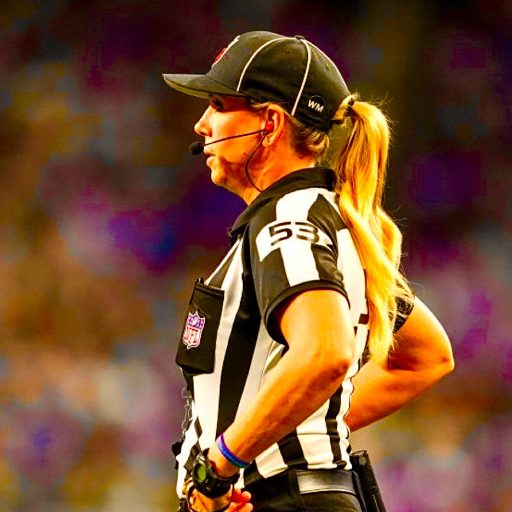
Kimberly Teehee. Teehee’s entry into public service and her subsequent selection as the Cherokee Nation’s Delegate-designate were driven by profound family influences, mentorship from legendary tribal leadership and her unmatched legislative track record in Washington, D.C. Her personal and family history is intertwined with the tangible effects of federal policies, ranging from the historical forced removal era to more recent assimilation programs. These experiences gave her a lifelong perspective on the critical need for tribal advocacy. A decisive factor in her selection as tribal delegate was her established reputation for building consensus on Capitol Hill. Cherokee Principal Chief Chuck Hoskin Jr. cited her rare ability to reach across political lines to advance complex tribal issues, noting her strong relationships with key congressional leaders of both parties. Photo credit: Cherokee Nation.
@dividerdecider.bsky.socialOct 13, 2026, 2:23 AM

Uniter
My favorite WWII Hero, Doris Miller
#ResistanceRoots #ProudBlue #DemVoice1 #Voices4Victory

#ProudBlue #ProudBlueVets
Remember Pearl Harbor
@DeciderDivider Photo: DOD, Dept. of the Navy. Naval Photographica
And honor our war heroes like Mess Attendant 3rd Class & Doris "Dorie" Miller who rescued wounded from USS West Virginia before manning a machine gun.
@bambooshooti.bsky.socialOct 13, 2026, 12:55 AM

#ResistanceRoots

Doris “Dorie” Miller was born on this day in 1919 in Waco, Texas. Because of his heroism during the attack on Pearl Harbor, he became the first African American recipient of the Navy Cross. His bravery spurred civil rights activists to push to desegregate the U.S. military. /1

Dorie Miller wearing his Navy Cross in May 1942. Miller’s extraordinary valor during the attack on Pearl Harbor forced a reluctant Navy to award him the Navy Cross. However, the myths and structural segregation that relegated Miller to the Messman Branch persisted after Dec. 7, 1941. Miller’s actions gave civil rights activists an undeniable symbol to fight for institutional equality. It took a coordinated campaign by activist networks to force the government’s hand. While the Navy tried to compartmentalize Miller’s award as an isolated exception — even keeping his rank restricted to the mess deck — the activist momentum could not be stopped. His visibility forced the Navy to begin opening up general service training to Black sailors and commissioning Black officers. Ultimately, the public discourse surrounding Miller’s valor laid the foundation for President Truman’s Executive Order 9981, desegregating the U.S. Armed Forces in 1948. Photo credit: Naval History and Heritage Command.
@eddsmitty.bsky.socialOct 12, 2026, 4:26 PM

⚠️WOKE CONTENT⚠️™️

🧵 Before Black stories were welcomed by mainstream publishers, Louise Jenkins Meriwether was already telling them. Take a moment to celebrate the life of this amazing trailblazer. Pull up a seat🪑, my friends.(cont)

#ProudBlue
#ResistanceRoots
#USDemocracy
#Voices4Victory

Photo, no description
@bambooshooti.bsky.socialOct 11, 2026, 11:42 PM

#ResistanceRoots

Lucy Morgan was born on this day in 1940 in Memphis, Tenn. She was an investigative reporter with the St. Petersburg Times (now the Tampa Bay Times) who was feared and revered by Florida politicians, lobbyists and law enforcement for her dedication to government accountability. /1

Lucy Morgan talks on the phone surrounded by notepads, ca. 1978. Morgan was the ultimate, uncompromising watchdog of Florida journalism. Over a trailblazing 50-year career, she transformed from a rural mother writing for 20 cents per word into one of the most respected investigative forces in American political history. She proved that meticulous, records-driven “shoe-leather” journalism could dismantle corrupt political machines, rogue sheriff departments and dangerous drug cartels. She valued the truth above partisan points, commanding equal parts terror and profound respect from both political parties. Ultimately, Morgan created a blueprint for fearless local journalism. She proved that a reporter armed with absolute accuracy, unyielding integrity and deep empathy for everyday citizens can singlehandedly check the abuses of the most powerful institutions in government.
@bambooshooti.bsky.socialOct 11, 2026, 3:33 PM

#ResistanceRoots

“Democracy is based upon the conviction that there are extraordinary possibilities in ordinary people.”

— Harry Emerson Fosdick

Dr. Harry Emerson Fosdick. Fosdick was a liberal protestant leader who used his platform as pastor of Manhattan’s Riverside Church and his popular weekly radio program to push back against the rise of totalitarianism in the 1930s. Fascists were consolidating power, and dictators claimed that ordinary citizens were too weak or chaotic to govern themselves. They argued that societies needed a “strongman” autocrat to thrive. This quote comes from Fosdick’s sermon, “A Confession of Faith in Democracy,” in which he argued that the U.S. did not need a dictator — it needed a rejuvenated faith in the capabitility of the common person. He argued that a political system must trust and empower individuals, rather than rule them through fear and force. Fosdick’s profound belief in the everyday citizen made him an inspiration to the next generation of civil rights leaders. MLK regularly drew from Fosdick’s writings to power his own moral arguments for equality.
@eddsmitty.bsky.socialOct 11, 2026, 11:55 AM

⚠️WOKE CONTENT⚠️™️

🧵 June 11, 1967: A White police officer shoots and kills a Black teen, igniting the Tampa Bay Riots— 4 days of violence that reshaped the city forever.

Here's the story.

Pull up a seat🪑, my friends.(cont)

#ProudBlue
#ResistanceRoots
#USDemocracy
#Voices4Victory

Photo, no descriptionPhoto, no description
@bambooshooti.bsky.socialOct 11, 2026, 12:50 AM

#ResistanceRoots

Today in history, 1957: President Eisenhower apologizes to Ghanaian Finance Minister Komla Agbeli Gbedemah, who was denied service in a segregated restaurant. It was one of many incidents involving African dignitaries and a factor in the passage of the Civil Rights Act of 1964. /1

Ghanaian Finance Minister Komla Abela Gbedemah (left) meets with President Dwight D. Eisenhower (center) and Vice President Richard Nixon (right) at the White House on Oct. 10, 1957. The meeting was arranged after Gbedemah was refused indoor service at a Howard Johnson’s restaurant in Dover, Del. President Eisenhower issued a formal apology and invited Gbedemah to the White House for breakfast to address the incident. He and Nixon expressed regret and discussed financial assistance for Ghana’s Akosombo Dam project. Following the incident, Howard Johnson’s management instructed the Dover restaurant to serve all customers regardless of race. However, Howard Johnson’s operated largely through a franchise model, and individual owners often adhered to local Jim Crow laws or deep-seated regional customs. The refusal to implement a nationwide policy turned Howard Johnson’s into a prime target for civil rights groups. Photo credit: Dwight D. Eisenhower Presidential Library and Museum.
@bambooshooti.bsky.socialOct 10, 2026, 12:27 AM

#ResistanceRoots

Today in history, 1977: A millionaire Harvard lawyer spends eight hours shoveling horse manure in Ocala, Fla. He called it a campaign strategy. Floridians called him their next Governor. His name was Bob Graham, and he soon became one of the nation’s most respected politicians. /1

Florida State Senator Bob Graham works as a “pooper scooper” at Ocala Breeders’ Sales, Oct. 9, 1977. Graham worked for 100 days at different jobs around the state during his first campaign for Governor. The Workdays concept began by chance in 1974 while Graham was serving in the Florida State Senate. As Chairman of the Education Committee, he openly criticized the quality of civic education in Florida schools. A frustrated high school teacher, Sue Reilly, dared him to try teaching a class himself. Graham accepted the challenge and spent a semester teaching civics at Carol City High School. He later designated this experience as his official “Workday #1,” and used it to make funding for school construction a top legislative priority. He realized that immersion was the most effective way to understand the reality of his constituents’ lives and translate that into political action. The Workdays program became a signature strategy throughout Graham’s political career.