#astronomypictureoftheday #apod A Complete Auroral Oval from SMILE https://apod.vidry.ca/day/261006/en
 @messier79.bsky.social
 @messier79.bsky.social
#astronomypictureoftheday #apod A Complete Auroral Oval from SMILE https://apod.vidry.ca/day/261006/en
 @juanmentat.bsky.social
🔭 A Complete Auroral Oval from SMILE
Fuente: NASA APOD http://www.star.ucl.ac.uk/~apod/apod/

 @apod.sizo.dev
🔭 Un Círculo Completo de Aurora desde SMILE
Créditos: ESA, CAS, SMILE y UVI
Fuente: https://apod.nasa.gov/apod/ap261006.html

 @fanapod.baldanders.info
#apod 2026-10-06
A Complete Auroral Oval from SMILE
Image Credit: ESA, CAS, SMILE, UVI
Web page: https://science.nasa.gov/image-article/apod-2026-october-6-a-complete-auroral-oval-from-smile/

 @astr-a.bsky.social
Cancel the rebranding. Turns out Sh2-188 in Cassiopeia is ALREADY officially the Shrimp Nebula 🦐
science.nasa.gov/image-articl...
NASA beat me to it. The Crab stays a Crab for now.
#Astronomy #Astrophysics #Space #ShrimpNebula #Sh2188 #CrabNebula #APOD #SpaceFacts #AstroData #NASA
 @orbitandbeyond.bsky.social
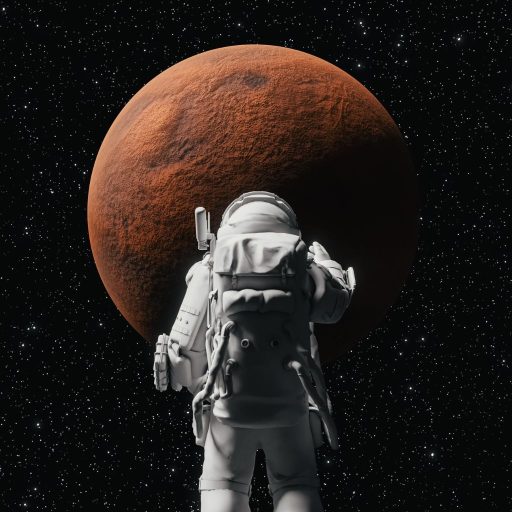
Explore Omega Centauri, Milky Way's largest globular cluster, in Sep 25 2026 APOD image; it is visible to naked eye in Southern Hemisphere.
Want to take the space rabbit hole a little further? (Ad AmazonAffiliate)→
https://www.amazon.com/dp/B00F5TDMDS?tag=wtsr0f-20

 @celestialatlas1.bsky.social
Omega Centauri, about 16,000 ly away, contains millions of stars and weighs ~4 million solar masses, the Milky Way’s biggest globular cluster.
If this makes you want to spend more time under the stars, have a look (Ad AmazonAffiliate)→
https://www.amazon.com/dp/0894900757?tag=wtsr0f-20

 @beyondthestars1.bsky.social
Lunar shadow across Earth featured in the 5 Sep 2026 APOD image.
If you're ready to spend a little more time with the night sky, have a look (Ad AmazonAffiliate)→
https://www.amazon.com/dp/B0G4PGTZ3M?tag=wtsr0f-20

 @deepspacejournal1.bsky.social
The APOD image from 5 Sep 2026 captures the Moon’s shadow sweeping across Earth, a clear illustration of lunar shadow phenomena.
If this has you thinking about your next observing session, have a look (Ad AmazonAffiliate)→
https://www.amazon.com/dp/B0G4PGTZ3M?tag=wtsr0f-20

 @astropicdaily.bsky.social
M104: The Sombrero Galaxy's Tidal Streams

 @apoddaily.bsky.social
🔭 NASA Science
📅 2026-10-05
Src: NASA Astronomy Picture of the Day
#NASA #APOD #Astronomy #Galaxy #DeepSpace #Astrophotography #Cosmos

 @spaceflightpedia.com
The Sombrero Galaxy, known as M104, has tidal streams. The October 5, 2026 Astronomy Picture of the Day brings those streams into focus, paired with a brief explanation by a professional astronomer.
 @messier79.bsky.social
#imageastrodujour #apod M104: Les flux de marées de la Galaxie du Sombrero https://apod.vidry.ca/day/261005/fr
 @messier79.bsky.social
#astronomypictureoftheday #apod M104: The Sombrero Galaxy's Tidal Streams https://apod.vidry.ca/day/261005/en
@juanmentat.bsky.social🔭 M104: The Sombrero Galaxy's Tidal Streams
Fuente: NASA APOD http://www.star.ucl.ac.uk/~apod/apod/

 @uzaydanhaberler.bsky.social
M104: Sombrero Galaksisi’nin Gelgit Akıntıları
#APoD Türkçe Günün Astronomi Görseli açıklama metnini sayfamızdan okuyabilirsiniz:
https://www.uzaydanhaberler.com/2026/10/05/m104-sombrero-galaksisinin-gelgit-akintilari/
 @fanapod.baldanders.info
#apod 2026-10-05
M104: The Sombrero Galaxy's Tidal Streams
Image Credit: Engelbert Vollmer
Web page: https://science.nasa.gov/image-article/apod-2026-october-5-m104-the-sombrero-galaxys-tidal-streams/

 @sugataai.com
We see the Sombrero Galaxy's dark spiral not as a flaw, but as a cosmic scar from ancient gravity tugging at its edge. #APOD sugataai.com/blog/apod-20...
 @astronomyunlocked.bsky.social
Omega Centauri, the Milky Way’s largest globular cluster, featured in the Sep 25 2026 APOD image—visible to the naked eye in Southern Hemisphere.
If this made you curious to dig deeper, this is worth exploring (Ad AmazonAffiliate)→
https://www.amazon.com/dp/B00F5TDMDS?tag=wtsr0f-20
 @deepspacejournal1.bsky.social
The APOD release on 5 Sep 2026 shows a lunar shadow crossing Earth, a clear example of the Moon’s path around the Sun.
If you're ready to spend a little more time with the night sky, have a look (Ad AmazonAffiliate)→
https://www.amazon.com/dp/B0G4PGTZ3M?tag=wtsr0f-20