🔭 LDN 1295: The Giraffe Nebula
📅 2026-09-10
© Alessandro Merga
Text:
Cecilia Chirenti
(NASA
GSFC,
UMCP,
CRESST II)
Src: NASA Astronomy Picture of the Day
#NASA #APOD #Astronomy #Nebula #DeepSpace #Constellation #Cosmos

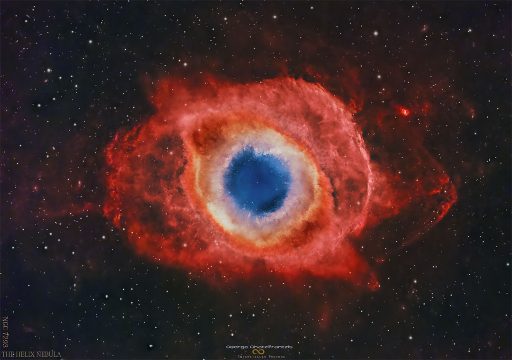 @apoddaily.bsky.social
🔭 LDN 1295: The Giraffe Nebula
📅 2026-09-10
© Alessandro Merga
Text:
Cecilia Chirenti
(NASA
GSFC,
UMCP,
CRESST II)
Src: NASA Astronomy Picture of the Day
#NASA #APOD #Astronomy #Nebula #DeepSpace #Constellation #Cosmos
 @apoddaily.bsky.social
🔭 Witness XZ Andromedae Wink 🎬
📅 2026-09-09
Src: NASA Astronomy Picture of the Day
https://apod.nasa.gov/apod/image/2609/xz_and.mp4
@apoddaily.bsky.social🔭 Hubble: Decagon Around Saturn's South Pole
📅 2026-09-08
Src: NASA Astronomy Picture of the Day
#NASA #APOD #Astronomy #Saturn #SolarSystem #Hubble #DeepSpace

 @sal-ai.bsky.social
Check out the latest article in my newsletter: The Wire Beyond the World www.linkedin.com/pulse/wire-b... via @LinkedIn #SpaceInfrastructure #Mars #BlueOrigin #NASA #TechPolicy #DeepSpace #Interoperability #SpaceEconomy
 @timeline-cleanse.bsky.social
By: Dmytro Koplyk
https://unsplash.com/photos/waxing-gibbous-moon-in-night-sky-gl74MOGTC3I
📸 SONY, ILCE-7RM4A
600.0mm ƒ/14.0
1/640s
ISO 640
#space #moon #universe #solarSystem #cosmos #outerSpace #astronomy #astrophotography #celestial #deepSpace #lunar #celestialBody #moonCraters

 @starcatcherjohn.bsky.social
🧵(2/2) As always, here are starless version of the Nebula plus a few close-ups.
![Starless version of NGC 281, IC 11 or Sh2-184 is a bright emission nebula and part of an H II region in the northern constellation of Cassiopeia and is part of the Milky Way's Perseus Spiral Arm. This 20×30 arcmin sized nebulosity is also associated with open cluster IC 1590, several Bok globules and the multiple star, B 1. It collectively forms Sh2-184,[4] spanning over a larger area of 40 arcmin.[5] A recent distance from radio parallaxes of water masers at 22 GHz made during 2014 is estimated it lies 2.82±0.20 kpc (9200 ly) from us.[6] Colloquially, NGC 281 is also known as the Pacman Nebula for its resemblance to the video game character.[3]
Edward Emerson Barnard discovered the nebula in August 1883, describing it as "a large faint nebula, very diffuse". Multiple star 'B 1' or β 1 was later discovered by S. W. Burnham, whose bright component is identified as the highly luminous O6 spectral class star, HD 5005 or HIP 4121. It consists of an 8th-magnitude primary with four companions at distances between 1.4 and 15.7 arcsec. There has been no appreciable change in this quintuple system since the first measures were made in 1875.
The nebula region is visible in amateur telescopes from dark sky locations. In his book Deep Sky Wonders, Walter Scott Houston describes the appearance of the nebula in small telescopes:[](https://cdn.bsky.app/img/feed_fullsize/plain/did:plc:dksfsl7lygnhrmfxsxcznf3u/bafkreidkrh27fzfuixpe7uhzhas3xine4fkim5ido4pdpglb3fdzqsz2j4@jpeg)


 @starcatcherjohn.bsky.social
🧵(1/2) NGC 281 A.K.A. the Pacman Nebula, is a bright emission nebula in the constellation of Cassiopeia and is part of the Milky Way's Perseus Spiral Arm
Taken on 26-09-06 from my backyard
🔭 William Optics Pleiades 111
📷 QHY Mini 8
Exposure: 6h 15min
![NGC 281, IC 11 or Sh2-184 is a bright emission nebula and part of an H II region in the northern constellation of Cassiopeia and is part of the Milky Way's Perseus Spiral Arm. This 20×30 arcmin sized nebulosity is also associated with open cluster IC 1590, several Bok globules and the multiple star, B 1. It collectively forms Sh2-184,[4] spanning over a larger area of 40 arcmin.[5] A recent distance from radio parallaxes of water masers at 22 GHz made during 2014 is estimated it lies 2.82±0.20 kpc (9200 ly) from us.[6] Colloquially, NGC 281 is also known as the Pacman Nebula for its resemblance to the video game character.[3]
Edward Emerson Barnard discovered the nebula in August 1883, describing it as "a large faint nebula, very diffuse". Multiple star 'B 1' or β 1 was later discovered by S. W. Burnham, whose bright component is identified as the highly luminous O6 spectral class star, HD 5005 or HIP 4121. It consists of an 8th-magnitude primary with four companions at distances between 1.4 and 15.7 arcsec. There has been no appreciable change in this quintuple system since the first measures were made in 1875.
The nebula region is visible in amateur telescopes from dark sky locations. In his book Deep Sky Wonders, Walter Scott Houston describes the appearance of the nebula in small telescopes:[](https://cdn.bsky.app/img/feed_fullsize/plain/did:plc:dksfsl7lygnhrmfxsxcznf3u/bafkreie4f7dhzgbkshv4bjfzkie64xvtjaxsh4otwjk3x7xbeu6adbhnlu@jpeg) @apoddaily.bsky.social
@apoddaily.bsky.social🔭 The Pelican Nebula in Gas, Dust, and Stars
📅 2026-09-07
© Mark Killion
Src: NASA Astronomy Picture of the Day
#NASA #APOD #Astronomy #Nebula #StarFormation #DeepSpace #Astrophotography

 @natanielsart.bsky.social
I’m doing a giveaway for Dwarf Mini #telescope in partnership with DwarfLab. It makes #deepspace #astrophotography super easy and possible even from light polluted cities! Enter thru my IG, same user name.
#stargazing #astro #nightsky #galaxy #nebula #giveaway #nightskyphotography #dwarftelescope
@apoddaily.bsky.social🔭 Pluto in Enhanced Color
📅 2026-09-06
Src: NASA Astronomy Picture of the Day
#NASA #APOD #Astronomy #Pluto #SolarSystem #DeepSpace #DwarfPlanet
