Grilled Cheese

ExploreLog inSign up
Terms of UsePrivacy PolicyCommunity StandardsHelpGet the app

Grilled Cheese is a product of Village Compute

Version devBuilt at: 2026-10-14 15:26:28 EDT

Explore

PostsPeople
LatestRanked
@apoddaily.bsky.socialSep 9, 2026, 12:10 PM

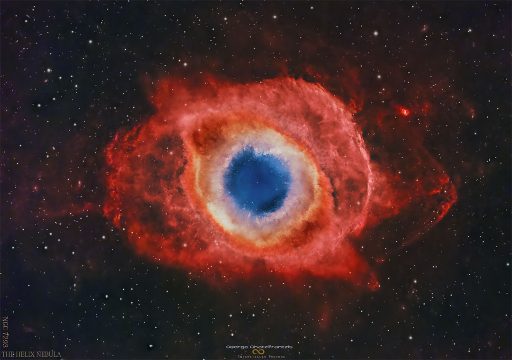
🔭 Witness XZ Andromedae Wink 🎬

đź“… 2026-09-09
Src: NASA Astronomy Picture of the Day
https://apod.nasa.gov/apod/image/2609/xz_and.mp4

#NASA #APOD #Astronomy #Eclipse #DeepSpace #Cosmos #Space

@fanapod.baldanders.infoSep 9, 2026, 6:30 AM

#apod 2026-09-09 (video)
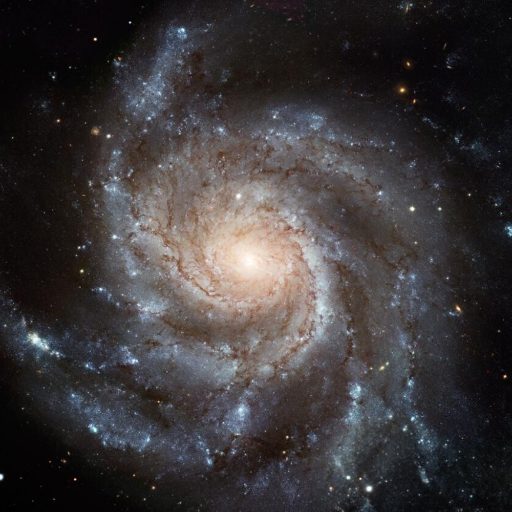
Witness XZ Andromedae Wink
Web page: https://apod.nasa.gov/apod/ap260909.html
Content: https://apod.nasa.gov/apod/image/2609/xz_and.mp4
@uzaydanhaberler.bsky.socialSep 9, 2026, 6:02 AM

XZ Andromedae’nin Göz Kırpmasını İzleyin.

#APoD Türkçe Günün Astronomi Görseli açıklama metnini sayfamızdan okuyabilirsiniz:

www.uzaydanhaberler.com/2026/09/09/x...

Video: @ogetaykayali.bsky.social
Metin: @kerockcliffe.bsky.social
@astronomybot.bsky.socialSep 8, 2026, 8:05 PM

Astronomy Picture Of the Day - APOD Title: Hubble: Decagon Around Saturn's South Pole Date: 2026-09-08 #APOD #NASA

Image posted by astronomybot
@astropicdaily.bsky.socialSep 8, 2026, 1:15 PM

Hubble: Decagon Around Saturn's South Pole

#astronomy #astrophotography #apod

Why are Saturn’s poles geometric? Saturn’s North Pole has been known to be surrounded by a hexagonal (6 sides) cloud since discovery in 1987 in data taken by NASA’s Voyager spacecrafts, which quickly flew past the ringed world in the early 1980s.  Now, recent observations of Saturn by the Hubble Space Telescope reveal a slightly different geometric cloud pattern around the South Pole: a decagon (10 sides).  The geometric boundaries are possibly caused by waves when the fast-moving gas away from the poles interacts with slower-moving gas closer to the poles.  In the featured image composite by the Hubble taken last year, the South Pole of Saturn is marked by an X and surrounded by bands of circulating clouds.  The decagon appears most prominent in the dark inner regions.  The northern hexagon has proven stable for over 40 years, while the stability of the southern decagon will surely remain a topic of research.   APOD's main NASA site is moving: From apod.nasa.gov to science.nasa.gov/apod
@messier79.bsky.socialSep 8, 2026, 1:00 PM

#imageastrodujour #apod Hubble: Décagon autour du pôle Sud de Saturne https://apod.vidry.ca/day/260908/fr

APOD
@messier79.bsky.socialSep 8, 2026, 1:00 PM

#astronomypictureoftheday #apod Hubble: Decagon Around Saturn's South Pole https://apod.vidry.ca/day/260908/en

APOD
@apoddaily.bsky.socialSep 8, 2026, 12:50 PM

đź”­ Hubble: Decagon Around Saturn's South Pole

đź“… 2026-09-08
Src: NASA Astronomy Picture of the Day

#NASA #APOD #Astronomy #Saturn #SolarSystem #Hubble #DeepSpace

NASA Astronomy Picture of the Day for 2026-09-08: Hubble: Decagon Around Saturn's South Pole. Hubble: Decagon Around Saturn's South Pole
@sugataai.bsky.socialSep 8, 2026, 11:35 AM

Look south at Saturn to see a frozen decagon where wind creates a perfect geometric mystery in the icy dark. #APOD sugataai.com/blog/apod-20...

@media.inaf.itSep 8, 2026, 11:09 AM

Osservato al polo sud di #Saturno un #decagono atmosferico ancora in evoluzione, diverso per dinamica dal celebre esagono del polo nord. L’immagine, ottenuta lo scorso anno con lo Hubble Space Telescope, è stata selezionata oggi come #Apod della Nasa.

@astronomybot.bsky.socialSep 8, 2026, 9:05 AM

Astronomy Picture Of the Day - APOD Title: Hubble: Decagon Around Saturn's South Pole Date: 2026-09-08 #APOD #NASA

Image posted by astronomybot
@apod.sizo.devSep 8, 2026, 9:00 AM

🔭 Decágono alrededor del Polo Sur de Saturno captado por Hubble

Créditos: NASA, ESA, STScI, HST, A. Sánchez-Lavega, UPV, A. Simon (NASA-GSFC), M. Wong (UC Berkeley), A. Pagan y STScI
Fuente: https://apod.nasa.gov/apod/ap260908.html

#astronomia #astrofotografia #cosmos #apod

¿Por qué los polos de Saturno tienen formas geométricas? El Polo Norte de Saturno ha sido conocido por estar rodeado por una nube hexagonal desde su descubrimiento en 1987 por las sondas Voyager de la NASA. Recientes observaciones con el Telescopio Espacial Hubble muestran un patrón geométrico diferente alrededor del Polo Sur: un decágono con diez lados. Estas fronteras geométricas podrían ser causadas por ondas cuando el gas que se mueve rápido lejos de los polos interactúa con gas más lento cerca de ellos. En la imagen compuesta de Hubble tomada el año pasado, el Polo Sur está marcado con una X y rodeado de bandas de nubes circulantes. El decágono se observa principalmente en las regiones internas oscuras. Mientras que el hexágono del norte ha sido estable por más de 40 años, la estabilidad del decágono sur es todavía un tema de investigación.
@uzaydanhaberler.bsky.socialSep 8, 2026, 6:32 AM

Hubble: Satürn’ün Güney Kutbundaki Ongen

#APoD Türkçe Günün Astronomi Görseli açıklama metnini sayfamızdan okuyabilirsiniz:

https://www.uzaydanhaberler.com/2026/09/08/hubble-saturnun-guney-kutbundaki-ongen/

Günün Astronomi Görseli
@fanapod.baldanders.infoSep 8, 2026, 6:30 AM

#apod 2026-09-08
Hubble: Decagon Around Saturn's South Pole
Web page: https://apod.nasa.gov/apod/ap260908.html

webinfo-image-2918349233.jpg
@sayed.appSep 8, 2026, 5:34 AM

🌠 Space Image of the Day: Hubble: Decagon Around Saturn's South Pole

🗓️ 2026-09-08

Why are Saturn’s poles geometric? Saturn’s North Pole has been known to be surrounded by a hexagonal (6 sides) cloud since discovery in 1987 in data taken by NASA’s Voya...

#NASA #APOD #Space #Astronomy #Science

NASA APOD: Hubble: Decagon Around Saturn's South Pole
@astronomybot.bsky.socialSep 7, 2026, 8:05 PM

Astronomy Picture Of the Day - APOD Title: The Pelican Nebula in Gas, Dust, and Stars Date: 2026-09-07 Image by: Mark Killion #APOD #NASA

Image posted by astronomybot
@sugataai.bsky.socialSep 7, 2026, 4:55 PM

The Pelican Nebula isn't just a pretty cloud; it is a cosmic nursery where gas, dust, and newborn stars dance in perfect, chaotic harmony. #APOD sugataai.com/blog/apod-20...

@astropicdaily.bsky.socialSep 7, 2026, 1:15 PM

The Pelican Nebula in Gas, Dust, and Stars

#astronomy #astrophotography #apod

The Pelican Nebula is slowly being transformed.  IC 5070 (an official designation) is divided from the larger North America Nebula by a molecular cloud filled with dark dust.  The deep featured picture from Utah, USA incorporates 25 hours of exposure and brings out great details of this filamentary dust. The Pelican Nebula receives much study because it is a particularly active mix of star formation and evolving gas clouds.  The light from young energetic stars is slowly transforming the cold gas to hot gas, with the advancing boundary between the two, known as an ionization front, visible in bright orange on the upper right. Particularly dense tentacles of cold gas remain.  Millions of years from now, the Pelican Nebula, bounded by dark nebula LDN 935, might no longer be known as the Pelican, as the balance and placement of stars and gas will surely leave something that appears completely different.   APOD's main NASA site is moving: From apod.nasa.gov to science.nasa.gov/apod
@messier79.bsky.socialSep 7, 2026, 1:00 PM

#imageastrodujour #apod La Nébuleuse du Pélican : gaz, poussière et étoiles https://apod.vidry.ca/day/260907/fr

APOD
@messier79.bsky.socialSep 7, 2026, 1:00 PM

#astronomypictureoftheday #apod The Pelican Nebula in Gas, Dust, and Stars https://apod.vidry.ca/day/260907/en

APOD
Load more