Grilled Cheese

ExploreLog inSign up
Terms of UsePrivacy PolicyCommunity StandardsHelpGet the app

Grilled Cheese is a product of Village Compute

Version devBuilt at: 2026-10-12 04:31:30 EDT

Explore

PostsPeople
LatestRanked
@footnotesinhistory.bsky.socialOct 10, 2026, 7:20 PM

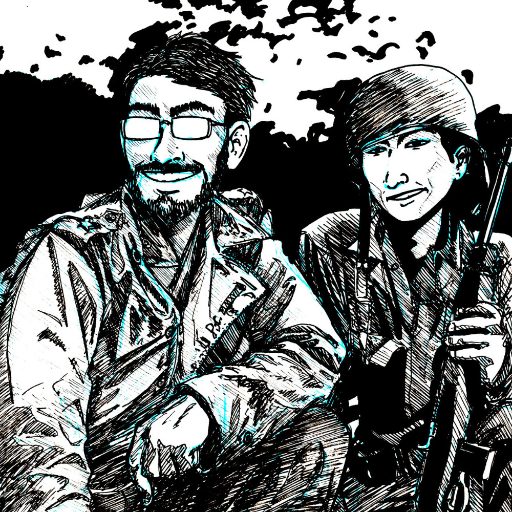
#OTD in 1944, the Seattle Times reports that Pvt. Masao Kuroki and Eugenie Sperling were married yesterday. The ceremony was performed by an Army chaplain at Fort Lawton, where Kuroki is stationed. The couple's story has been syndicated to newspapers across the country.
šŸ—ƒ #skystorians

"Miss Sperling Becomes Bride Of Pvt. Kuroki"
The former Eugenie Sperling, the 19-year-old white girl who was wooed and won by a young Japanese-American soldier and would let nothing stand in the way of their marriage, was Mrs. Masao G. Kuroki today.
Records disclosed that Miss Sperling and Private Kuroki, 24, were married yesterday afternoon by a chaplain at the Seattle Army post at which Kuroki is stationed.
The Seattle Times, October 10, 1944Denied a parental blessing for the interracial union. Miss Sperling defied her mother and came to Seattle from Spokane to be married. Denied a waiver of the three-day prenuptial waiting period required in this state, the young couple waited until their marriage license became valid yesterday. Denied a pass from his post, Kuroki summoned his pretty fiancee there, and they were married.
Miss Sperling, who, being more than 18, did not require the approval of her parents to be married remarked somewhat bitterly before the ceremony: "I thought marriage was a private affair!" and added: "Sure, I'm happy."
The Seattle Times, October 10, 1944
@askhistorians.bsky.socialOct 10, 2026, 6:33 PM

A new #Podcast is here #Skystorians! Join Dr. Lukas Rieppel to discuss the role of paleontology in the late 19th century. How the discipline evolved and how the robber barons, working class, & native peoples of the Gilded Age left a mark on paletonology.
www.askhistorians.com/podcast-arch...

@iduhouse.bsky.socialOct 10, 2026, 5:07 PM

šŸ“ŗ Artist of the Day: Nam June Paik

Known as the father of video art, Nam June Paik imagined a world where screens and creativity merged long before it became reality. His work transformed technology into a medium for play, reflection, and human connection.

#CreatorsAtWork #Skystorians #Art #ArtSky

Nam June Paik leans over a small white spherical television, his chin resting on his hand and his fingers hooked around the set’s handle. His dark jacket nearly merges with the background while the convex screen glows blue with static. This 1981 portrait, credited to photographer Lim Young-kyun, turns Paik’s chosen material into part prop, part collaborator, part extension of the artist himself.
By then, television had been Paik’s artistic language for nearly two decades. At his 1963 Exposition of Music – Electronic Television in Wuppertal, he presented altered TV sets whose electronics distorted ordinary broadcasts, treating the television not as a neutral appliance but as something an artist could compose. After moving to New York in 1964, he pushed further into portable video, performance and sculpture. With engineer Shuya Abe, he developed the Paik-Abe Video Synthesizer beginning in 1969, allowing electronic images to be mixed, colored and manipulated in real time. Global Groove in 1973 then imagined television as a fast-moving cross-cultural collage rather than a one-way national broadcast.
That history changes the feeling of this portrait. Paik is not simply posing beside ā€œnew technology.ā€ He had spent years taking television apart conceptually and physically, asking who controls the image, who receives it, and what happens when viewers become participants. The year after this photograph, the Whitney Museum mounted his 1982 retrospective, then the largest exhibition devoted to a single video artist, including large-scale installations such as V-yramid. Television had moved from the living room into the museum, and Paik had helped force that transition. Lim’s photograph catches him at the threshold: an artist resting casually on the machine he had already taught the art world to see differently.A monumental map of the United States stretches across a museum wall, built from hundreds of glowing television screens and traced state by state in red, green, blue, yellow and pink neon. Each region flickers with faces, landscapes, popular culture and moving images. This is Nam June Paik’s Electronic Superhighway: Continental U.S., Alaska, Hawaii, created in 1995 and now in the Smithsonian American Art Museum.
The work measures roughly 15 by 40 feet and uses 336 television sets within a 51-channel video installation, plus custom electronics, steel, wood and hundreds of feet of neon tubing. The images inside each state are not random. Paik assembled personal associations, television history and American cultural shorthand into a country experienced through media. Arkansas mixes his longtime collaborator Charlotte Moorman with Bill and Hillary Clinton. Alabama includes documentary material from the Montgomery Bus Boycott, with Martin Luther King Jr. and Malcolm X on the soundtrack, complicating the romantic American fantasy of the open highway. In Washington, D.C., a live camera replaces a monitor, placing the viewer inside the electronic map.
The title reaches back to 1974, when Paik submitted a report to the Rockefeller Foundation imagining an ā€œelectronic super highway,ā€ a broadband network linking cities through satellites, cables, data systems and eventually fiber optics. He was not simply predicting the internet. He was asking what a connected media society might do to culture, education, politics and human relationships.
By 1995, the World Wide Web was entering public life. Paik answered that moment with a map in which geography and electronic information are inseparable. America becomes a network of screens, each place understood through circulating images. The work is exuberant and seductive, but its question feels even sharper now: when screens become the roads through which we know a country, who decides what we see along the way?In a black-and-white photograph by Tom Haar from 1974, Nam June Paik stands at left and Shigeko Kubota at right in their Westbeth studio in New York, each holding a bulky portable video camera. Between them sits a rounded television showing a woman’s face, perched on an old cabinet beside the wide horn of an antique phonograph. Kubota wears a long dress printed with repeated female faces. The image resembles a family portrait, except the family is people, cameras, screens and machines.
The photograph records a moment when portable video was still radically new. Sony’s Portapak made it possible for one artist to record outside a television studio, loosening moving images from the expensive infrastructure of broadcast production. Paik seized that freedom early, but this photograph also matters because Kubota was not merely his partner or assistant. She was a major video artist in her own right, a Fluxus participant who bought a Portapak in 1970 and developed an autobiographical practice merging video and sculpture. In 1974 she also began directing the video program at Anthology Film Archives, helping create space for the emerging medium.
Paik and Kubota married in 1977 and sometimes collaborated, including on Merce by Merce by Paik. Yet their approaches remained distinct. Kubota later pushed back against assumptions that she imitated Paik, describing their practices as ā€œwater and oil.ā€ Her work moved toward memory, travel, nature and sculptural video environments while Paik increasingly pursued mass communication, broadcast networks and spectacular electronic installations.
Seen with that history, Haar’s photograph is more than an image of ā€œthe father of video artā€ with his wife. It shows two artists inside the unstable birth of a medium, each holding technology that let artists record their own lives, manipulate television’s authority and build alternatives to mainstream broadcasting. The cameras are not accessories. They are declarations of authorship.Inside the circular atrium of the National Museum of Modern and Contemporary Art in Gwacheon, South Korea, television screens rise in concentric tiers into a towering electronic spire. The monitors glow with shifting color and moving imagery, narrowing toward the skylight. This is Nam June Paik’s The More, The Better, completed in 1988, his largest permanent video installation and a defining monument of electronic art.
The sculpture contains 1,003 monitors on a steel structure. The number is meaningful: 10/03 evokes October 3, Korea’s National Foundation Day. Paik had left Korea during the Korean War and built his career across Japan, Germany and the United States, but by the 1980s he was using satellite broadcasts to collapse cultural distance. Good Morning, Mr. Orwell linked New York and Paris in 1984. Bye Bye Kipling connected Seoul, Tokyo and New York in 1986. The More, The Better arrived as South Korea prepared to host the 1988 Seoul Olympics and was switched on September 15, two days before the Games opened. Paik’s satellite project Wrap Around the World carried the installation to an international audience.
Its title came from scale itself. When the planned number of televisions seemed too small for the museum’s rotunda, Paik embraced multiplication. More screens meant more images, more information, more points of contact. The result resembles a pagoda, monument, broadcast tower and futuristic city at once, turning television into architecture.
Later history makes Paik’s questions about technology even richer. Aging CRT components and fire risks forced the museum to shut it down in 2018. After a major conservation project, it was reactivated in 2022. Hundreds of damaged CRTs were repaired or replaced, while obsolete small screens were fitted with modern flat-panel displays inside preserved housings. A work about technological abundance became a conservation puzzle: when the machines of media history die, what must survive for the artwork to remain itself?
@shonaparkerhistory.bsky.socialOct 10, 2026, 3:23 PM

How The Victorians Lived is currently only Ā£1.99 on Amazon Kindle in the UK and $2.99 in the US šŸ˜If you'd like to try out my writing, now's your chance! Let me know what you thinkšŸ’œ

www.amazon.co.uk/How-Victoria...

#19thcentury #19thC #Skystorians #nonfiction #history #Victorian šŸ—ƒļø #victorianera

@bsky.realhackhistory.orgOct 10, 2026, 2:36 PM

Please RT for reach: Do I have anyone following who knows or knows someone who would know how to access old UK court records? I’m looking for a case that was eventually dismissed but was held at Southwark Crown Court in 1991 - 1992.
#skystorians #history

@royalhistsoc.orgOct 10, 2026, 1:15 PM

We are very sorry to learn of the death of Professor Chris Wickham. Chris was elected a Fellow of the Society in 1986.

As well as being a superb scholar, Chris played leading roles in shaping and interpreting the research and publishing environments in which historians work #Skystorians

@onslies.bsky.socialOct 10, 2026, 12:00 PM

#histenv #envhist #EnvironmentalHistory #skystorians @ihr.bsky.social

@mobhistory.substack.comOct 10, 2026, 11:30 AM

#OTD (Oct 10)
Events in U.S. organized crime #history.

#QueensNY #WorcesterMA #Brooklyn #LasVegas #NewYork #Mafia #MafiaHistory šŸ—ƒļø #Skystorians

On this date, Oct 10...
• in 1891, future Buffalo crime boss Stefano Magaddino is born in Castellammare del Golfo, Sicily.
• in 1911, Giuseppe Costabile is convicted in New York of carrying a bomb.
• in 1925, Frank LaPuma is found murdered in New York City. Vito Genovese is arrested in Queens NY for homicide, later discharged.
• in 1927, Raymond L.S. Patriarca is arrested at Worcester MA for bootlegging.
• in 1928, boss of bosses Salvatore 'Toto' D'Aquila is shot to death in Manhattan. Mike Abbatemarco of Brooklyn is given an elaborate, well attended funeral.
• in 1930, Thomas Reggione of New York begins a lengthy prison sentence for armed robbery. Murdered Brooklyn mobster Carmelo Piraino is buried.
• in 1935, a federal grand jury at New York indicts Dutch Schultz on 11 counts of failing to file income tax returns.
• in 1957, New York crime boss Joseph Bonanno is observed in Italy, traveling under an alias and accompanied by four men.
• in 1963, an informant tells the FBI that mafiosi Tommy Eboli and Gerry Catena have paid Joseph Valachi's wife $10,000 to give the press negative information about her husband.
• in 1971, Frank Rosenthal becomes an employee of the Las Vegas Stardust at an annual salary of $190,000.
• in 1973, two New York television cameramen are beaten when they attempt to film the funeral for Paul Vario's son. 
Image of Joe Bonanno.
@kefauver4prez.bsky.socialOct 10, 2026, 12:15 AM

Look out, Senator, Estes is stealing your girl - and your job!

This 1948 cartoon from the Chattanooga Daily Times shows a key factor in Kefauver's upset win over Senator Tom Stewart: the Tennessee Valley Authority.

#skystorians #history #polisky

@cakrolik.bsky.socialOct 9, 2026, 8:15 PM

I just discovered the *NOTES* column option in Canvas's gradebook. WHY did I not know about this feature sooner!?

#academicsky #medievalsky #skystorians

@footnotesinhistory.bsky.socialOct 9, 2026, 5:03 PM

#OTD in 1944, Eugenie Sperling received her marriage license today while being swarmed by reporters. Sperling, who is engaged to Pvt. Masao Kuroki, refused to speak with reporters, stating, "I thought marriage was a private affair." The couple will be married at nearby Fort Lawton.
šŸ—ƒ #skystorians

"Jap-American Gets License"
Dashing from the marriage license bureau of the county auditor's office this forenoon after obtaining a license to marry a Japanese-American soldier, 19-year-old Eugenie Sperling declared bitterly to reporters and photographers: "I thought marriage was a private affair."
The brown-haired young woman whose home is in Spokane, came here to be married to Pvt. Masao G. Kuroki, who is stationed at Fort Lawton. The couple applied for a license Thursday and then asked Presiding Judge Clay Allen to grant them a waiver of the three-day waiting period so that they might be married immediately. Judge Allen refused the request on the grounds that he must have a written request from Miss Sperling's mother, who is "violently opposed"' to the marriage.
The Seattle Times, October 9, 1944Dressed neatly in a black coat and black sandals and carrying an overnight bag, the girl appeared at County Auditor Robert A. Morris' office this forenoon, without her fiance to pick up the marriage license. When reporters approached her she ran from the office. A few moments later however. she stopp and listened to their questions.
"I don't care to talk and I'm not going to talk," she declared firmly. "You can say anything you want and you can stay as long as you want, but I'm still not going say anything."
When asked if she was happy about her impending marriage, she said, "Sure I'm happy, but I'm not going to say anything. Someone told me not to talk, and I'm following their advice."
The Seattle Times, October 9, 1944Miss Sperling came to Spokane a short time ago from Minnesota. Her mother, a forewoman in a Spokane launory, told The Times she had forbidden her daughter to marry the 24-year-old Japanese. 
Where and when Miss Sperling her soldier fiance wouid be and married was indefinite today. In asking the court for a waiver of the three-day wait, Private Kuroki had said he was not sure he would still be in Seatlle today. Army officials said he still was here, but there was question whether he could leave his post for the ceremony. In that case, there was a possibility that the wedding would be held at Fort Lawton.
The Seattle Times, October 9, 1944
@ghilondon.bsky.socialOct 9, 2026, 5:01 PM

dynamics in society, and point to policies that work or that predictably lead to disasters.

#medievalisms #medievalhistory #middleages #modernity #historicalresearch #skystorians
8/8

@d-j-frost.bsky.socialOct 9, 2026, 4:26 PM

I'm trying to find a source for the biographical detail on the Wikipedia page for the Marxist philosopher John Lewis: en.wikipedia.org/wiki/John_Le...

I've checked the references and it's not in them! And I can't find anything in the CPGB books I've got to hand...

Any ideas?

#skystorians

@psheridanhistory.bsky.socialOct 9, 2026, 4:05 PM

Working on my two last dissertation chapters and I love that I get to dive into my niche interest of state constitutions #skystorians

Load more