Grilled Cheese

ExploreLog inSign up
Terms of UsePrivacy PolicyCommunity StandardsHelpGet the app

Grilled Cheese is a product of Village Compute

Version devBuilt at: 2026-10-13 03:52:57 EDT

Explore

PostsPeople
LatestRanked
@ecpr.bsky.socialSep 17, 2026, 7:00 AM

🚨Deadline: Call for editors of The Loop 🚨

@ecprtheloop.bsky.social seeks Academic Editors or an editorial team from 1 Oct

Are you familiar with:
✔️ What makes a successful blog post?
✔️ The Loop's editorial process?
✔️ the role of blogs in promoting #polsci to a wider readership?

👇️ Apply today!
@polstudies.bsky.socialSep 16, 2026, 5:02 PM

Greenwashing doesn't just mislead consumers. It corrupts democratic rhetoric, letting corporations pose as agents of political change. Our everyday language helps make that possible. Corrado Fumagalli argues we have a duty to counter-frame in ordinary conversations: buff.ly/JNSnFiW

#polsky #polsci

"Abstract
Normative research on greenwashing has largely focused on the environmental and economic consequences of false or misleading green claims. This article introduces a new perspective that sheds light on its democratic costs. First, I argue that by interfering with the transmission of a public political culture through deceptive claims, greenwashing constitutes a particularly problematic form of corporate capture of democratic rhetoric. I further contend that greenwashing should also be examined against ordinary patterns of language use, given their capacity to shape the range of communicative possibilities available. At the normative level, I then defend a duty to counter-frame: a duty of ordinary citizens to play their part in avoiding reinforcing the communicative conditions that facilitate corporate capture of public rhetoric. This duty aims to initiate processes of reciprocal reason-giving about responsible language use within everyday conversations."
@polstudies.bsky.socialSep 16, 2026, 11:02 AM

IN NEW ISSUE: How does internal migration affect political life in autocracies? Yuequan Guo & Jiannan Zhao examine how returning migrants in China show higher political efficacy & shifted forms of participation. Read OPEN ACCESS: buff.ly/6pRihmv

@polstudiesassoc.bsky.social #polsky #polsci

Abstract
How is internal migration related to political efficacy and participation in autocracies? Existing research emphasizes migration’s socioeconomic impact, given the staggering internal migration volume in developing countries, but pays inadequate attention to its relationship with politics. We argue that migrants are more likely to interact with the government and possess greater political efficacy than non-migrants. When migrants return home, they are motivated by higher political efficacy to participate more in politics than non-migrants. We test the theory using four nationally representative surveys in China from 2006 to 2014 and find that returning migrants are more confident in understanding and influencing politics. However, they vote less in elections and avoid challenging the government collectively. Exploratory analysis shows that the counterintuitive results arise because returning migrants shift from traditional political participation, like voting, to new means, like lodging complaints online. The relationship between migration and politics is contingent on the authoritarian context.
@polstudies.bsky.socialSep 15, 2026, 5:02 PM

Should EU migrants receive equal welfare treatment? Pietro Intropi examines reciprocity in EU law, arguing rights and contributive duties vary by migrants’ contributions and the justice of the host state. Read more: buff.ly/O7Foc1b

@polstudiesassoc.bsky.social #polsky #polsci

"Abstract
Should all European Union (EU) citizens enjoy the same welfare benefits as nationals when they migrate within Europe? Which categories of EU migrants (workers, job-seekers and non-economically active ones) should be entitled to full equal treatment? I discuss reciprocity as a moral basis of EU law, extending White’s account of fair reciprocity to the supranational context of the EU. I suggest that the concept of workers in EU law should be reformed to account for a plurality of valuable contributions. I also discuss the implications of reciprocity in non-ideal conditions, arguing that EU migrants have a reduced contributive obligation when they face injustice in the host member state. The seriousness of such injustice may even imply lifting the contributive obligation entirely. The contributive obligation of non-economically active individuals is a duty to seek work, and I suggest it entitles them to limited equal treatment."
@polstudies.bsky.socialSep 15, 2026, 11:01 AM

IN NEW ISSUE: Does polarization increase violence toward political candidates? Morten Harmening & @donyhu.bsky.social examine how ideological divides fuel aggression in democratic elections. Read OPEN ACCESS: buff.ly/hoXcA8B

@polstudiesassoc.bsky.social #polsky #polsci #germany

Abstract
Political violence is on the rise in Western democracies. The increase in violence against political actors is alarming because it clashes with fundamental democratic values. Political violence is also concerning because it does not affect all politicians equally. Existing research has primarily focused on the demographic characteristics of targeted politicians, while largely overlooking ideological factors. Using candidate survey data from the 2021 German federal election, we show that the polarization of electoral districts, as well as party and candidate extremeness increase the likelihood that politicians report being victimized. This is the case both for physical attacks and property damage.
@polstudies.bsky.socialSep 14, 2026, 5:02 PM

Why do senators respond differently to China trade shocks? @weitianliu.bsky.social finds Democrats became critical as import exposure rose, while Republicans responded less. Read more: buff.ly/khjZ0Tu

@polstudiesassoc.bsky.social #polsky #polsci

"Abstract
Trade among major powers is never purely economic; it is also a site of political conflict over blame, threat, and national interest. Why, then, do legislators facing similar trade shocks respond in such different ways? Focusing on US Senate rhetoric on trade with China between 2009 and 2023, this paper examines how partisanship conditions the translation of economic disruption into elite political speech. Drawing on sentiment analysis of Senate floor speeches and state-level measures of Chinese import exposure across two periods, it develops a partisan-conditioning argument: trade disruption acquires political meaning as parties interpret it. Democratic senators grew markedly more critical as local import exposure increased, especially under the earlier China Shock window. Republicans showed a much flatter response to early-period exposure and even a slightly positive association with later-period penetration. The China Shock left a durable mark on Senate discourse, but one structured by party, not geography alone."
@ecpr.bsky.socialSep 14, 2026, 2:02 PM

💡 Are you skilled at transforming complex #Polsci research into clear, engaging content?

🚨 3 days left to apply 🚨

👀 The Loop is seeking Academic Editors or an editorial team to start 1 Oct 2026 @ecprtheloop.bsky.social

@polstudies.bsky.socialSep 14, 2026, 11:01 AM

IN NEW ISSUE: Should political parties pick their parliamentary candidates by lottery among members? William Bosworth, Keith Dowding & Adriano Giuliani examine sortition within parties as a guard against elite capture while preserving deliberation. Read OPEN ACCESS: buff.ly/YcMEp7o

#polsky #polsci

Abstract
We argue political parties should select their parliamentary candidates by way of a lottery among their members. Alternatives such as party primaries, caucus votes, and elite selection create entry points for elite manipulation of the electoral process. While sortition for selecting parliaments directly has been said to control for elite capture, it is also likely to dissolve political parties and established voting blocs within parliament. This would undermine the democratic ideal of political parties, including their role in producing and implementing comprehensible legislative agendas. Sortition within parties, however, will not have that effect. Rather it promotes the democratic ideal by guarding against elite capture and stimulating internal deliberation in a feasible way. Voting will still weed out poor candidates in the general election. Party members should also be able to vote to retain successful lottery winners for subsequent elections to incentivize good performance and party discipline in parliament. We discuss the limited use of insaculación by the Mexican political party Morena as provisional evidence for the feasibility of our proposal.
@bschlipphak.bsky.socialSep 14, 2026, 7:14 AM

Just to also spread the word among the #PolSci community: Diamond open access journals are a great contribution to the community but need your help. Pledging to be a reviewer (at least) once a year really makes a difference for them - and in the end, for us.

@polstudies.bsky.socialSep 13, 2026, 5:01 PM

Why do governments prevent crime in some places but neglect others? @juangelvezf.bsky.social examines Colombia, finding incumbents direct crime prevention funds to electorally competitive municipalities, boosting subsequent votes for the incumbent coalition. Read more: buff.ly/6ruEjgq

#polsci

"Abstract
Why do governments prevent crime in some places while neglecting others? Crime prevention policies are often viewed as too slow, diffuse, and politically intangible to generate electoral rewards. When implemented, existing research suggests they primarily serve to reward co-partisans or mobilize ideologically aligned voters. This article challenges that view by arguing that incumbents allocate crime prevention resources to electorally competitive municipalities because these investments yield electoral returns. Using detailed project-level data from Colombia, I show that national incumbents disproportionately direct crime prevention funds to municipalities where recent presidential elections were closely contested, rather than to areas with higher crime rates or strong partisan loyalties. I then show that these allocations increase the vote share of the right-wing incumbent coalition in subsequent elections. Drawing on quantitative analyses and interviews with policymakers and bureaucrats, I argue that these effects operate primarily through the visibility and attribution of crime prevention projects, particularly those aligned with right-wing issue ownership of public security."
@polstudies.bsky.socialSep 13, 2026, 11:00 AM

IN NEW ISSUE: In what senses might body counts be, paradoxically, both humanizing and dehumanizing? @moyalloyd.bsky.social explores the role that orders of grievability play in determining whose lives are counted & how. Read OPEN ACCESS: buff.ly/xwx8g2w

@polstudiesassoc.bsky.social #polsky #polsci

Abstract
This paper is concerned with a conundrum: the contention that the dead are dehumanized both through body counts and their absence. To understand this paradox we need to excavate who normatively speaking has a life that counts. I advance the idea of countability as a novel explanatory concept to name the general conditions of possibility, including the ordering of grievability, that underpins acts of counting. Among other things, orders of grievability regulate who enjoys ontological status as fully human. To be eligible for counting an embodied being must first be countable. Furthermore, body counts are performative. They have onto-political effects, organizing and facilitating, reflecting and reiterating, the differential valuation of human lives as well as the distribution of ontological possibilities. The failure or refusal to count has parallel onto-political effects. (De)humanization, however, is not just an issue of whether deaths are counted but, as shown here, how they are counted.
@polstudies.bsky.socialSep 12, 2026, 11:00 AM

IN NEW ISSUE: Is it rational to expect to win elections? @mbarnfield.bsky.social argues so-called "wishful thinking" about election outcomes is part of how voters make rational sense of their role in democracies. Read OPEN ACCESS: buff.ly/FGqoGEO

@polstudiesassoc.bsky.social #polsky #polsci

Abstract
It is well established in political science that those who favour an election outcome tend to say it has a higher chance of success than those who oppose it. This tendency towards so-called ‘wishful thinking’ is often treated as a problem for democracy because it shows that voters are, as the term suggests, irrational. In this article, I make the case that partisan electoral expectations are significant not because they demonstrate widespread irrationality, but because they show how voters make sense of their role in democracies. I provide an alternative account of partisan electoral expectations as following a principle of electoral hope. On this account, partisan electoral expectations are rational in a practical, if not necessarily theoretical, sense.
@polstudies.bsky.socialSep 11, 2026, 5:01 PM

Does the level of government shape political trust and compliance? Susan Banducci, @l-horvath.bsky.social & Daniel Stevens argue local trust influences prosocial behaviour, unlike national trust. Read OPEN ACCESS: buff.ly/RgZMQ5R

@polstudiesassoc.bsky.social #polsky #polsci #PoliticalTrust

"Abstract
According to Tang and Huhe, individuals “are nested in a multiplicity of governments,” including national and local governments, “and . . . constantly find themselves in variant relationships with government at different levels”. Yet, previous research has mostly concentrated on individuals’ assessments of national governments, or supranational organizations such as the European Union, overlooking assessments of local governments and their effects. To address this, we fielded a four-wave survey in England in 2020–2021 capturing local and national government trust, as well as contemporaneous indicators of performance across these levels of government. Disaggregating between- and within-individual explanations for variation, we find distinct influences on trust in national and local government, and that trust in local government exerts an influence on pro-social behaviour whereas national government trust does not. Importantly, for future research on political trust, our findings show that the level of government matters for both the drivers and consequences of political trust."
@polstudies.bsky.socialSep 11, 2026, 11:00 AM

IN NEW ISSUE: How do people adapt to sanctions in authoritarian contexts? Yechan Moon & Taehee Whang show informal economies in North Korea expand where sanctions hit hardest. Read OPEN ACCESS: buff.ly/vblP2x5

@polstudiesassoc.bsky.social #polsky #polsci

Abstract
How do people in authoritarian regimes adapt to external economic pressure? We examine how economic sanctions affect informal economic activity in North Korea. Using county-level data from 167 regions for the years 2016, 2018, and 2022, we find that informal economic activity significantly expanded in areas most affected by sanctions, particularly those reliant on heavy industry such as primary metals, machinery, and transportation. These bottom-up adaptations illustrate how citizens, rather than the state, absorb the shocks of international pressure. By tracing micro-level adjustments over time, our study sheds light on the uneven and indirect effects of sanctions in targeted countries. The findings highlight the need for more strategic, sector-sensitive sanction design and contribute to broader debates on the effectiveness of economic sanctions, authoritarian resilience, and economic coping mechanisms under constraint.
@polstudies.bsky.socialSep 10, 2026, 5:02 PM

Who supports martial law in a democracy? Brandon Beomseob Park & Inkwan Chung examine South Korea, finding affective polarization drives support for executive overreach. Read more: buff.ly/63rPmga

@polstudiesassoc.bsky.social #polsky #polsci #AffectivePolarization #ResearchNote

Abstract
On 3 December 2024, South Korea experienced an unprecedented political crisis when the president declared martial law. While the declaration was rapidly reversed and condemned by key democratic institutions, public opinion did not converge on rejection. Instead, support for—and tolerance of—the measure persisted among a nontrivial share of citizens. Why, in a democracy with functioning institutions, are some citizens willing to accept extraordinary executive measures? Using original nationwide survey data, this research shows that public support for martial law is strongly associated with affective polarization. Individuals who express strong partisan and leader-based affective alignment with the incumbent are significantly more likely to accept martial law, while those polarized in the opposite direction overwhelmingly reject it. The findings suggest that affective polarization can align evaluations of executive overreach with partisan loyalties, weakening normative constraints even in consolidated democracies where institutional safeguards continue to function effectively.
@power-proj.bsky.socialSep 10, 2026, 12:47 PM

Our leads @mqpellicer.bsky.social and @evawegner.bsky.social presented two #PoWER project papers on tax policy bias and parliamentary property assets at LMU Munich's Politics of Taxation workshop. 📊 #PolSci
wealthpolicies.eu/activities

@power-proj.bsky.socialSep 10, 2026, 12:45 PM

Our team members @gventurini.bsky.social and @dalexiadou.bsky.social presented at #APSA2026, adressing questions:

• Do female finance ministers govern differently than men?
• How does the post-political "revolving door" career gap affect women?

wealthpolicies.eu/activities

📊 #PolSci

@polstudies.bsky.socialSep 9, 2026, 11:02 AM

IN NEW ISSUE: How does media framing shape perceptions of election winners? Thomas M. Meyer & Katjana Gattermann argue equivalency framing influences voter views, especially for ambivalent voters. Read OPEN ACCESS: buff.ly/Z1yU6IB

@polstudiesassoc.bsky.social #polsci #polsky

Abstract
This article examines how media framing of election results affects voter perceptions of election winners and losers. We conceive of media framing as equivalency framing because the very same election result can be framed positively or negatively. We expect direct effects on voter perceptions and additionally argue that ambivalent voters should be most affected by such framing in their evaluation of election results. We test these arguments with two pre-registered studies, namely, a survey experiment that employs fictional stimulus material and a two-wave panel survey linked to a news content analysis against the backdrop of the 2021 German Federal Election. The findings reveal framing effects on voter perceptions in fictional settings and conditional effects driven by partisan reasoning in real-world contexts. These findings provide an important mechanism for future research interested in the consequences of election outcomes for government legitimacy or political system support.
@ecprtheloop.bsky.socialSep 8, 2026, 9:36 AM

✍️ Do you have a flair for communicating #PolSci research beyond academia?
👀 We're seeking experienced political scientists as Academic Editors – individually or as an editorial team – to join The Loop from 1 Oct 2026.
📆 New deadline: Thu 17 Sep.
💻️ Find out how to apply: buff.ly/9aJEM6Y

@b-stock.bsky.socialSep 8, 2026, 8:36 AM

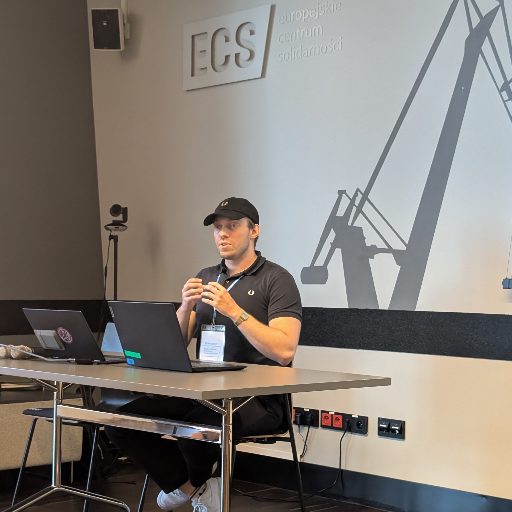
Excited to present my work on Active Clubs tomorrow morning at ECPR in Kraków! 🏛️
​I'm sharing how I combined two LLMs for multimodal topic modeling alongside qualitative analysis.
​Panel info: ecpr.eu/Events/Event...
​DMs open if you want to connect! #ECPR2026 #PolSci

Load more