Grilled Cheese

ExploreLog inSign up
Terms of UsePrivacy PolicyCommunity StandardsHelpGet the app

Grilled Cheese is a product of Village Compute

Version devBuilt at: 2026-10-13 22:02:59 EDT

Explore

PostsPeople
LatestRanked
Load more
@messier79.bsky.socialSep 20, 2026, 1:00 PM

#astronomypictureoftheday #apod Analemma over the Callanish Stones https://apod.vidry.ca/day/260920/en

APOD
@jens0331.bsky.socialSep 20, 2026, 12:12 PM

Gotta have to link to this #APOD:
Analemma over the Callanish Stones
Image Credit & Copyright: Giuseppe Petricca
apod.nasa.gov/apod/ap26092...

@juanmentat.bsky.socialSep 20, 2026, 11:00 AM

🔭 Analemma over the Callanish Stones

Fuente: NASA APOD http://www.star.ucl.ac.uk/~apod/apod/

#APOD #NASA

Analemma over the Callanish Stones
@astronomybot.bsky.socialSep 20, 2026, 9:05 AM

Astronomy Picture Of the Day - APOD Title: Analemma over the Callanish Stones Date: 2026-09-20 Image by: Giuseppe Petricca #APOD #NASA

Image posted by astronomybot
@apod.sizo.devSep 20, 2026, 9:00 AM

🔭 El analema sobre las piedras de Callanish

Créditos: Giuseppe Petricca
Fuente: https://apod.nasa.gov/apod/ap260920.html

#astronomia #astrofotografia #cosmos #apod

Si salieras al exterior a la misma hora cada día y tomaras una foto que incluyera el Sol, ¿cómo cambiaría la posición del Sol? Una respuesta visual a esta pregunta es un analema, una imagen compuesta tomada desde el mismo lugar a la misma hora durante un año. El analema destacado fue compuesto a partir de imágenes tomadas cada pocos días al mediodía cerca del pueblo de Callanish, en las Hébridas Exteriores de Escocia, Reino Unido. En primer plano se encuentran las piedras de Callanish, un círculo de piedras construido alrededor del 2700 a.C. durante la Edad de Bronce de la humanidad. No se sabe si la disposición de las piedras de Callanish tuvo o tiene un significado astronómico. Las causas últimas de la forma en 8 de este y todos los analemas son la inclinación del eje terrestre y la elipticidad de la órbita de la Tierra alrededor del Sol. En los solsticios, el Sol aparece en la parte superior o inferior del analema. La imagen destacada fue tomada cerca del solsticio de diciembre, por lo que el Sol aparece cerca de la parte inferior. Los equinoccios corresponden a los puntos medios del analema y no al punto de intersección. En dos días habrá un equinoccio, cuando el día y la noche son iguales en todo el planeta Tierra. Muchas culturas celebran el cambio de estación con el equinoccio.
@fanapod.baldanders.infoSep 20, 2026, 6:30 AM

#apod 2026-09-20
Analemma over the Callanish Stones
Image Credit: Giuseppe Petricca
Web page: https://science.nasa.gov/image-article/apod-2026-september-20-analemma-over-the-callanish-stones/

webinfo-image-3156313224.jpg
@sayed.appSep 20, 2026, 5:41 AM

🌠 Space Image of the Day: Analemma over the Callanish Stones

📷 Giuseppe Petricca
🗓️ 2026-09-20

If you went outside at the same time every day and took a picture that included the Sun, how would the Sun's position change? A visual answer to that questi...

#NASA #APOD #Space #Astronomy #Science

NASA APOD: Analemma over the Callanish Stones
@apoddaily.bsky.socialSep 20, 2026, 5:24 AM

🔭 Analemma over the Callanish Stones

📅 2026-09-20
© Giuseppe Petricca
Src: NASA Astronomy Picture of the Day

#NASA #APOD #Astronomy #Astrophotography #Space

NASA Astronomy Picture of the Day for 2026-09-20: Analemma over the Callanish Stones. Analemma over the Callanish Stones
@uzaydanhaberler.bsky.socialSep 20, 2026, 4:22 AM

Callanish Taşları Üzerinde Analemma

#APoD Türkçe Günün Astronomi Görseli açıklama metnini sayfamızdan okuyabilirsiniz:

https://www.uzaydanhaberler.com/2026/09/20/callanish-taslari-uzerinde-analemma-2/

Günün Astronomi Görseli
@astronomyunlocked.bsky.socialSep 19, 2026, 8:42 PM

A Moon’s shadow across Earth, captured on 5 Sep 2026 by APOD, illustrates the geometry of lunar eclipses.

If this makes you want to spend more time under the stars, have a look (Ad AmazonAffiliate)→
https://www.amazon.com/dp/B0G4PGTZ3M?tag=wtsr0f-20

#APOD

Photo, no description
@astronomybot.bsky.socialSep 19, 2026, 8:05 PM

Astronomy Picture Of the Day - APOD Title: A Zodiacal Night Date: 2026-09-19 Image by: Neelam and Ajay Talwar #APOD #NASA

Image posted by astronomybot
@orbitandbeyond.bsky.socialSep 19, 2026, 4:50 PM

When the Moon blocks the Sun, its shadow sweeps Earth—shown in the 5 Sep 2026 APOD image.

If you're ready to spend a little more time with the night sky, have a look (Ad AmazonAffiliate)→
https://www.amazon.com/dp/B0G4PGTZ3M?tag=wtsr0f-20

#APOD

Photo, no description
@apoddaily.bsky.socialSep 19, 2026, 2:14 PM

🔭 A Zodiacal Night

📅 2026-09-19
© Neelam and Ajay Talwar
Src: NASA Astronomy Picture of the Day

#NASA #APOD #Astronomy #Astrophotography #Space

NASA Astronomy Picture of the Day for 2026-09-19: A Zodiacal Night. A Zodiacal Night
@astropicdaily.bsky.socialSep 19, 2026, 1:15 PM

A Zodiacal Night

#astronomy #astrophotography #apod

Also known as the false dawn, a luminous band of zodiacal light is captured in this dark night skyscape. The serene view was recorded just before the beginning of astronomical twilight during September's star party at the remote Hanle Dark Sky Reserve, Ladakh, India, planet Earth. At about 4,500 meters altitude, the dark sky reserve presents a haven for hardy stargazing and astrophotography enthusiasts. While meteors streak through the night, bright planet Jupiter appears immersed in the faint zodiacal glow near the eastern horizon. Follow the zodiacal band toward the zenith to find open star cluster M44 and a yellowish tinged planet Mars near the center of the frame. In fact, serendipitous detections of interplanetary dust by NASA's Juno spacecraft suggest Mars itself is the source of dust that back scatters sunlight and creates zodiacal light in planet Earth's night.  APOD's main NASA site is moving: From apod.nasa.gov to science.nasa.gov/apod
@messier79.bsky.socialSep 19, 2026, 1:00 PM

#imageastrodujour #apod Une nuit zodiacale https://apod.vidry.ca/day/260919/fr

APOD
@messier79.bsky.socialSep 19, 2026, 1:00 PM

#astronomypictureoftheday #apod A Zodiacal Night https://apod.vidry.ca/day/260919/en

APOD
@astropicdaily.bsky.socialSep 19, 2026, 12:08 PM

A Zodiacal Night

#astronomy #astrophotography #apod

Also known as the false dawn, a luminous band of zodiacal light is captured in this dark night skyscape. The serene view was recorded just before the beginning of astronomical twilight during September's star party at the remote Hanle Dark Sky Reserve, Ladakh, India, planet Earth. At about 4,500 meters altitude, the dark sky reserve presents a haven for hardy stargazing and astrophotography enthusiasts. While meteors streak through the night, bright planet Jupiter appears immersed in the faint zodiacal glow near the eastern horizon. Follow the zodiacal band toward the zenith to find open star cluster M44 and a yellowish tinged planet Mars near the center of the frame. In fact, serendipitous detections of interplanetary dust by NASA's Juno spacecraft suggest Mars itself is the source of dust that back scatters sunlight and creates zodiacal light in planet Earth's night.  APOD's main NASA site is moving: From apod.nasa.gov to science.nasa.gov/apod
@juanmentat.bsky.socialSep 19, 2026, 11:00 AM

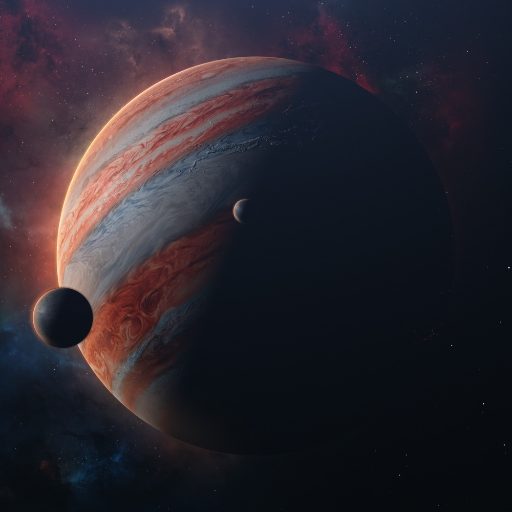
🔭 A Zodiacal Night

Fuente: NASA APOD http://www.star.ucl.ac.uk/~apod/apod/
#APOD #NASA

A Zodiacal Night
@astronomybot.bsky.socialSep 19, 2026, 9:05 AM

Astronomy Picture Of the Day - APOD Title: A Zodiacal Night Date: 2026-09-19 Image by: Neelam and Ajay Talwar #APOD #NASA

Image posted by astronomybot
@apod.sizo.devSep 19, 2026, 9:00 AM

🔭 Una noche con luz zodiacal

Créditos: Neelam and Ajay Talwar y TWAN
Fuente: https://apod.nasa.gov/apod/ap260919.html

#astronomia #astrofotografia #cosmos #apod

Conocida también como el falso amanecer, una banda luminosa de luz zodiacal aparece en este tranquilo paisaje nocturno. Esta vista serena fue capturada justo antes del inicio del crepúsculo astronómico durante la fiesta estelar de septiembre en la Reserva de Cielo Oscuro de Hanle, Ladakh, India, en el planeta Tierra. A unos 4,500 metros de altitud, esta reserva ofrece un refugio ideal para entusiastas de la observación estelar y la astrofotografía. Mientras los meteoros atraviesan el cielo nocturno, el brillante planeta Júpiter aparece inmerso en el tenue resplandor zodiacal cerca del horizonte oriental. Siguiendo la banda zodiacal hacia el cenit, se encuentra el cúmulo estelar abierto M44 y el planeta Marte con un tinte amarillento en el centro del encuadre. De hecho, detecciones fortuitas de polvo interplanetario por la nave Juno de NASA sugieren que Marte es la fuente del polvo que dispersa la luz solar y crea la luz zodiacal en la noche de la Tierra.