Grilled Cheese

ExploreLog inSign up
Terms of UsePrivacy PolicyCommunity StandardsHelpGet the app

Grilled Cheese is a product of Village Compute

Version devBuilt at: 2026-10-13 09:58:44 EDT

Explore

PostsPeople
LatestRanked
@adamchapman.bsky.socialOct 3, 2026, 7:15 PM

Gwych!

Fantastic to see this resource (a massive corpus of 15th century Welsh poetry) back again. #HanesCymru #Skystorians

@glmasson.bsky.socialOct 3, 2026, 2:23 PM

FINALLY! Regained access to my account after months of website issues! #skystorians #history

@mobhistory.substack.comOct 3, 2026, 1:03 PM

#OTD (Oct 03)
Events in U.S. organized crime #history.

#Brooklyn #BuffaloNY #Detroit #FortLeeNJ #Chicago #Florida #NewYork #Mafia #MafiaHistory 🗃️ #Skystorians

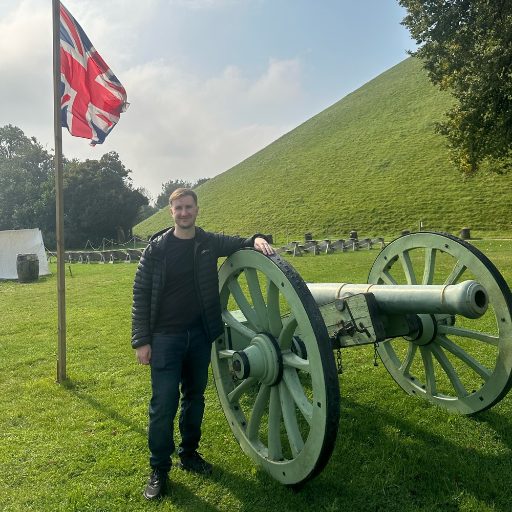
On this date, Oct 03...
• in 1903, Joseph Valachi is born Giuseppe Vilacio in New York City.
• in 1905, Vito Laduca is arrested in Baltimore in connection with a Brooklyn NY kidnapping.
• in 1912, Harlem racketeer Aniello Prisco is arrested for the Sept. 3 killings of Tony Zaccaro and Giuseppe Jacco.
• in 1914, Monk Eastman is arrested for vagrancy in Buffalo NY, and a city court orders him to leave the community.
• in 1921, arriving in New York traffic court on a speeding charge, Joseph 'Joe Peppe' Viserti is recognized as a homicide suspect and charged with the killing of Joseph Lagumina.
• in 1931, Elmer Macklin is arrested in Detroit for the murder of Chester LaMare.
• in 1951, the Fort Lee NJ chief of police is indicted for failing to investigate gambling complaints against Willie Moretti and Joe Adonis.
• in 1962, a federal jury acquits Chicago underworld leader Tony Accardo of tax fraud.
• in 1973, Salvatore Anastasio, Catholic priest and author of a book about his murdered brother Albert Anastasia, passes away in Italy.
• in 2008, a federal jury convicts Vincent Artuso and three south Florida associates of racketeering and other charges.
Image of Tony Accardo.
@sharv98.bsky.socialOct 3, 2026, 11:08 AM

I have an article published in LJMUs ASPIRE Journal! The article, based on my Undergraduate research, investigates the fluidity of Anglo-Asante interests around the ‘Ashanti Expeditions’.

The article is open access and available here: openjournals.ljmu.ac.uk/LJMU-ASPIRE/...
#history #skystorians

Photo, no description
@outsidewrite.co.ukOct 3, 2026, 7:07 AM

I am tantalisingly close to 1,000 followers on Substack (currently 968).

Please follow me if you’re interested in:

🧐 Football history

📣 Football culture

🏟️ Groundhopping

👉 outsidewrite.substack.com

Thanks!

#groundhopping #Skystorians #Footballhistory #Travel

Photo, no description
@iduhouse.bsky.socialOct 3, 2026, 12:43 AM

🖼️ Artist of the Day: Wifredo Lam

Wifredo Lam’s paintings fused Afro-Cuban culture, surrealism, and spirituality into dreamlike visions. His art reflected a world where myth and modernity coexist, celebrating the complexity of identity and ancestry.

wifredolam.org

#CreatorsAtWork #Skystorians #Art

Black-and-white photograph of Wifredo Lam standing in his high-ceilinged studio in Albissola Marina, Italy, in 1964. He poses near the center with one arm raised against a doorway or canvas and the other hand at his hip, surrounded by paintings leaning on walls and floor, open frames, ladders, brushes, jars, and a radio. Behind him is Les enfants sans âme (The Soulless Children), a large 1964 canvas of angular white and dark forms. The room feels both orderly and alive, a workshop built for scale. By this point Lam was no longer the young Cuban painter absorbing European modernism. He had lived through Spain’s civil war, exile from Nazi-occupied France, a transformative return to Cuba, and decades of movement among Havana, Paris, New York, and the Mediterranean. Albissola became another kind of home. Invited to the Ligurian coast through artist Asger Jorn’s circle in the 1950s, Lam eventually bought a house there and added a tall studio with a huge window overlooking the bay. His son Eskil remembered music blasting from large speakers while his father worked. The change of place also opened new materials: Lam deepened his printmaking and ceramics, moving his hybrid figures from dense tropical settings toward sparer grounds and sharper lines. That evolution is visible around him here. The strange beings that once crowded The Jungle have not vanished; they have been distilled. Lam resisted being reduced to Cubism, Surrealism, “Latin American art,” or an exotic image of Blackness. His life had crossed Chinese, African, Spanish, Cuban, French, and Italian worlds, and his work refused to choose only one. In 2025–26, MoMA’s first comprehensive U.S. retrospective of Lam finally traced that full transnational arc across six decades. This studio portrait catches him midway through it: surrounded by the evidence of a practice still changing, with no single country, movement, or medium large enough to contain him. The studio itself reads as a map of an artist always in motion.Wifredo Lam’s Your Own Life, 1942, is a gouache on paper built around a fractured, frontal head that seems to contain several beings at once. Against a blue field, the face is layered: one eye stares from a pale oval, another peers from a striped form, a long narrow nose divides the composition, and an animal-like figure occupies the center. Leaf shapes crown the head, while the faint profile of Lam’s German wife, Helena Holzer, appears like a ghost at the right edge. The portrait feels less like one person than a meeting place between human, animal, plant, memory, and spirit. Lam made it the year after returning to Cuba following eighteen years in Europe. He had lived through the Spanish Civil War, entered Picasso’s and the Surrealists’ circles in Paris, and fled France after the Nazi occupation. Home did not offer a simple return. Lam came back seeing Cuba through exile, racism, colonialism, and European modernism, searching for a language capable of holding those histories at once. Your Own Life belongs to that breakthrough. Cubist fragmentation and Surrealist metamorphosis are present, but Lam was no longer content to borrow Europe’s fascination with masks or the “primitive.” He drew instead on Afro-Cuban culture, African art, Caribbean vegetation, his Chinese and African ancestry, and conversations with Lydia Cabrera and Alejo Carpentier. The hybrid body became a way to refuse fixed identities. Lam himself moved through categories others wanted to impose on him: Cuban and European, Chinese and African, modernist and outsider. Here, fragmentation does not mean brokenness. It becomes abundance. The multiple eyes suggest several ways of seeing at once, while Holzer’s spectral profile folds private life into a cultural transformation. Now, Your Own Life reads like an early declaration of the visual world that would soon culminate in The Jungle. Lam was learning how to make a painting carry migration, ancestry, desire, and history without forcing them into one face.Black-and-white photograph of Wifredo Lam crouching in his Havana studio in 1943, surrounded by the paintings that marked his return to Cuba. Behind him rises La jungla (The Jungle), its elongated plant-human-animal figures packed into a dense field; nearby is Le matin vert (The Green Morning), and La silla (The Chair) lies on the floor. Lam wears a light shirt and striped trousers, one arm resting across a bent knee. A cup sits near his shoes, a table of studio materials stands at left, and the monumental canvases make his body look small inside the world he was inventing. The photograph preserves a turning point. Lam had returned to Cuba in 1941 after eighteen years abroad, fleeing Europe as war closed around him. He came home transformed by Madrid, the Spanish Civil War, Picasso, Surrealism, and exile, but disturbed by racism, poverty, colonial hierarchies, and Afro-Cuban culture packaged for tourists. With Lydia Cabrera and Alejo Carpentier, he traveled, listened, and deepened his engagement with Afro-Cuban history and religious traditions. Lam insisted that he would not make picturesque Cuba for foreign consumption. He wanted painting capable of carrying the force of Black Cuban life. In this room that ambition became material. Sugarcane, broad leaves, mask-like faces, horse forms, breasts, horns, hands, and impossible bodies entered his canvases, not as ethnographic illustration but as what he called a poetic excitation. He later described his painting as an act of decolonization and imagined it as a Trojan horse disturbing the dreams of exploiters. The studio photograph lets us see that project before museums turned The Jungle into an icon. These works are still leaning against walls, sharing floor space with cups, brushes, and unfinished labor. Eight decades later, MoMA’s 2025–26 retrospective placed this moment at the center of Lam’s transnational story. Here history has not hardened yet. We are inside the workshop while a new visual language is being made.Wifredo Lam’s La jungla (The Jungle), 1942–43, fills the frame with four towering hybrid beings entangled in sugarcane and tropical foliage. Their bodies are hard to separate from the plants around them: elongated legs end in huge hand-like feet; mask-shaped faces carry multiple eyes; breasts resemble fruit; horns, tails, leaves, and human limbs overlap. Blues, greens, pale whites, orange, and black move across the surface in translucent layers, giving the crowded scene the feeling of a dream made dense. Lam made the monumental work after returning to Cuba in 1941 following eighteen years in Europe. He glued together two large sheets of kraft paper, sketched the composition in charcoal, then built it with thin oil paint. The humble support matters. This was not a polished fantasy of the tropics. Sugarcane carries the history of Cuba’s plantations, slavery, and indentured labor, while the hybrid figures evoke the endurance of Afro-Caribbean cultures. Lam knew European modernism intimately: he had befriended Picasso, worked among the Surrealists, and absorbed Cubism’s fractured bodies. But The Jungle was not European style simply applied to Caribbean subject matter. Back in Cuba, Lam turned those tools against colonial ways of seeing. He rejected tourist spectacle that reduced Black Cuban culture to entertainment and sought figures powerful enough to unsettle the viewer. The painting’s spiritual charge draws from Afro-Cuban religious worlds without functioning as a literal diagram of Santería. Lam said he worked from “poetic excitation,” allowing symbols to stay multiple and alive. MoMA acquired The Jungle in 1945, two years after its completion. Eighty years later, it anchored MoMA’s 2025–26 retrospective, the first comprehensive U.S. survey of his six-decade career. The painting still refuses an easy category: modernist and Caribbean, beautiful and menacing, historical and dreamlike. Its achievement is not synthesis made smooth. It is a history kept visibly tangled.
@kefauver4prez.bsky.socialOct 3, 2026, 12:10 AM

Have you driven a Ford lately?

Kefauver getting a tour of the Ford assembly plant in St. Paul ahead of the 1956 Minnesota primary.

He appears to be checking out the engine of a newly assembled ride.

#polisky #skystorians #history

Photo, no description
@nhomastoriega.bsky.socialOct 2, 2026, 6:46 PM

I'm solid on the book history angle but I'd love any recommendations for good historical works on the British Navy at the turn of the 19th century #skystorians
@royalhistsoc.orgOct 2, 2026, 5:30 PM

At 6pm on Tuesday 3 November we welcome Sathnam Sanghera to give the 2026 RHS Public History Lecture @greshamcollege.bsky.social. Sathnam's lecture is entitled 'What History is NOT'.

In-person booking at Gresham opens tomorrow (3 October) bit.ly/4xURpl1 Online booking is also available #Skystorians
@womenof1000.bsky.socialOct 2, 2026, 3:37 PM

#MedievalSky #Skystorians 🗃️

WWomen of 1000 || Meg Hyland@womenof1000.bsky.socialOct 2, 2026, 3:36 PM

Mystery saint! I've got a mystery saint on a hand reliquary that is supposedly 16th century and Spanish. Can't share the image, but the inscription says: SANTA RATLRINA MARTIRIS So who is St Ratlrina the Martyr? Any ideas?

@boydellandbrewer.bsky.socialOct 2, 2026, 2:15 PM

Now in paperback ➡️ The Calais Garrison by David Grummitt is a definitive account of the English garrison at Calais – the largest contemporary force in Europe – in the wider context of European warfare in the middle ages.

Buy the book 👉 buff.ly/wwRryBY

#BookSky #MedievalSky #SkyStorians

Photo, no description
@caitbeaumont.bsky.socialOct 2, 2026, 12:55 PM

📣 1st seminar for Term 1 26/27 @cont-brit-hist.bsky.social at @ihr.bsky.social & it's a great one! We're delighted @carorusterholz.bsky.social will join us (online only) to present her work on 'Young Black Women & Contraception in Britain 1980-2010'. #skystorians @womenshistnet.bsky.social. Book 👇
@eicathomefinn.bsky.socialOct 2, 2026, 12:23 PM

Join us Wednesday 7 October at 5:30 pm at the Institute of Historical Research, London or on Zoom, for Miles Ogborn's "Law, Violence and Empire: Understanding the Jamaican Uprising Trials of 1832". Free and welcoming to researchers, students & the public. Please register in advance. #Skystorians

@lindaaburnett.bsky.socialOct 2, 2026, 11:26 AM

There is still time to register for @sadiahqureshi.bsky.social seminar "Empires of Extinction in the Anthropocene" on Tuesday, 15-16 CET (abstract below). For Zoom link please email: [email protected] #skystorians #histsci #envhist

@royalhistsoc.orgOct 2, 2026, 10:35 AM

Applications now invited for the Society's new 'Social History Archive Partnership' bit.ly/4iFNuF0

This offers free 6-month access to content in @socialhistarchive.bsky.social, published by DC Thomson.

The scheme aims to support independent historians who lack access to such resources #Skystorians

Load more