The Olive Trees by Vincent van Gogh, 1889, MoMA-The Museum of Modern Art
 @art.feediverse.org
Reading girl, 1922 #matisse #postimpressionism

 @art.feediverse.org
Reading girl, 1922 #matisse #postimpressionism
@art.feediverse.orgStill Life with Profile of Laval, 1886 #postimpressionism #gauguin

 @dave.feediverse.org
Head of a Man with Cap (Lithographer's Shade), 1886 #vincentvangogh #postimpressionism.
@art.feediverse.orgHead of a Man with Cap (Lithographer's Shade), 1886 #vincentvangogh #postimpressionism
 @dave.feediverse.org
Pont-Aven woman and child, 1886 #postimpressionism #paulgauguin.
@art.feediverse.orgPont-Aven woman and child, 1886 #postimpressionism #paulgauguin

 @firstamendmentgirl.bsky.social
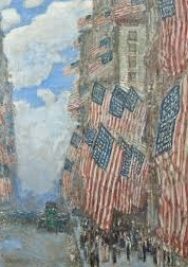
The Olive Trees by Vincent van Gogh, 1889, MoMA-The Museum of Modern Art
 @dave.feediverse.org
The Drinkers (after Daumier), 1890 #postimpressionism #vangogh.
@art.feediverse.orgThe Drinkers (after Daumier), 1890 #postimpressionism #vangogh

 @artlovergirl.bsky.social
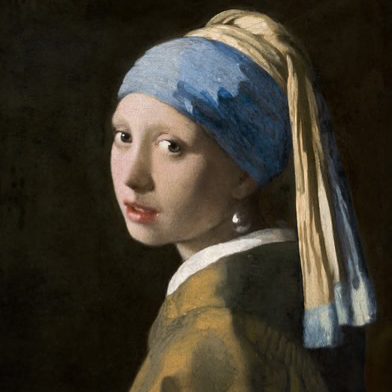
A little art history humor!
🤣🖼️🎨👂😂😆
 @dave.feediverse.org
Three Pears, 1879 #paulcezanne #postimpressionism.
@art.feediverse.orgThree Pears, 1879 #paulcezanne #postimpressionism
 @dave.feediverse.org
Sheaf of Grain, 1907 #franzmarc #postimpressionism.
@art.feediverse.orgSheaf of Grain, 1907 #franzmarc #postimpressionism
 @dave.feediverse.org
Sower with Setting Sun, 1888 #postimpressionism #vangogh.
@art.feediverse.orgSower with Setting Sun, 1888 #postimpressionism #vangogh
 @firstamendmentgirl.bsky.social
Farmhouse in Provence by Vincent van Gogh, 1888, National Gallery of Art (Washington DC)
![Van Gogh arrived in Arles in February 1888, the landscape covered with snow. But it was sun that he sought in Provence - a brilliant light that would wash out detail and simplify forms, reducing the world around him to the kinds of flat patterns he admired in Japanese woodblock prints. Van Gogh's time in Arles was amazingly productive. In about 15 months - just 444 days - he produced more than 200 paintings, about 100 drawings, and wrote more than 200 letters.
He described a series of seven studies of wheat fields: "landscapes, yellow - old gold - done quickly, quickly, quickly, and in a hurry just like the harvester who is silent under the blazing sun, intent only on the reaping." Yet he was also at pains to point out that these works should not be "criticized as hasty" since this "quick succession of canvases [was] quickly executed but calculated long beforehand."
Pairs of complementary colors - the red and green of the plants, the woven highlights of oranges and blue in the fence, even the pink clouds that enliven the turquoise sky - shimmer and seem almost to vibrate against each other. The impressionists used this technique to enhance the luminosity of their pictures. Pissarro, who helped introduce Van Gogh to these concepts, noted, "if I didn't know how colors behaved from the researches of...scientists, we [the impressionists] would not have been able to pursue our study of light with so much confidence."](https://cdn.bsky.app/img/feed_fullsize/plain/did:plc:gtvblttitvvita57xiqahrvh/bafkreidukly7cjyembhpwfkfkio4dovunsk4c5jp42ddhietvryh5pmrtm@jpeg) @dave.feediverse.org
@dave.feediverse.orgTriumphal Arch #cortes #postimpressionism.
 @beavervasia.bsky.social